
United States sent astronauts towards the Moon for the first time in over 53 years. On Wednesday, four astronauts from the US space agency NASA began this historic journey aboard the Orion capsule from the Kennedy Space Centre, marking the start of the Artemis II mission.
Humans last travelled to the Moon in 1972. Following NASA’s Apollo 17 mission, this is the first time humans have set off for the Moon again. The mission is viewed as a significant step in the long-term plan to send humans to both the Moon and Mars.

Throughout their journey, even as Earth shrinks to a small blue dot in the rear-view mirror, they have enjoyed a constant connection with mission control in Houston, Texas. Those calm voices from NASA have provided a comforting link to home, reports BBC.

NASA’s Space Launch System (SLS) rocket, carrying the Orion spacecraft with Artemis II Commander Reid Wiseman, Pilot Victor Glover, and Mission Specialist Christina Koch from NASA, alongside Mission Specialist Jeremy Hansen from the Canadian Space Agency (CSA), lifts off at 6:35pm EDT on Wednesday, 1 April 2026, from Launch Complex 39B at NASA’s Kennedy Space Center in Florida. The Artemis II test flight will take the crew on a ten-day journey around the Moon and back.
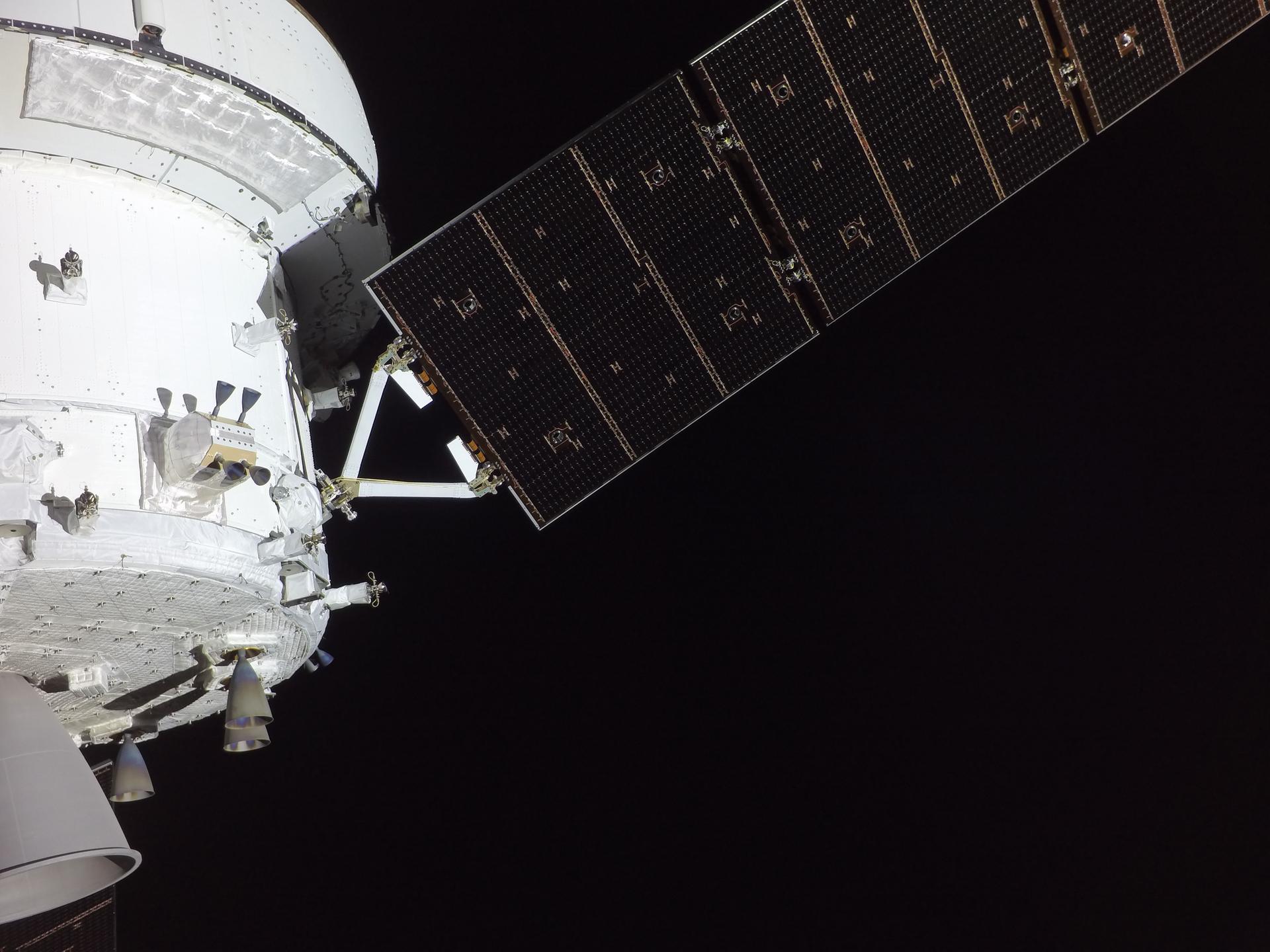
NASA’s Orion spacecraft, as seen from one of the cameras mounted on its solar array wings. The service module is prominently featured in the image, showing a portion of the orbital manoeuvring system engine and three of the eight auxiliary thrusters. Also visible is one of the four solar array wings. Each of Orion’s solar array wings is made up of three panels and generates enough electricity to power two three-bedroom homes.




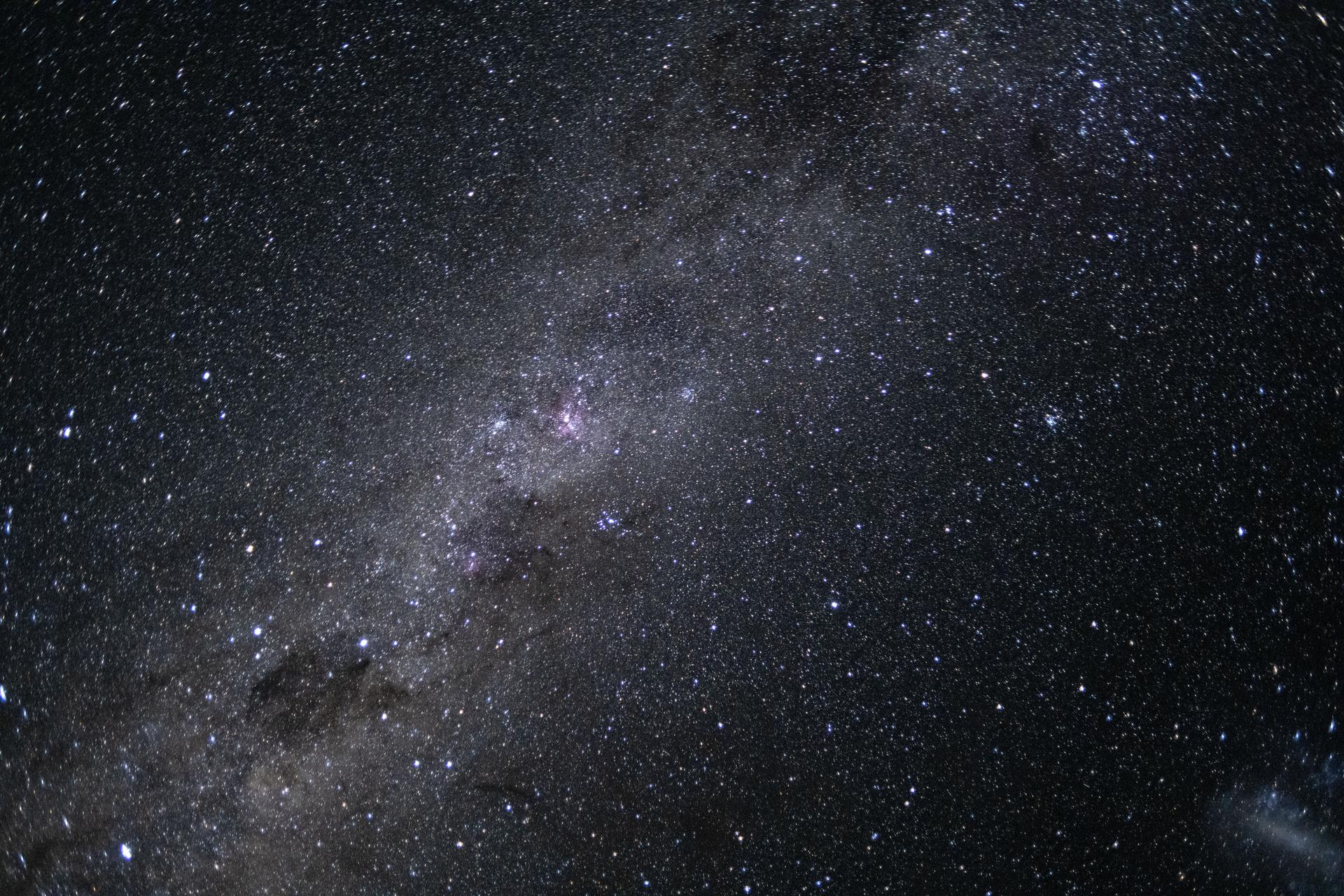
A stunning moment frozen in time. The Artemis II crew captured this breathtaking image of our galaxy, the Milky Way. The galaxy’s elegant spiral structure is dominated by just two arms wrapping off the ends of a central bar of stars. Spanning more than 100,000 light-years, Earth is located along one of the spiral arms, about halfway from the galactic centre.
The Artemis II crew pause for a group photo inside the Orion spacecraft on their journey home. After swinging around the far side of the Moon on 6 April 2026, the crew exited the Moon’s sphere of influence (the point where the Moon’s gravity exerts a stronger pull on Orion than Earth’s gravity does) on 7 April, and are now heading back to Earth for a splashdown in the Pacific Ocean on 10 April.

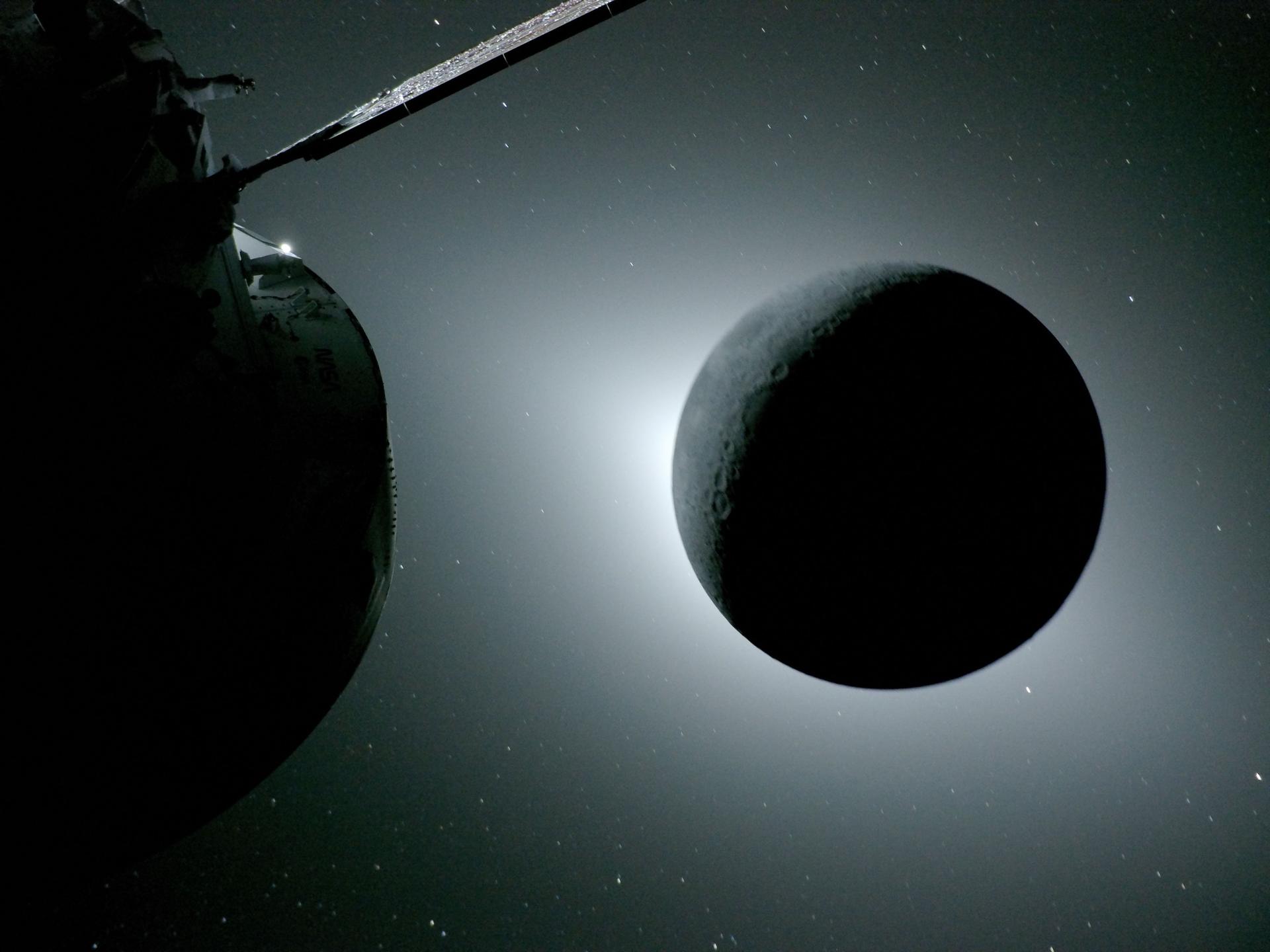
During a solar eclipse on 6 April 2026, one of the cameras mounted on the Orion spacecraft’s solar array wings captured the image of the Moon backlit by the Sun. Orion itself is visible in the foreground on the left. Sunlight reflected off Earth illuminates the left edge of the Moon, giving that part of the lunar disk a subtle brightness. Just below the Moon’s bottom-right edge, the bright dot is Saturn. Further to the right, at the very edge of the image, lies Mars.
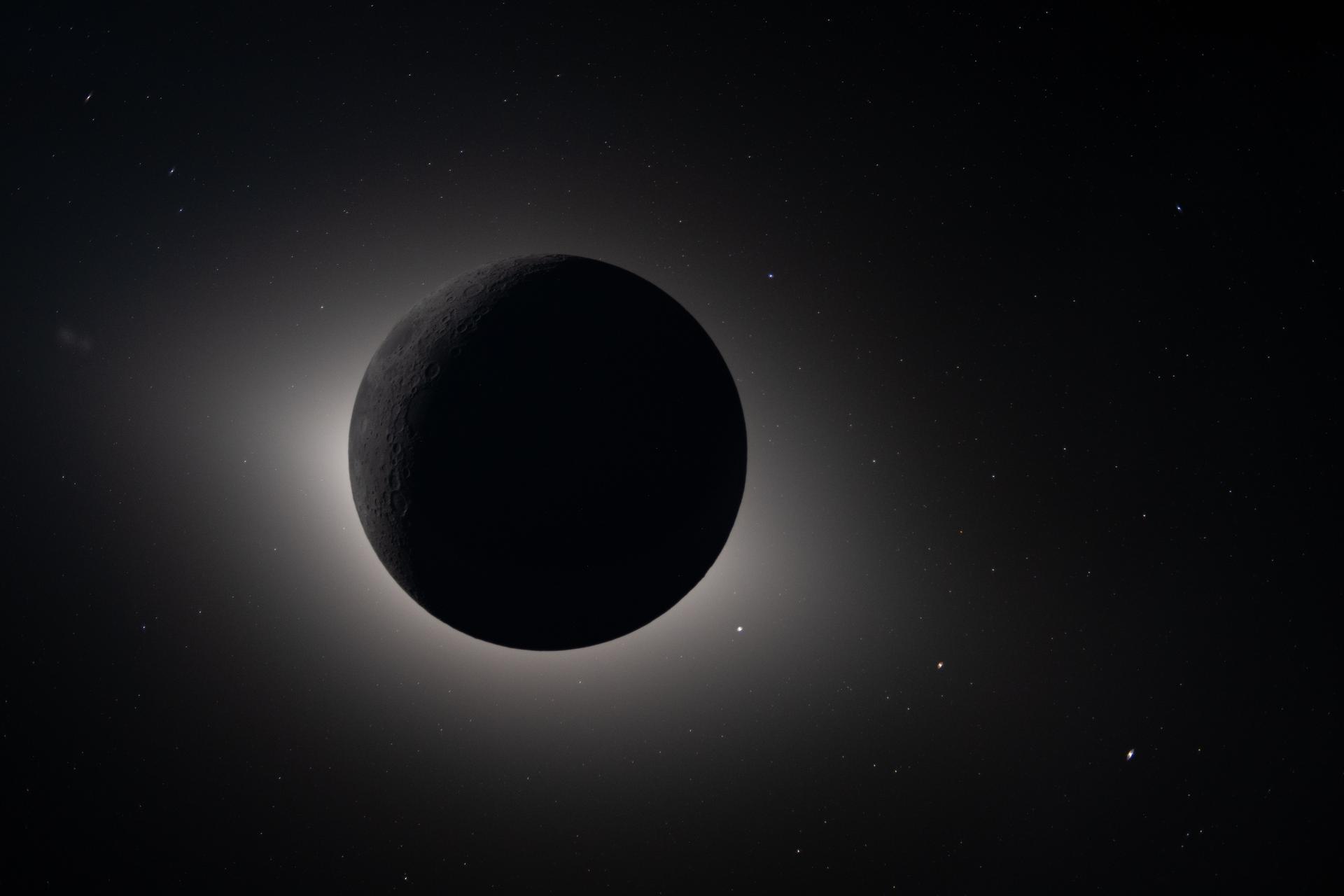
The image, captured by the Artemis II crew during their lunar flyby on 6 April 2026, shows the Moon fully eclipsing the Sun. From the crew’s perspective, the Moon appears large enough to completely block the Sun, creating nearly 54 minutes of totality and offering a view far beyond what is possible from Earth.
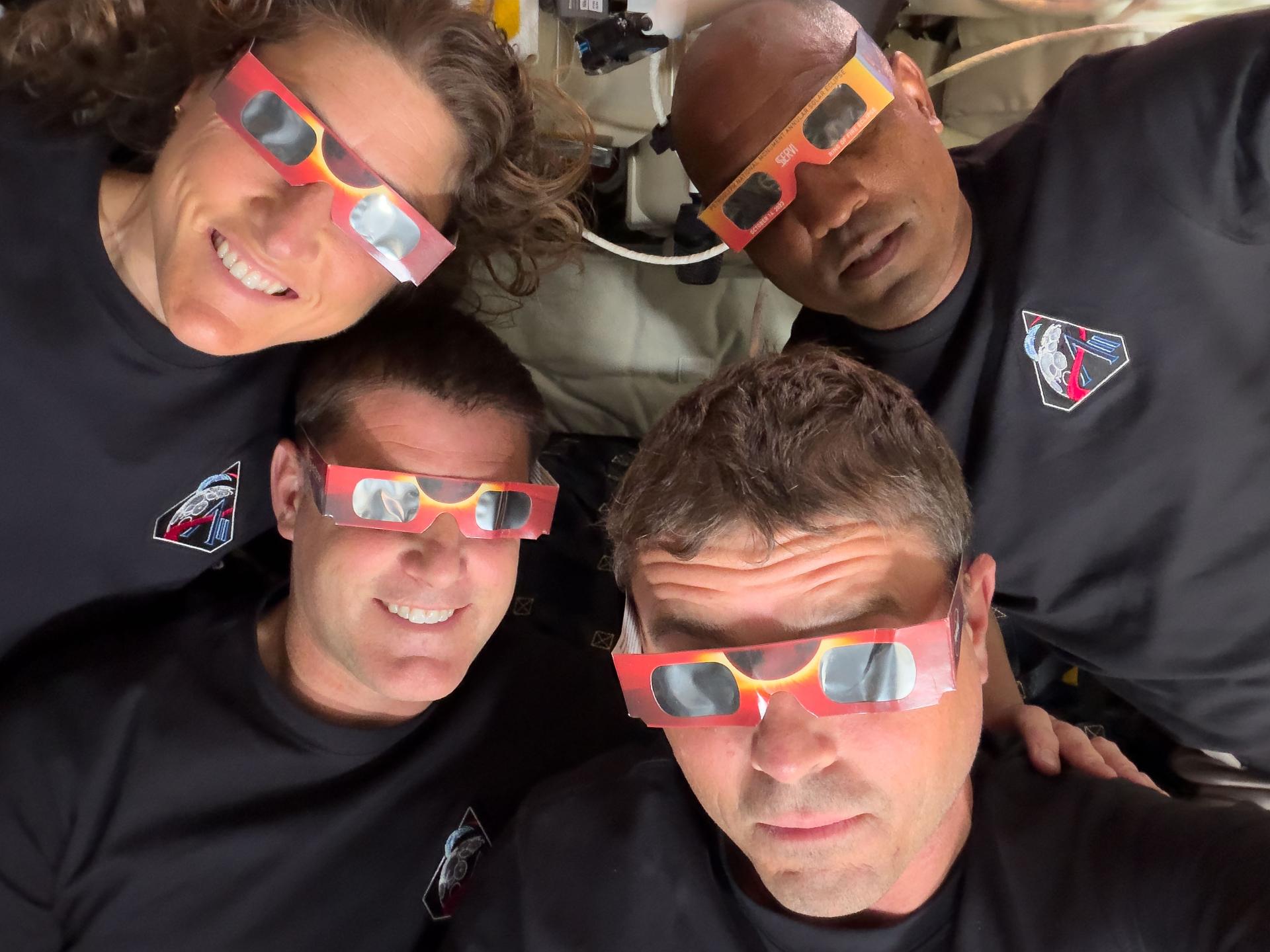
The Artemis II crew use eclipse viewers to protect their eyes during key moments of the solar eclipse they experienced on their lunar flyby. The viewers are identical to those produced by NASA for the 2023 annular eclipse and the 2024 total solar eclipse. This marked the first time eclipse glasses have been used at the Moon to safely observe a solar eclipse.
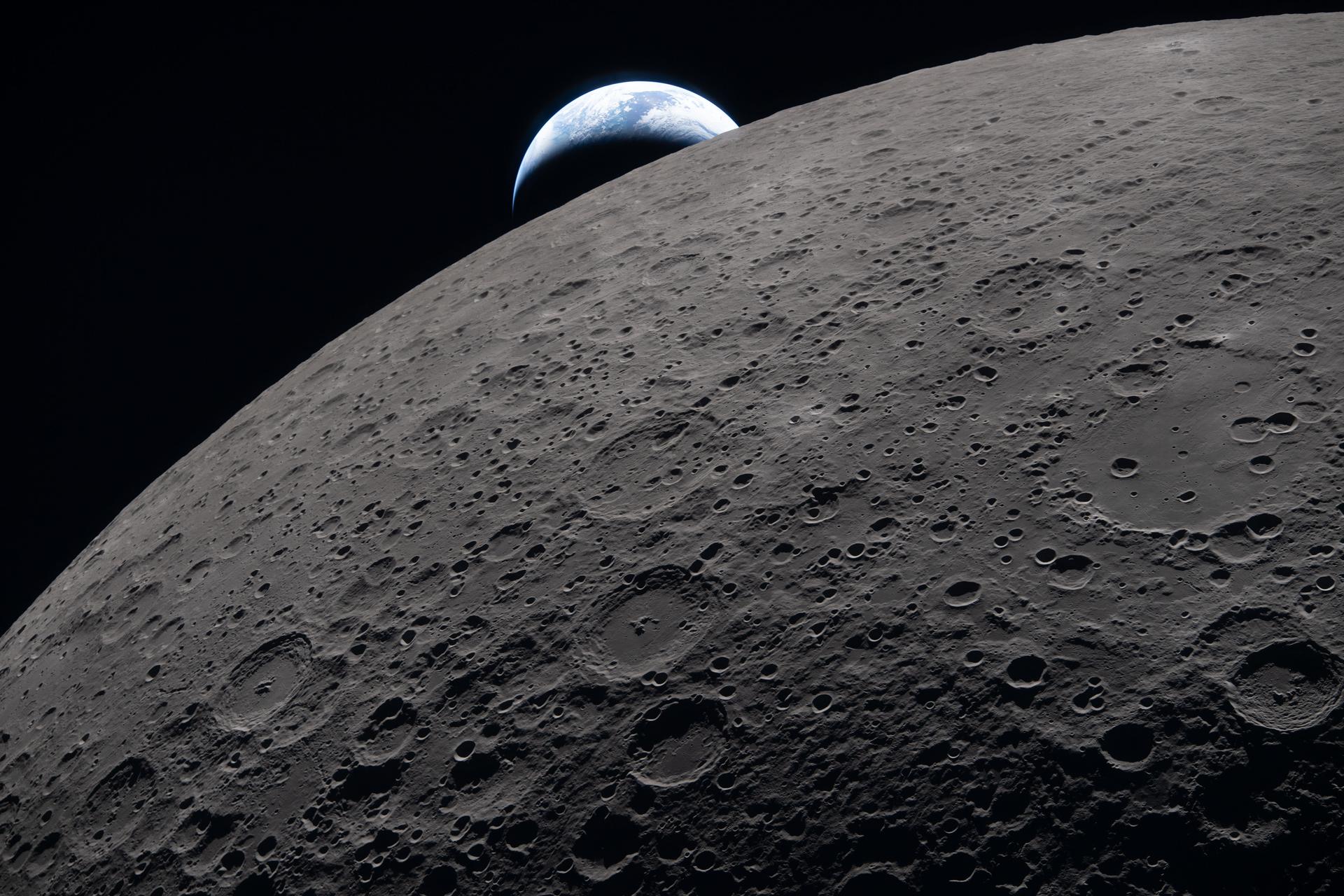
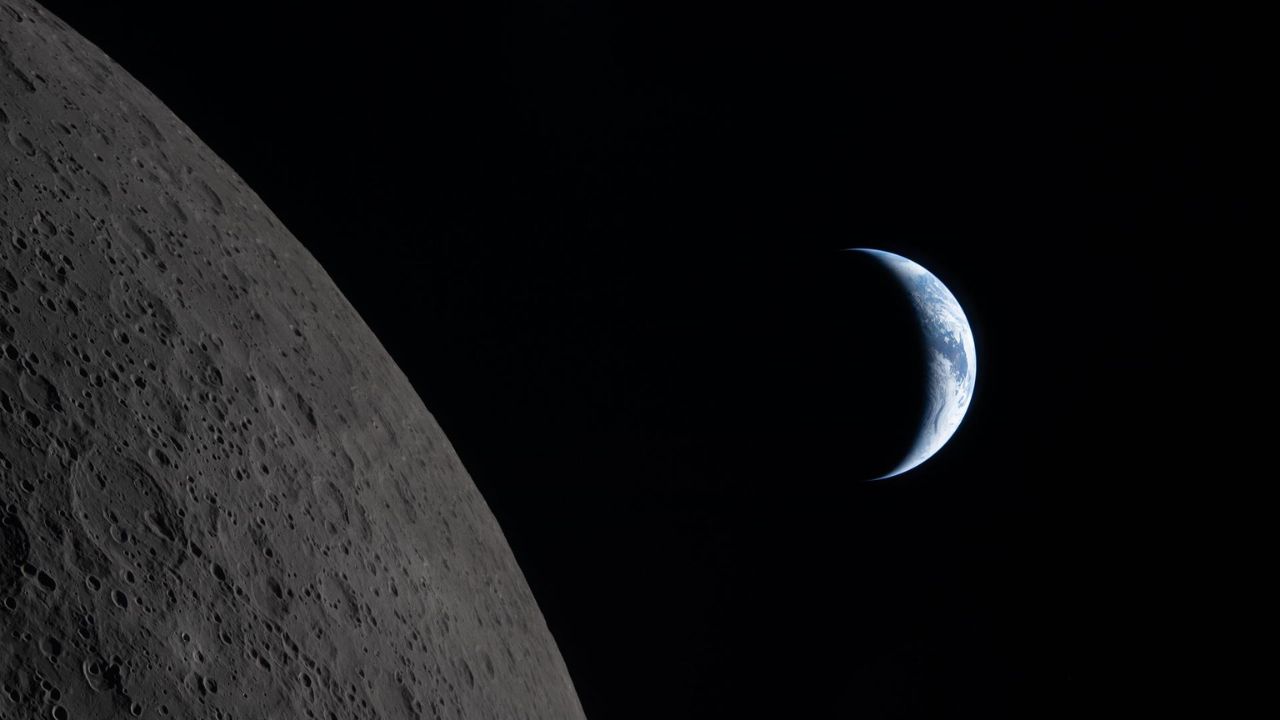
During the Artemis II lunar flyby, the lunar surface fills the frame in sharp detail while a distant Earth sets in the background. This image was captured at 6:41pm EDT on 6 April 2026, just three minutes before the Orion spacecraft and its crew passed behind the Moon and lost contact with Earth for 40 minutes before re-emerging on the other side. In this image, the dark portion of Earth is experiencing night-time, while swirling clouds are visible over the Australia and Oceania region on its day side. In the foreground, Ohm crater reveals terraced edges and a relatively flat floor marked by central peaks – formed when the surface rebounded upward during the impact that created the crater.