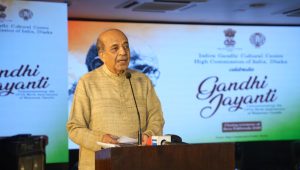
Foreign Minister Khalilur Rahman is expected to meet his Indian counterpart S Jaishankar in the first week of March, marking the first minister-level engagement between the two countries since the BNP-led government took office on 17 February.
Diplomatic observers say the meeting could narrow gaps between Dhaka and New Delhi and reset bilateral engagement.
Analysts note that India’s close alignment with the previous Awami League government fuelled anti-India sentiment in Bangladesh and proved politically unsustainable.
Following the fall of Sheikh Hasina’s government in August 2024, relations between Bangladesh’s interim administration and the Modi government cooled, with limited high-level contact.
Analysts describe the new foreign minister as a familiar figure within Indian policy circles and say early political dialogue is essential to rebuild trust amid shifting regional dynamics.
“It is not possible to conduct foreign relations through media or social media. There is a need for real engagement between top political leaders,” said former ambassador to Nepal and former deputy high commissioner of Bangladesh in New Delhi Mashfee Binte Shams.

She added that regular ministerial visits were common during previous BNP governments, making early engagement particularly important.
Possible venue
Khalilur Rahman has been invited to the Raisina Dialogue in New Delhi from 5-7 March and will attend the Commonwealth Council of Ministers meeting in London on 8 March, where Jaishankar is also expected.
Diplomatic sources say the bilateral meeting will depend on his travel schedule — either in New Delhi or London.




“It will be a sideline meeting that will lead to a formal meeting of the Joint Consultative Commission, possibly in April,” a foreign ministry official said.
Key issues on the agenda
Bangladesh and India traditionally hold 40 to 50 bilateral meetings annually through institutional mechanisms, but engagement declined sharply over the past 18 months under the past interim government.
The Joint Consultative Commission (JCC), led by the two foreign ministers, is now expected to convene in April.
Water sharing, trade, border management, security cooperation, connectivity and people-to-people contact are expected to dominate discussions.
“It’s a good opportunity to meet on the sidelines of another event, and it should be followed by formal engagement,” said former ambassador to the European Union and former deputy high commissioner in New Delhi Mahbub Hassan Saleh.
He stressed that water, security and border management remain priority issues, while visa normalisation across categories could improve people-to-people contact in the near term.
Water-sharing concerns
The Ganges Water Sharing Treaty expires in December, increasing pressure for renewed negotiations. A joint technical committee agreed by both sides has yet to be formed.
The Ganges remains critical for livelihoods and ecological balance in both countries, Mahbub Hassan Saleh said.
“There is urgency to address climate change impacts linked to Ganges water in the next treaty. It is essential under new climate realities,” he said.
Border management and trade barriers
Border tensions and civilian deaths remain sensitive issues in bilateral ties. Analysts say improved political understanding could help reduce such incidents.
“Border tension often reflects gaps in political understanding. Dhaka and Delhi must reach an understanding through which such tensions can be reduced,” Mashfee Binte Shams said.
On trade, she said non-tariff barriers continue to limit Bangladesh’s exports despite duty-free access to the Indian market. Testing requirements in distant laboratories frequently delay shipments, leaving trucks stranded at border points for hours.
Removing such barriers would allow Bangladesh to benefit fully from preferential access, she said.
Analysts say the anticipated ministerial meeting could help stabilise relations and restore structured engagement between the two neighbours.