As winter tightens its grip, residents across northern and southwestern Bangladesh are grappling with chilly mornings, foggy days, and biting cold.
Over the past few days, temperatures have steadily dropped, and on Saturday at least six districts—Jashore, Chuadanga, Gopalganj, Pabna, Sirajganj, and Nilphamari—are experiencing a mild cold wave, leaving many struggling to stay warm.
According to the Bangladesh Meteorological Department (BMD), the lowest temperature was recorded in Jessore at 9°C, while Teknaf in the south registered the highest at 29°C, reflecting stark regional variations.
Meteorologist Muhammad Abul Kalam Mallik provided key insights into the current situation. He explained, “Minimum temperatures of 9-10°C in these districts classify as a mild or limited cold wave. However, based on current atmospheric conditions, the cold is unlikely to persist beyond the next 48 hours.”
Abul Kalam Mallik added that the perceived intensity of winter depends on the difference between daytime maximum and nighttime minimum temperatures. “When the gap falls below 10°C, the cold feels more pronounced, and below 5°C, it becomes bone-chilling. Wind speeds above 10 km/h also accelerate heat loss from the body,” he noted.

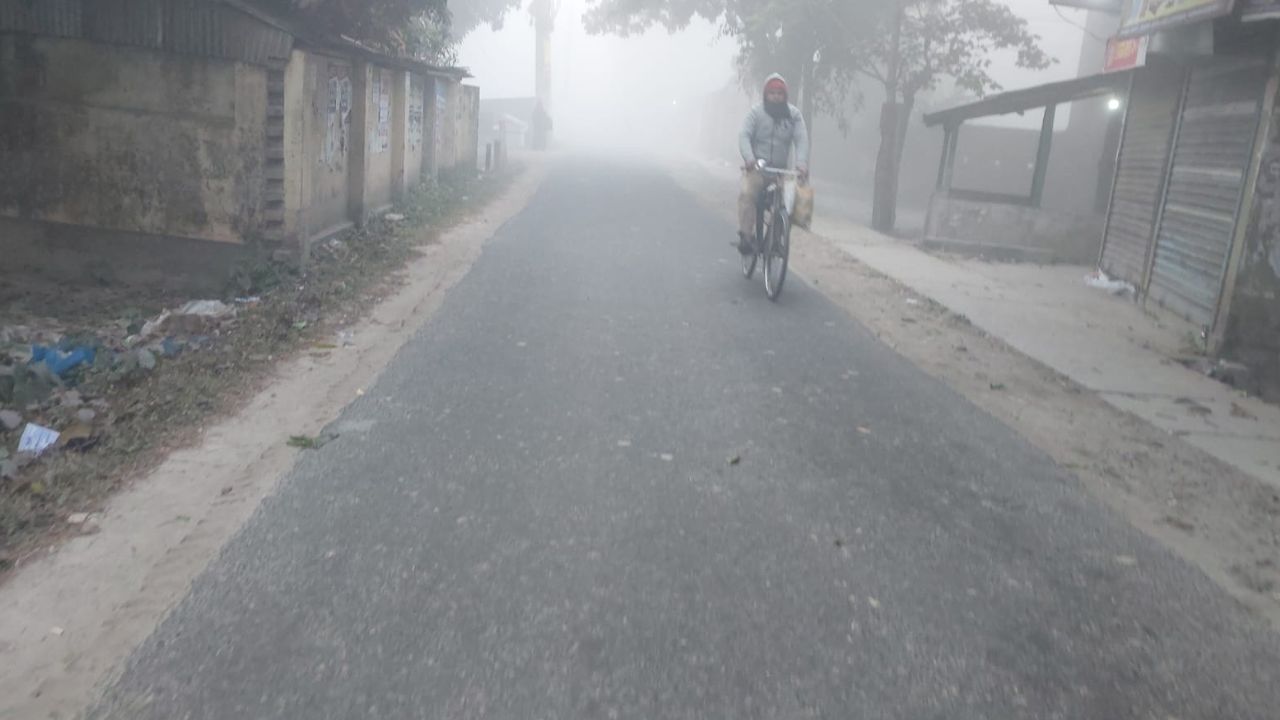
Residents in Gaibandha, Panchagarh, and Chuadanga are facing severe hardships. In Gaibandha, the minimum temperature fell to 11.8°C amid 100 per cent humidity, while dense morning fog has reduced visibility on roads and highways.
Local auto-rickshaw driver Rahan Alam said, “Visibility is nearly zero even with lights on, and people are staying indoors. Our daily earnings have dropped by more than half.” Char-area resident Badiuzzaman added that icy winds from the Jamuna and Brahmaputra rivers make the cold almost unbearable, even at home.
In Panchagarh, at the foothills of the Himalayas, Tetulia recorded a minimum temperature of 11°C. Persistent fog has blocked sunlight until the afternoon for the past four days, with nighttime dew-like drizzle.




E-rickshaw driver Nazrul Islam said, “I used to earn Tk600–700 daily; now even Tk300 is difficult.” Tetulia Weather Office in-charge Jitendranath Roy warned of the possibility of a second mild-to-moderate cold wave in the first week of January.
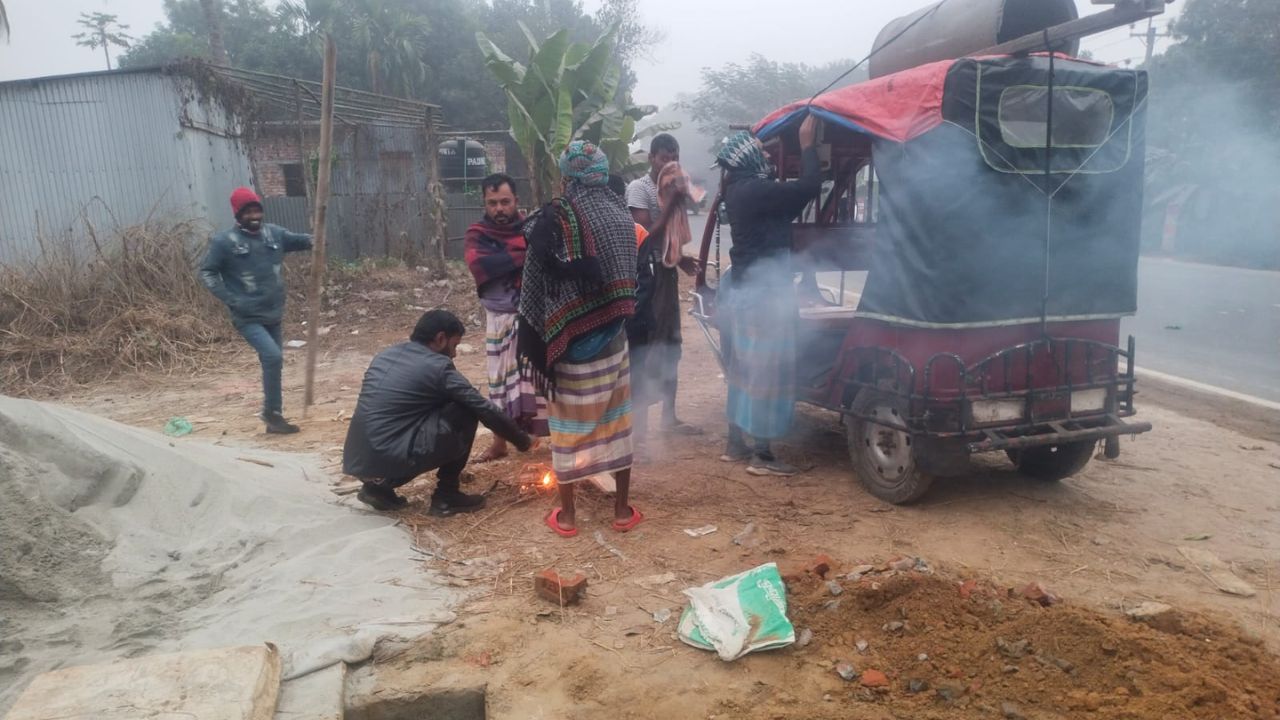
Chuadanga faced similar conditions, with temperatures dropping to 9.6°C and overcast skies persisting throughout the day. Homeless and slum dwellers are burning straw roadside to stay warm.
With winter showing its harsher side, cold-related illnesses are surging. Medical experts warn that children and the elderly are particularly vulnerable to pneumonia, colds, coughs, fever, respiratory issues, and diarrhea.
Dr Sohel, a pediatrician at Gaibandha General Hospital, advised, “Use warm clothing and ear muffs, ensure nutritious warm meals, and avoid cold or stale food to prevent pneumonia, colds, and respiratory issues.”
Agriculture is also affected. Dense fog may disrupt photosynthesis in Boro seedbeds and Rabi crops, potentially stunting growth and reducing yields.
Government and non-governmental organisations are distributing aid to affected populations. The Gaibandha district administration has already handed out 22,600 blankets and requested additional supplies from the Ministry of Disaster Management.
Social and volunteer organisations are providing old clothes and dry food, though residents in remote char areas report insufficient support.
In the capital, weather remains relatively stable. Daytime temperatures are expected between 25-30°C, with nighttime lows of 15-20°C until January 5, 2026.
Light to moderate fog may appear during late night and early morning hours. Meteorologists warn that low upper-atmospheric wind speeds combined with high humidity could temporarily push air quality into the ‘unhealthy’ category.
Moderate to dense fog is expected in northern regions and river basins from midnight to morning, while lighter fog may linger elsewhere until afternoon.
Experts urge caution for commuters and essential travel, as prolonged fog may lower daytime temperatures and intensify the cold sensation.