Weaknesses in tax administration have fuelled Bangladesh’s growing reliance on indirect taxes—particularly Value-Added Tax (VAT)—increasing the financial pressure on ordinary citizens, experts warn.
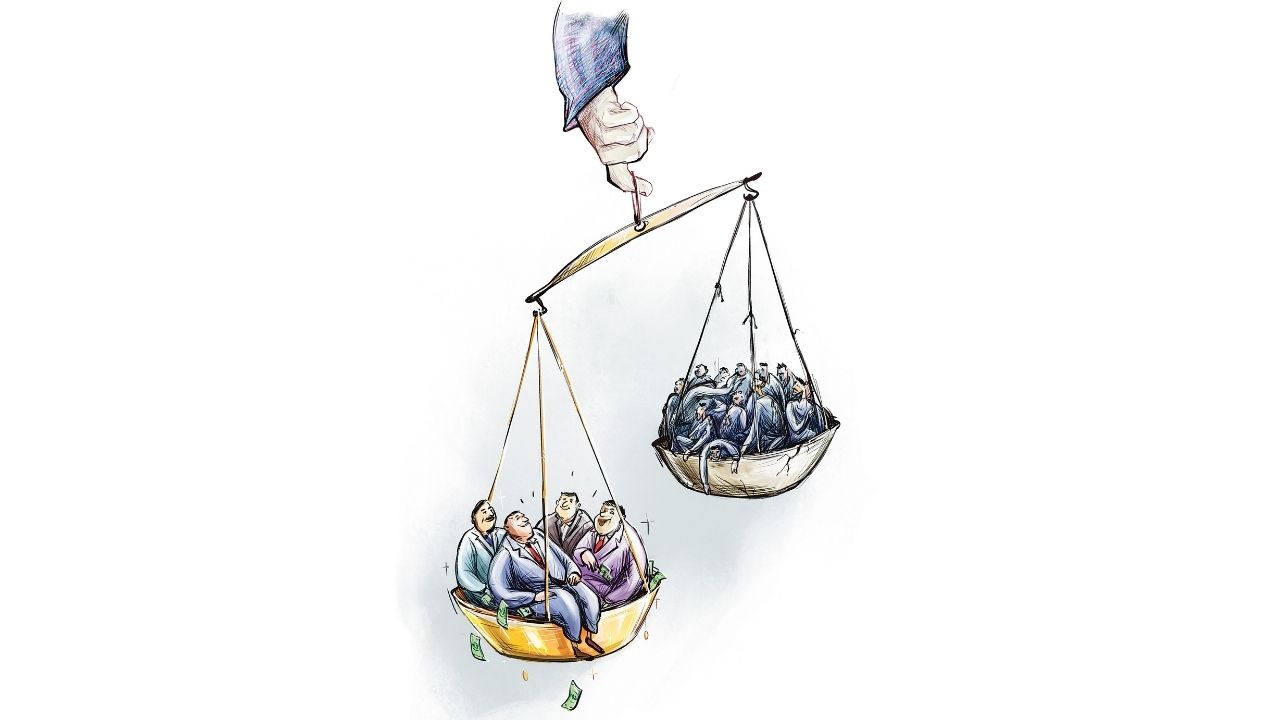
They describe this dependence as short-sighted, given the country’s economic slowdown, high inflation and declining purchasing power. Because indirect taxes apply a uniform rate to all consumers, lower-income groups end up paying a disproportionately high share, worsening inequality and economic stress.
“Bangladesh’s revenue collection relies heavily on indirect taxes, and ordinary consumers are bearing the burden,” Zahid Hussain, former lead economist at the World Bank’s Dhaka office, told TIMES of Bangladesh.
He said the National Board of Revenue (NBR) must strengthen administrative efficiency through reform to ease pressure on low-income households.
NBR data shows VAT contributes more than 38% of total tax revenue. Of over 644,000 VAT-registered business entities nationwide, only around 380,000 file monthly returns.
Ahead of VAT Day, NBR Chairman Md Abdur Rahman Khan said, “We will take measures to ensure that no unregistered entities operate their business in the coming days.”
Economists note that during the Awami League government, key indicators—including GDP size, per capita income and export earnings—were inflated, obscuring underlying vulnerabilities now becoming more visible.



“As the per capita income of most people remains far below acceptable levels, the reliance on VAT will have a severe impact,” said Abdur Razzaque, chairman of Research and Policy Integration for Development (RAPID).
He warned that middle- and lower-income groups will be hit hardest.
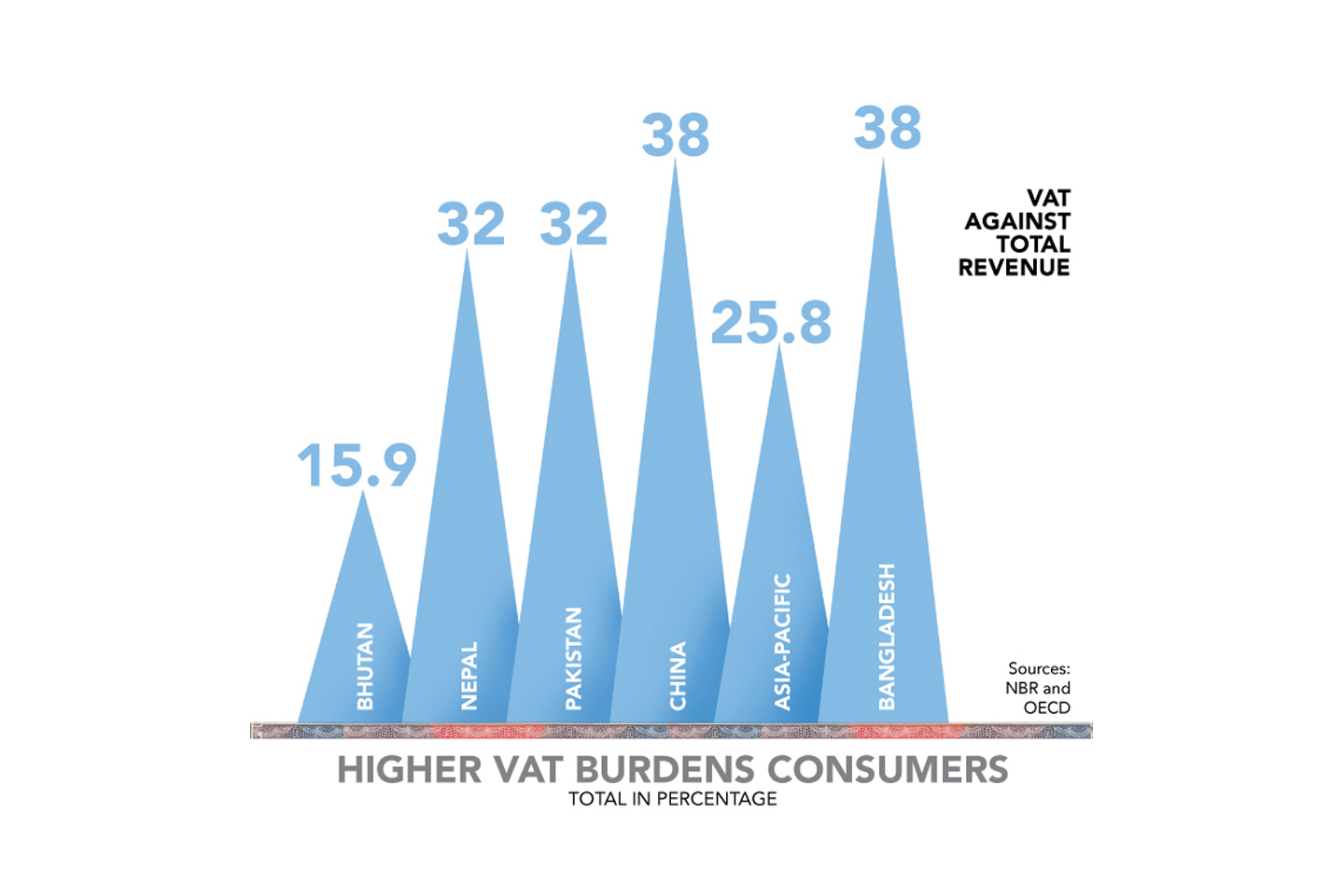
Regional comparisons underline Bangladesh’s dependence on VAT. According to the OECD’s Revenue Statistics in Asia and the Pacific 2025 report, VAT contributed 25.8% of total tax revenue across the Asia-Pacific region in 2023. VAT accounts for roughly 38% of revenue in China, 32% in Pakistan and Nepal, and 15.9% in Bhutan.
Experts argue that in a fair and functional tax system, direct taxes should provide the dominant share of revenue, while indirect taxes remain limited. Direct taxes place greater responsibility on high-income earners, whereas indirect taxes fall equally on all, disproportionately affecting the poor.
“In countries with weak tax administration like Bangladesh, opportunities to evade indirect taxes are minimal, while wealthy individuals and business elites often exploit legal loopholes to avoid direct taxes,” Razzaque said.
VAT’s share in Bangladesh’s revenue continues to rise. In the first four months of the current fiscal year, NBR collected Tk1.19 lakh crore, of which Tk28,432 crore came from indirect taxes.
Bangladesh introduced VAT on 1 July 1991 on the recommendation of the World Bank and IMF, replacing the previous sales tax system. It was designed to make revenue collection simpler, more transparent and more effective. Initially limited to a few sectors under the VAT Act 1991, it has gradually expanded to cover a far wider range of economic activities.