


In Dhaka, the starting salary of an MBBS doctor at a private hospital ranges between Tk30,000 and Tk40,000, depending on the institution. Outside Dhaka, some doctors work for as little as Tk15,000. Meanwhile, under the new pay structure, the gross salary of a fourth-class government employee will exceed Tk33,000.
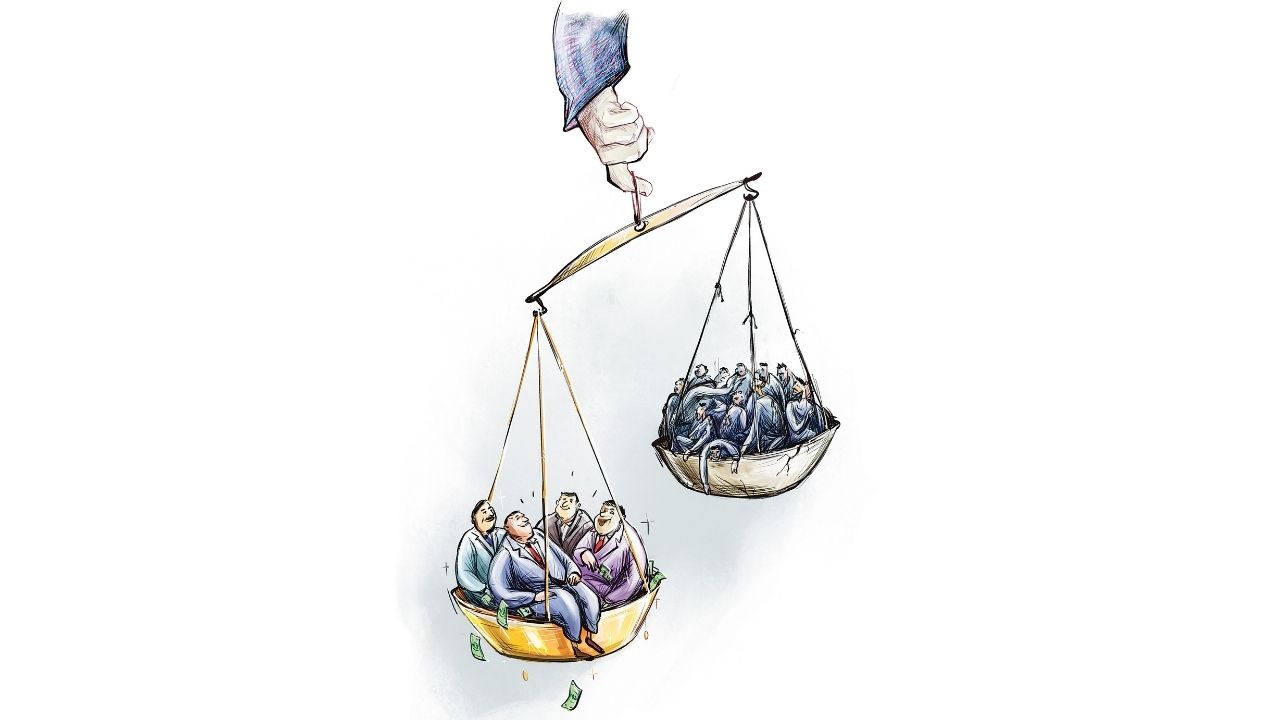
After government employees’ salaries were doubled in 2015, concerns emerged over widening inequality between public and private sector workers. Unlike the government sector, most private sector jobs have no minimum salary structure, with many employees complaining of years without pay increases.
Private sector employees have now started questioning the new government salary structure, fearing it could create another layer of inequality. Experts warn that it may discourage workers and reduce workplace motivation.
Former president of the International Business Forum Bangladesh Humayun Rashid told TIMES, “Despite revenue and financial pressures, the government has decided to increase salaries to satisfy a section of the population. This will increase cost pressures on the private sector as employees will also demand higher salaries.”
However, he said private companies are currently not in a position to raise salaries in line with the government’s decision.
“As a result, frustration may grow among employees, while retaining skilled workers will become a major challenge for employers,” he said.
The ninth pay structure comes nearly a decade after the eighth and contradicts the government’s earlier position. After increasing salaries in 2015, the government had said there would be no further pay commissions, with annual increments and promotions after fixed periods instead.
Although the latest increase was justified on inflation grounds, the rise is significantly higher than the increase in prices. Over the past 11 years, overall inflation has risen by slightly more than 82 percent, while government employees’ salaries have increased by 60 percent to 75 percent, including increments and other benefits.
Since 2010, the government has announced three pay structures, benefiting around 15 lakh workers. Members of the armed forces, employees of other government organisations and several lakh retired officials will also benefit.
Retired employees will receive higher pensions, although these will not double. Depending on their existing amounts, pensions will increase by 55 percent to a maximum of 75 percent.
Following each salary increase, the government said the move would reduce corruption, increase motivation and create an efficient administration. However, few are confident that corruption among government employees has actually declined.

What was the government’s announcement?
In 2015, the pay commission headed by Mohammed Farashuddin recommended doubling salaries, introducing a 5 percent annual increment and ending the practice of forming new pay commissions. It also recommended adjusting increments if inflation exceeded 5 percent in any year.
On 15 December that year, then finance minister AMA Muhith said employees would receive annual salary increases and promotions after 10 and 16 years.
Former finance secretary Muslim Chowdhury told TIMES, “The government had talked about adjusting salaries with inflation and increasing salaries by 5 percent annually, but no institutional framework was created for this. Therefore, the decision that there would be no more pay commissions had no legal basis.”
Were salaries increased excessively?
Zahid Hussain, former lead economist at the World Bank’s Dhaka Office, believes salaries have increased more than inflation.
Speaking to TIMES, he said, “Considering inflation, a salary increase of 20 to 25 percent would have been reasonable.”
According to government data, inflation over the 11 years since 2015 stood at 82.25 percent. This means that if expenses were Tk10,000 in 2015, they would now be around Tk18,250.
While there is no increment in the first grade, annual salary increases from the second to the 20th grade range between 3.75 percent and 5 percent.



Under this calculation, someone earning Tk10,000 under the eighth pay structure would now receive Tk15,000 to Tk17,000. Employees also received promotions, while the Awami League government provided an additional 5 percent incentive with the 2024 annual increment. The interim government later increased this to 15 percent.
According to this calculation, government employees have not fallen significantly behind inflation.
Under the new structure, salaries will increase by 141 percent for the 19th and 20th grades, 115 percent to 139 percent for grades 12 to 18, and 100 percent from the first to the 11th grades.
New inequality?
Government employees’ salaries increased by at least 70 percent in 2010, 95 percent in 2015 and at least 100 percent this time. Based on this calculation, a person earning Tk10,000 in 2010 will receive more than Tk66,000 under the new structure.
Among Bangladesh’s 60 to 70 lakh private sector employees, Bangladesh Bank has fixed minimum salaries only for the banking sector. The government has said discussions were held on the private sector while preparing the ninth pay scale, but no specific plan has been announced.
Under the new structure, first-class government employees will receive a basic salary of Tk44,000, with total earnings exceeding Tk70,000 after housing allowance and other benefits. At the lowest level, fourth-class employees under the 20th grade will receive a basic salary of Tk20,000, with total earnings reaching Tk33,000 to Tk34,000.
High-paying private sector jobs are mainly available in multinational companies, banks, ‘A’ category private universities and some NGOs.
Since 2021, Bangladesh Bank has tightened salary regulations in private banks. Currently, trainee officers receive around Tk40,000, officers around Tk50,000 and senior officers slightly above Tk60,000.
At ‘A’ category private universities, lecturers start at around Tk80,000, while salaries at ‘B’ category universities range between Tk30,000 and Tk40,000. At ‘C’ category universities, teachers are recruited for as little as Tk20,000.
However, only eight to nine universities fall under the ‘A’ category, with a similar number in the ‘B’ category.
Humayun Rashid said, “Except for banks, multinational companies and a handful of local organisations, starting salaries for young graduates in most institutions are not encouraging. Small organisations generally offer around Tk30,000, while stronger companies offer Tk40,000 to Tk45,000.”
There is also no minimum wage structure in most private businesses. Although newspapers have a wage board, only a few organisations follow it. Television and online media outlets often recruit employees for starting salaries as low as Tk15,000.
In 2023, the minimum salary in the garment sector was fixed at Tk12,500. Despite employing millions, domestic workers have no salary structure. Transport workers also lack a declared wage framework.
Professor Waresul Karim, dean of the School of Business and Economics at North South University, told TIMES, “A sense of inequality has been created, and it will increase further. The private sector will also face tremendous pressure to raise salaries, but I do not know whether they will be able to do so.”
Inequality driving risky migration
Low incomes and poor wages have contributed to a growing tendency among young people to seek overseas opportunities through irregular migration routes.
A review of the International Organization for Migration’s (IOM) Missing Migrants Project database shows that between 2015 and 2025, at least 1,329 Bangladeshis died and 859 went missing in 84 incidents across nine irregular migration routes.
The total number of deaths and missing persons during the decade stood at 2,188.
Where will the money come from?
The new pay structure will increase government expenditure by more than Tk1 lakh crore annually. Total additional costs will exceed Tk2 lakh crore, while the cost of annual increments will also double. Overall government expenditure is expected to rise by at least Tk10,000 crore every year.
However, revenue collection remains weak.
At the end of the 2025-26 fiscal year, the revenue shortfall exceeded Tk87,000 crore. Although the current fiscal year’s revenue target is nearly Tk7 lakh crore, collection remains poor.
In July, the first month of the fiscal year, the National Board of Revenue collected Tk23,825 crore against a target of Tk38,880 crore — a shortfall of Tk15,055 crore, or around 39 percent.
The revenue shortfall has increased government borrowing from banks.
In the last fiscal year, the government borrowed Tk1.65 lakh crore from the banking system, Tk47,000 crore above the target. Increased government borrowing can affect private sector investment.
Will corruption decrease?
During implementation of the eighth pay structure, then finance minister Muhith said higher salaries would reduce corruption and bring dynamism to the administration.
The government has again claimed that the new pay scale will improve financial security, increase motivation and help build an efficient, dynamic and citizen-friendly administration.
However, Professor Waresul Karim said salary increases alone cannot reduce corruption.
“The expectation that corruption will decrease with salary increases is unrealistic. It also has no direct link with improving service quality,” he said.
He said corruption occurs due to three factors under the corruption triangle: perceived need, opportunity and justification.
“Corrupt individuals believe they have significant needs. Secondly, government jobs provide substantial authority. Thirdly, they create justifications for their actions.”
“There is effectively no audit, accountability or checking system in government jobs. Unless internal controls are strengthened, corruption will not disappear, and service quality will not improve,” Professor Waresul said.