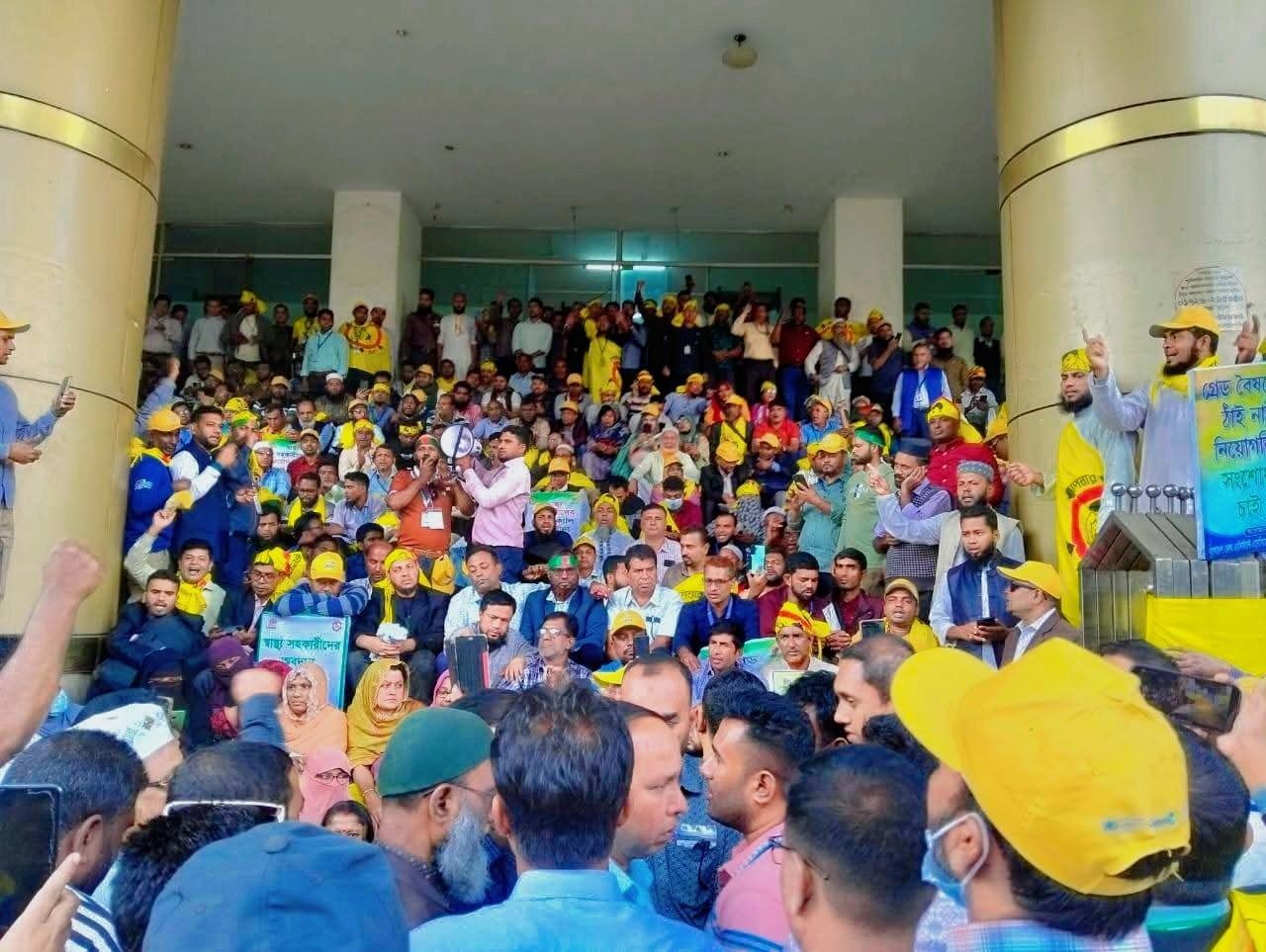

Health assistants across the country have continued their protest for the 10th consecutive day, demanding amendments to recruitment rules, removal of pay disparities, and recognition of technical rank.
Speaking to the TIMES of Bangladesh, Mirajul Karim, a senior leader of the Health Assistant Association, said, “We have been demanding these reforms for the last 28 to 30 years, but we have not seen any progress. We will continue our protest until all our demands are met. Our discussions with the authorities have yielded no results.”
On Monday, from 10am, they observed a full-day work abstention in front of the Directorate General of Health Services (DGHS) in Mohakhali, maintaining their ongoing sit-in programme.

The work stoppage began on 29 November with a two-day protest at the Central Shaheed Minar. Later, the movement shifted to the DGHS premises, where health assistants, assistant health inspectors, and health inspectors from all 64 districts gathered under the banner of the Bangladesh Health Assistant Association.

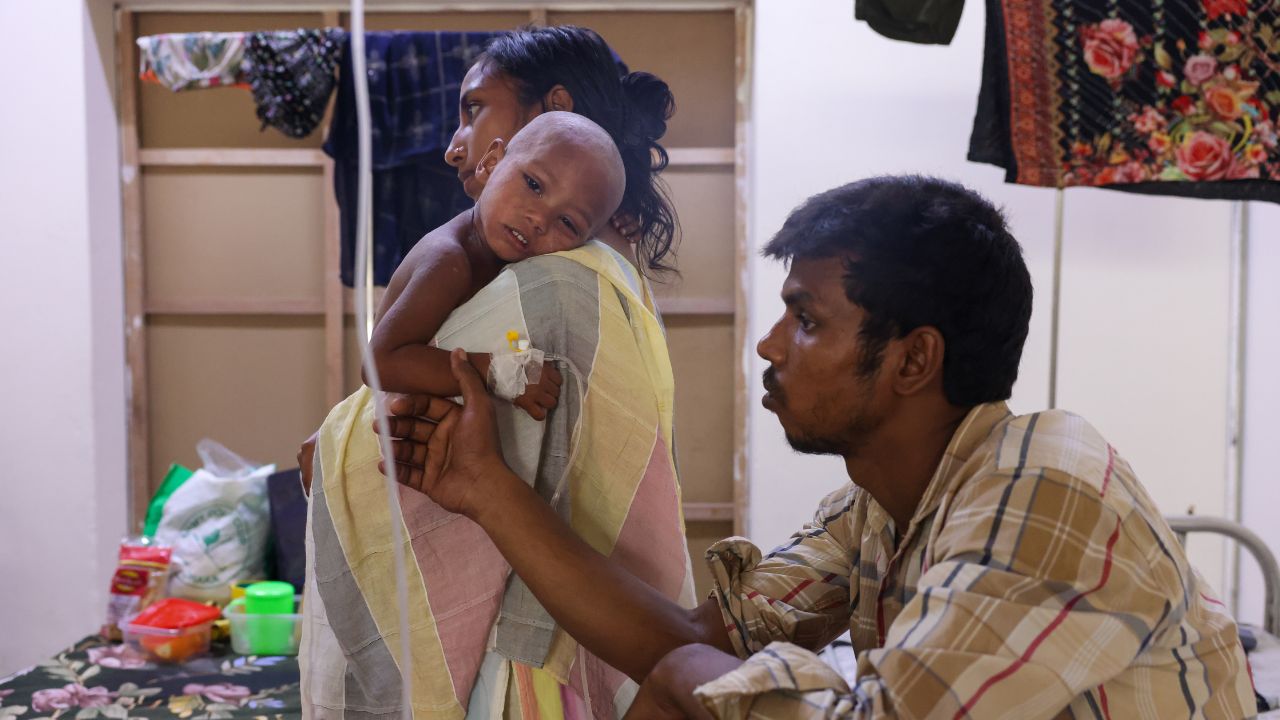

Due to the strike, services at around 120,000 temporary vaccination centres across the country have been suspended for several days. As a result, mothers and children arriving for routine vaccinations have been turned away without receiving essential immunisation services. Protesters say they regret the disruption but insist they had no alternative. After decades of unmet promises and prolonged deprivation, they claim the authorities left them with no choice but to escalate their movement.
Health assistants also highlighted the extensive workload they carry, including door-to-door registration for immunisation, birth and death registration, identification of tuberculosis patients, administering DOTS medication, organising courtyard meetings and other gatherings, and providing routine services three days a week at community clinics. Despite these responsibilities, their travel allowance remains only Tk600 per month, and many receive a starting salary of just Tk9,700.
Their six-point charter of demands includes amending recruitment rules to incorporate bachelor’s-level qualifications and granting the 14th grade; awarding the 11th grade and technical rank to those who completed in-service diplomas; ensuring continuous higher-grade promotion; including all health workers under the bachelor-level pay scale without additional training; incorporating time scale or higher scale benefits when revising pay; and recognising the in-service diploma (SIT course) as an equivalent qualification.