
In the recently concluded year 2025, a total of 9,111 people were killed in 6,729 road accidents, an increase of 6.94 percent compared to 2024.
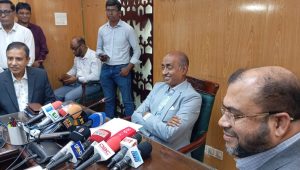
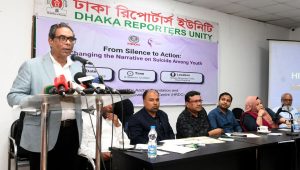
The Bangladesh Jatri Kalyan Samiti presented its annual report on road accidents at a press conference at the Dhaka Reporters Unity on Sunday morning. The organisation’s Secretary General Md Mozammel Haque Chowdhury said the financial loss from these accidents exceeded Tk 60,000 crore last year.
He added that to reduce such tragic fatalities and damages, all political parties participating in the national election must include commitments to road safety and improved public transport in their election manifestos.
According to the report, a total of 14,812 people were injured. In addition, 513 railway accidents killed 485 people and injured 145, while 158 people died in waterway accidents.

There were 2,493 motorcycle accidents, resulting in 2,983 deaths and 2,219 injuries. These accounted for 37.04 percent of total accidents, 38.46 percent of deaths, and 14.98 percent of injuries.
Altogether, across road, rail, and waterways, 7,369 accidents caused 9,754 deaths and 15,096 injuries.



Among those affected by road accidents were 190 members of law enforcement agencies, 1,691 drivers, 1,216 pedestrians, 551 transport workers, 832 students, 129 teachers, 1,056 women, 622 children, 69 journalists, 15 doctors, 11 freedom fighters, 5 lawyers, 9 engineers, and 141 political activists.
Of these, 35 police officers, 20 army personnel, 1 navy member, 3 Ansar members, 2 RAB members, 2 fire service members, 3 BGB members, 10 freedom fighters, 14 journalists, 415 women, 546 children, 633 students, 122 teachers, 1,557 drivers, 219 transport workers, 9 engineers, 5 lawyers, 103 political activists, 14 doctors, and 1,146 pedestrians were killed.
During this period, a total of 10,288 vehicles involved in accidents were identified — 14.49 percent buses, 22.60 percent trucks/pickups/covered vans/lorries, 5.85 percent cars/jeeps/microbuses, 6.63 percent CNG-run auto-rickshaws, 28.48 percent motorcycles, 13.54 percent battery-run rickshaws/easy bikes, and 8.38 percent Nosimon/Karimon/Mahindra/tractors/legunas. Although motorcycle and battery-run auto-rickshaw accidents have risen alarmingly, such incidents are underreported in the media, failing to reflect the true picture.
Accidents involving buses increased by 1.04 percent, motorcycles by 0.99 percent, CNG auto-rickshaws by 1.06 percent, and Nosimon/Mahindra/legunas by 1.01 percent. Meanwhile, accidents involving trucks/covered vans/lorries decreased by 0.73 percent, battery-run rickshaws/vans/easy bikes by 3.02 percent, and cars/jeeps/microbuses by 0.36 percent compared to the previous year.
Of all accidents, 48.84 percent involved pedestrians being run over, 26.00 percent were head-on collisions, 18.63 percent occurred when vehicles lost control and fell into ditches, 5.37 percent were due to miscellaneous causes, 0.44 percent involved scarves entangled in vehicle wheels, and 0.68 percent were train-vehicle collisions.
Analysis shows that 38.22 percent of accidents took place on national highways, 27.13 percent on regional highways, and 28.83 percent on feeder roads. Additionally, 4.22 percent of accidents occurred in Dhaka city, 0.9 percent in Chattogram city, and 0.68 percent at railway crossings.
The rise in small vehicles and their unrestricted movement contributed to a 2.55 percent increase in accidents on national highways and a 5.47 percent increase on regional highways.
According to the Jatri Kalyan Samiti report, the causes of road accidents include reckless driving, dangerous overtaking, road construction defects, unfit vehicles, carelessness of drivers, passengers, pedestrians, and law enforcement agencies, driver incompetence and ignorance of traffic laws, reckless attitudes of transport owners and drivers, use of mobile phones or headphones while driving, unprotected railway crossings, driving under the influence of drugs, absence or encroachment of footpaths, corruption in traffic law enforcement, violation of traffic laws, absence of road signs and markings, extortion on roads, markets set up on roads, undefined driver recruitment and working hours, lack of road lighting, insufficiently high road dividers, and lack of planning and accountability among institutions responsible for reducing accidents.