


More than 2,000 people have died of Ebola in the Democratic Republic of Congo since the outbreak was declared under three months ago, with over 1,000 of those deaths recorded in just the past three weeks, government figures showed on Tuesday.
Officials confirmed 4,381 cases across five provinces as of Tuesday, including 2,011 deaths, making it the fastest-growing Ebola outbreak ever recorded in the country and the second-deadliest globally, behind only the 2014 2016 West African epidemic that killed 11,310 people, according to Al Jazeera.
The World Health Organization said on Monday that the virus had actually first emerged in DR Congo in February, three months before the outbreak was formally declared on 15 May in the country and neighbouring Uganda.
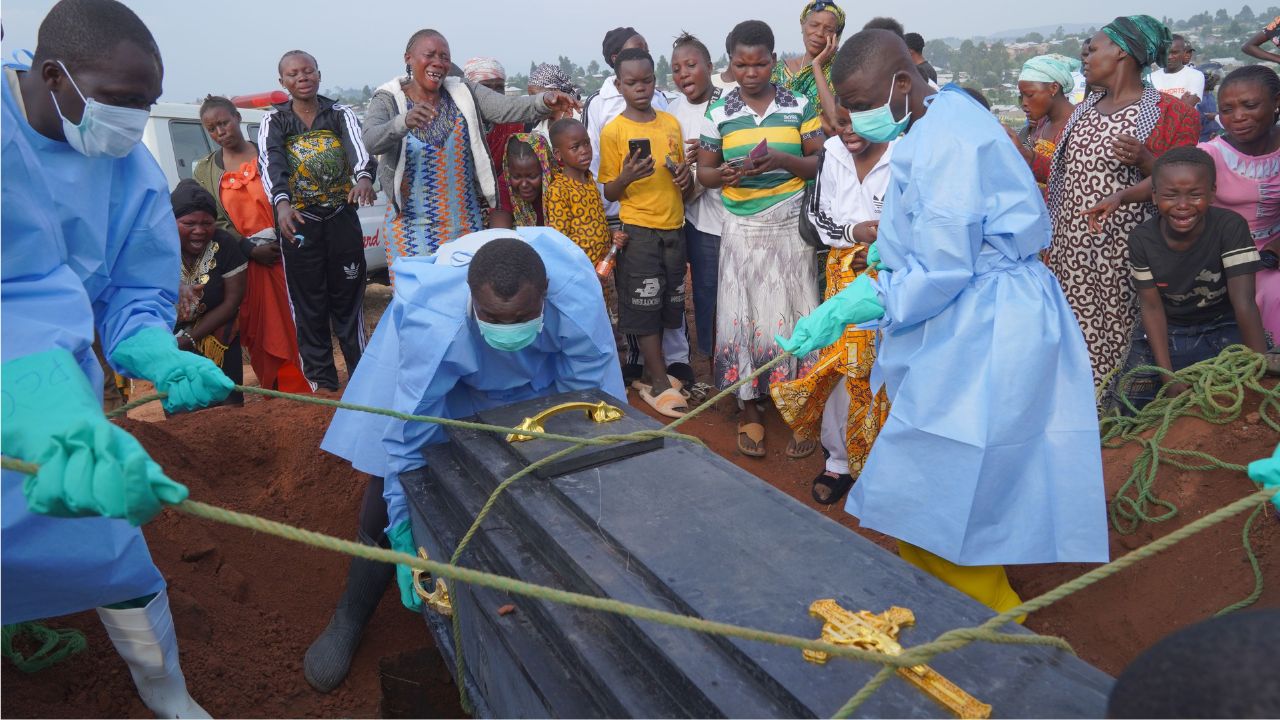
Efforts to contain the epidemic have been hampered by a combination of factors. Health workers have staged strikes over unpaid wages, misinformation about the disease has spread among affected communities, and some families have continued to hold traditional burials for Ebola victims, a practice that risks further transmission of the virus.

No approved vaccine or treatment currently exists for the Bundibugyo strain of Ebola behind the outbreak, which is rarer than other strains of the virus. The WHO said last week that vaccine trials had begun, though it cautioned that results were likely to be months away.
Separately, Israel’s Ministry of Health said on Tuesday it was investigating a suspected Ebola case after a citizen who had recently returned from DR Congo developed a fever. The ministry said in a series of posts on social media platform X that tests had been carried out and results were expected within 24 hours. The individual is currently in isolation.


The scale of the outbreak has raised alarm among global health authorities, given how rapidly the case count has climbed since May. Analysts have pointed to the strain on the DR Congo’s healthcare system, already stretched thin by conflict and instability in parts of the country, as a key obstacle to bringing the epidemic under control.
Unpaid medical staff walking off the job has further weakened the response at a critical moment, leaving fewer personnel to trace contacts, treat patients and enforce isolation measures.
Cultural resistance has also proven difficult to overcome. Family burials, in which relatives wash and touch the bodies of the deceased as part of mourning traditions, are considered a major driver of transmission during Ebola outbreaks, since the virus remains highly infectious in bodily fluids after death. Health authorities have sought to work with community and religious leaders to encourage safer burial practices, though uptake has varied.
The absence of an approved vaccine or treatment for the Bundibugyo strain marks a significant gap in the global response toolkit. Existing Ebola vaccines developed for other strains, including those used to curb past outbreaks in DR Congo, are not effective against this variant, leaving health workers reliant on supportive care and containment measures such as quarantine and contact tracing.
The case in Israel underscores growing concern about the risk of international spread as the outbreak continues to expand. While the WHO has not declared the epidemic a public health emergency of international concern, health officials worldwide have been urged to remain vigilant for travellers returning from affected regions who display Ebola symptoms, including fever, fatigue and unexplained bleeding.
With case numbers still climbing sharply and no medical countermeasures yet available, health officials say the coming weeks will be critical in determining whether the outbreak can be brought under control before it surpasses the death toll of the 2014-2016 West African epidemic.