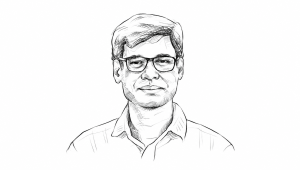
The third death anniversary of Dr. Zafarullah Chowdhury brings Bangladesh not only memories of a life well lived but also of a revolution led by an extraordinary man. He was a healer in more ways than one, whose ideas and actions have influenced the fields of health, human rights, and nation-building. His legacy stands out as a unique blend of scholarship, activism, and institutional building, rooted in the belief that dignity, access, and justice cannot be dissociated from the right to health.
The Bangladesh Liberation War provided the most decisive formative experiences in the life of Dr. Chowdhury. When millions of people had been forced out of their homes and were in dire need of medical help, he became one of the major organisers of healthcare efforts for wounded freedom fighters. With others, he worked in refugee camps along the India-Bangladesh border, where makeshift hospitals were set up to treat patients under extremely difficult conditions. Dr. Chowdhury actively involved himself in forming a health delivery network comprising mostly Bangladeshi doctors and medical students. The latter initiative would later contribute to his receiving the prestigious Ramon Magsaysay Award for his outstanding contributions to public service. Above all, however, the war strengthened his conviction of the interconnection between political and social emancipation. In Dr. Chowdhury’s view, liberation meant more than mere political independence. It meant the ability to receive equitable healthcare, education, and employment opportunities.
In 1972, immediately following Bangladesh’s liberation from Pakistani rule, he founded Gonoshasthaya Kendra (GK), the most remarkable healthcare organisation ever established in any developing country. Located in Savar, near Dhaka, this institution soon became known as an example of a community-based healthcare system. By abandoning the elitist, hospital-based model inherited from the colonial period, Dr. Chowdhury developed a new concept of preventive and participatory healthcare that involved educating local people to increase their involvement in the treatment process. One of the key GK innovations was the training of thousands of rural women as paramedics – a bold step in a society characterised by deeply entrenched patriarchy.

Another important feature of Gonoshasthaya Kendra was its integration of healthcare, education, nutrition, sanitation, and livelihood activities. GK is now considered an example of sustainable community health development and is cited in numerous international publications on healthcare.
One of the key initiatives undertaken by Dr. Chowdhury that contributed most to Bangladesh’s further success was his active participation in the development of the National Drug Policy of 1982. At that time, the monopolies of multinational pharmaceutical corporations left essential medicines out of reach for average citizens. Thanks to his efforts, certain important decisions have been taken through policies. This meant that the prescribing of unnecessary drugs was limited, generic drugs were recommended, and indigenous medicines were encouraged. As a result, Bangladesh became a highly successful producer of generic drugs, which are now sold in more than 150 countries. Thanks to his initiatives, the affordability of essential drugs increased, positively impacting the country’s overall health. The activities of his Gonoshasthaya Pharmaceuticals company proved once again that quality healthcare need not be unaffordable.




Apart from his work in healthcare, Dr. Chowdhury was one of the most prominent human rights campaigners in the country. His commitment to democracy and accountability made him a fierce opponent of state authorities and international institutions when they went against the values he advocated. Moreover, he became the voice of Bangladeshi garment workers who suffered greatly due to exploitative practices prevalent in the industry. He also campaigned for gender equality and education reforms and fought against environmental degradation. Unusually for a man of scholarship, he did not restrict himself to academic discussion and became involved in practical activities which brought him into closer contact with grassroots movements.
Dr. Chowdhury was no man of conformity, nor was he afraid to challenge the powers that be. He was never afraid to criticise government and international policies and was committed to upholding truth and justice above anything else. Such a stance, inevitably, turned him into a controversial figure but also made him a prominent and respected human rights activist. Moreover, by refusing to conform to the dominant ideology, he upheld high ethical standards, sometimes putting these ahead of material benefits. The younger generation of Bangladeshis looks upon Dr. Chowdhury as an example of ethical leadership. His legacy teaches them that professional excellence should always be accompanied by social activism.
Dr. Chowdhury’s legacy left a deep mark on Bangladesh’s development. Several features of the country’s development that distinguish it from other developing countries are directly related to the principles he advocated for. These include a focus on primary healthcare, an emphasis on community-based health interventions, and the promotion of the country’s own pharmaceutical industry. There are many factors relevant to the strategies used regarding Bangladesh’s achievements in child mortality rates, maternal healthcare services, and immunisations. The need for a community-based preventive healthcare system is evident in the country’s current policy.
There is no doubt that Dr. Chowdhury’s mission remains unfinished due to the continued presence of social inequalities, urban-rural disparity, and poor healthcare delivery.
Dr. Zafarullah Chowdhury was more than a physician, more than an activist – he was the conscience of a nation. His life embodied a rare synthesis of compassion and courage, intellect and action. As Bangladesh commemorates his third death anniversary, the most meaningful tribute lies not in ceremonial remembrance, but in renewed commitment. His ideals, justice, and human dignity must continue to guide policy, practice, and public consciousness. In a world increasingly driven by profit and power, his legacy offers a timeless lesson: that the true measure of progress is not wealth, but the well-being of the most vulnerable.
The writer is a Professor and former chair, Journalism and Mass Communications, Savannah State University, Georgia, USA. E-mail: E-mail: [email protected]