A writ petition has been filed in the High Court challenging the inadequate budget allocation for Supreme Court, state inaction in appointing the required number of judges, and failure to constitute sufficient benches due to the judicial crisis.
The petition also sought directions to ensure basic professional facilities for Supreme Court lawyers. A total of 26 lawyers from the higher and subordinate courts jointly filed the writ petition.
Lawyer Mohammad Humayan Kabir Pallab informed that the writ petition was filed last Tuesday with the permission of the High Court bench of Justice JBM Hassan and Justice Aziz Ahmed Bhuiyan.
The petition demanded Knopf-style enforcement of access to justice, justice, and speedy trial as per the Constitution. To achieve this, direction was sought for an adequate and proportional budget allocation considering the needs and scope of work of the Supreme Court.
In addition, direction was sought to appoint the required number of judges in the Appellate Division and the High Court Division, and to constitute adequate benches.

The application also included securing adequate chambers, seating space, sanitation, safe drinking water, and digital infrastructure for Supreme Court lawyers.
This petitioners further sought direction to formulate a demand-based and reasonable budget framework for the judiciary in consultation with the chief justice and the Supreme Court.



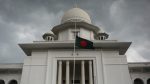
The respondents in the writ petition are the secretary of the Law and Justice Division, cabinet secretary, secretary of the Finance Division, registrar general of the Supreme Court, attorney general, Bangladesh Bar Council, and Bangladesh Supreme Court Bar Association.
According to the application, Tk291 crore has been allocated for the Supreme Court in the 2026-27 fiscal year, which is extremely low compared to the national budget of around Tk9,38,000 crore. In the same fiscal year, Tk347.40 crore was allocated for Bangladesh Television, which is about Tk56 crore or 19 per cent higher than the allocation for the Supreme Court.
The writ petition also mentioned that on 2 May, the law minister had referred to the judiciary in the media as the “most neglected sector” of the state.
It highlighted the case backlog and shortage of judges as major obstacles to the judicial process. Data in the application showed that as of August 2026, the number of pending cases in the Supreme Court stood at around 6,85,830.
Against this, there are a total of 105 judges, including five in the Appellate Division and 99 in the High Court Division. As of 24 April 2026, the number of pending cases in the Appellate Division alone was nearly 42,000.
The petition noted that of the cases filed each year, around 35 per cent are disposed of in the High Court Division and around 18 per cent in the Appellate Division. It added that handling the pressure of cases is impossible with the existing number of judges and infrastructure.

This application also mentioned that the recommendation of the Judiciary Reform Commission to increase the number of lower court judges from around 2,000 to at least 6,000 has not been implemented.
The writ petition claimed that despite facing higher case pressure, the budget allocation for Bangladesh’s Supreme Court is lower than that of the apex courts in neighbouring countries.
Since the administrative and infrastructural expenses of both the Appellate Division and the High Court Division must be borne by the same institution, the structural pressure on the Supreme Court of Bangladesh is higher compared to India and Pakistan, the petition noted.
Earlier on 6 September, a legal notice was sent to the respondents asking them to respond taking necessary steps within three days, but no response was received, according to the writ petition.