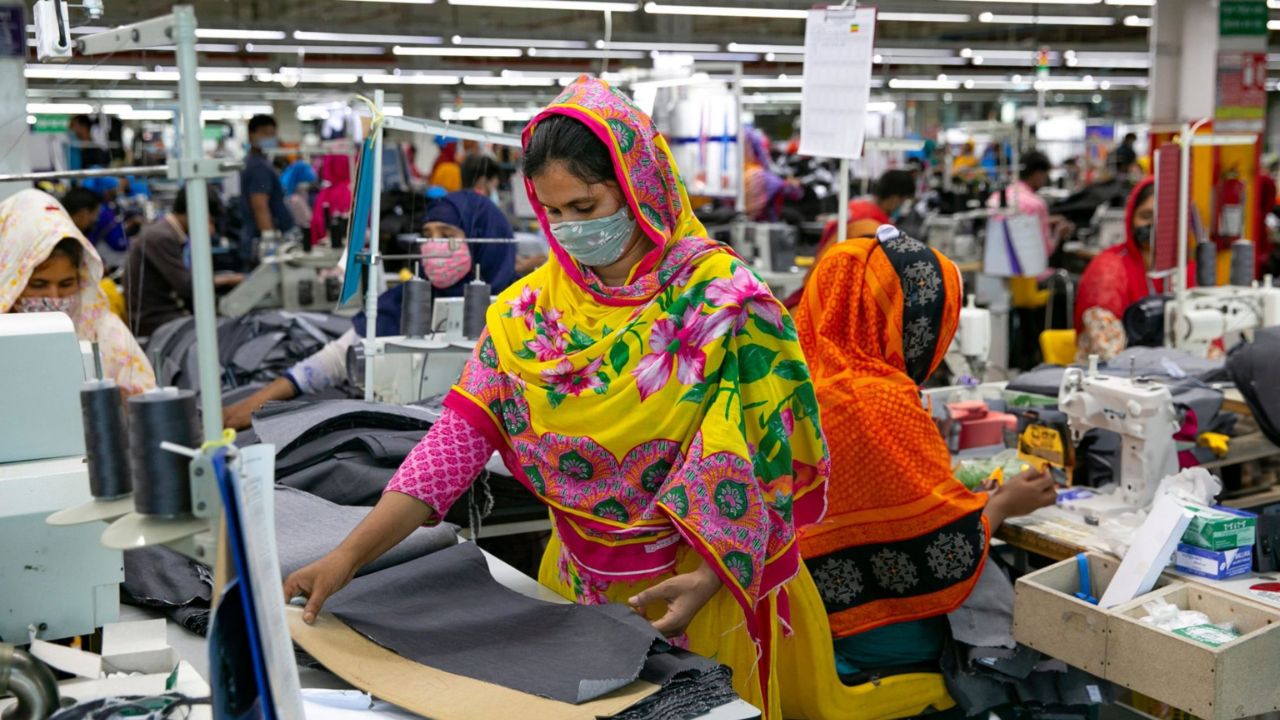



The female workforce of Bangladesh has been forced to pay a ‘biological tax’ or systematic dehydration to keep the multi-billion-dollar garment export industry of that country alive. They lose time, get a quota, get punished by the supervisor, and also lose a bit of their salary for drinking each glass of water. Bangladesh’s economic success has earned global praise, but to get through each workday, workers are forced to give up the most basic biological needs. This issue does not exist in one factory or one worker but is systemic throughout the entire global apparel supply chain.
The national economy is significantly affected by the Ready-Made Garment (RMG) Sector. Approximately four million workers are employed in the RMG sector, which earned $36 billion as export earnings for the country in the 2023-24 fiscal year, about 10% of the GDP. Many female workers gained socio-economic independence they would not have achieved otherwise due to employment in the RMG sector, which significantly changed the national labour force demographics. The official narrative ends at the factory gate regarding the RMG sector. The national government monitors daily wage rates, export volume, and the compliance of buildings used as factories with safety standards. However, the government does not monitor or report on the physiological and psychological costs suffered by RMG workers at their workplaces. In addition, it does not track or report on what happens to RMG workers after they leave the RMG sector due to age or disability.
Those responsible for the production schedule impose requirements on other individuals that exceed the basic requirements for the comfort of human beings. According to experts’ comparative research studies, about 30 percent of female garment workers and low-income females in other industries may take three loo breaks a day. On the other hand, low-income women working in other industries are not more likely to suffer from voiding symptoms and chronic pelvic pain than garment workers. Even though many factories provide better facilities, production pressure goals are not essentially different. Moreover, it is blatantly clear that there is a serious lack of long-term medical knowledge regarding how these persistent workplace restrictions affect kidney function, maternal health and menstrual hygiene for the rest of a worker’s life.
Women garment workers face additional obstacles to workplace wellbeing due to a lack of private sanitary facilities as well as reluctance to talk about menstrual troubles. Thus, policies on occupational health must include culturally appropriate health education, confidential medical assistance and dignified sanitation facilities. The impact is much larger for mothers since they represent nearly 65% of all working women in this sector. Many are rural workers and migrants who are financially constrained and compelled to leave their children behind with grandparents in faraway villages. Research conducted by icddr,b and others show that the long absence of parents can deprive growing children of emotional support. While a mother can afford to pay for her child’s schooling with money she earns by attending work, she will not be available for the start of her child’s first school term.

Not only do they contribute to the economy, but they also carry the cultural memories and social identities of their rural homes. The process of moving from village life to industrial employment is not just an economic phenomenon. It is also a process of cultural change, family relationships, and social displacement. As women sever connections with their community, their traditional support systems founded on kinship, neighbourhoods, and collective care may be weakened. We need to learn from these cultural shifts in creating more humane and socially responsive labour policies.
As per the National Labour Law, employers of factories having forty or more female workers have to provide a creche facility. Iccdr,b’s Thrive programme has found many of the daycare centres that are said to be open are just space, a ‘tick box’. Trade unions stated that most do not provide care. However, experts said that 80 percent of member companies provide care. In a study of 805 mothers, it was found that mothers who have reliable daycare experience reported significantly fewer symptoms of depression and anxiety. Thus, access to affordable, high-quality daycare is a key factor in improving maternal mental health.




One of the greatest problems facing the RMG industry today is its demographic cliff; that is, what do women do when they reach 35? A poll of more than 3000 workers in Dhaka, Gazipur and Narayanganj conducted by Karmojibi Nari revealed that, of the workers surveyed, a massive 86 percent were under 35 years of age. Only 9 percent were over the age of 35. LightCastle Partners further states that industry statistics show a massive drop in female participation rates; since 1980, the female participation rate fell from 80 percent in 1980 to only 53.7 percent in 2021.
Problems like availability of water in some places, child care in the workplace and the transition of the elderly into retirement have been separated in terms of policymaking and government into separate departments. But for employees on the shop floor, all these issues combine together to become one large burden. Resolving a problem of such magnitude will require tearing down the walls of both bureaucracy and academia. Doing so will also require a radical change in how we view the work people are doing in industry.
The hidden costs borne by women working in garments can be tackled by means of the concept of ‘Re-Thinking Interdisciplinarity’. If we control the exploitation of history and analyse our structural problems and then create plans for a sustainable future, we can pool all those different areas into one set of enforceable labour laws. Factories must provide employees with free facilities for access to safe drinking water and allow them to use the restroom freely. Workplace childcare programs should be independently reviewed for effectiveness at providing developmental opportunities to children. Older garment workers should get specialised healthcare services and reasonable severance on termination.
The economic contribution of female garment workers cannot solely be understood through their wages, productivity and export figures. The cultural identities, traditional knowledge, family relationships, oral histories and community support networks are also important dimensions of human development. For garment industries to be truly inclusive, it is necessary that not just the economic rights and physical health of workers but also their social dignity and cultural wellbeing are ensured.
It is time we rethink how we see the identity of our nation. According to the IMF, our future prosperity hinges on how we care for the women who help generate economic value. As long as the RMG industry does not address and reduce the biological and mental health risks that are part of their employment clauses, the women’s empowerment story of working in the RMG industry will only be a half-truth.

Dr. Md Habibur Rahman is a Development Specialist, Folklorist, and Professor of Folklore and Social Development studies at the University of Rajshahi, Bangladesh. Email: [email protected]
Naima Ibrahim Eva is a Community developer, youth activist and co-founder of ONNOY. Email: [email protected]
The views expressed in this article are solely those of the authors