Mishkatul Mashiat, a Dhaka University student, has heard one explosion after another over the past few days while travelling from her home in Dhanmondi to the campus. What frightens her even more is that attackers are setting off crude bombs near police officers on the streets and escaping unhindered.
The young woman is also angry with the government and university administration over what she sees as their failure to ensure security.
“Although there have been several cocktail explosions on and around the campus over the past few days, the university administration has taken no visible action. It feels as though the administration is asleep,” she said.
As deposed prime minister Sheikh Hasina has announced plans to return to the country by December, hand bombs have been exploding at different locations and buses have been set on fire. A sleeping bus driver has also died in one of the fires.

Panic has spread beyond the capital after grenade-like objects were found at Rajshahi Airport.
Police say there is no security crisis, but Mishkat, who works on animal welfare on campus, remains unconvinced. She is concerned about the safety of animals as well as people.
“The way hand bombs are being thrown indiscriminately means dogs could also be injured at any moment,” she said.
Md Fazlul Hoque, administrator of the Federation of Bangladesh Chambers of Commerce and Industry (FBCCI), the country’s apex business organisation, told TIMES, “The ongoing violence is affecting not only social life but also business and commerce. Conducting business has become risky in an environment of insecurity. At the same time, the country’s image is being damaged internationally.”

Mohammad Aynul Islam, a professor of political science at Dhaka University, said the repeated explosions and arson attacks should not be viewed simply as isolated criminal incidents. In his view, the incidents are creating fear and uncertainty among the public.
He was at the university’s Faculty of Business Studies when an explosion occurred there and saw students running in panic. He said he had not expected to witness such an atmosphere on the campus in the aftermath of the July uprising.

“People look to the government to ensure the security of their lives and property. If the government cannot restore security, people’s fear will not go away,” Aynul said.
Offering a political interpretation of the situation, he said a lack of mutual trust between the government and the opposition creates opportunities for a third party to take advantage. Political parties need to establish at least a minimum level of consensus and trust, he said.
Aynul also said banning a political party did not necessarily bring its organisational activities to a complete halt. Similar incidents had occurred in the past as a way of making a group’s presence felt, he added.




The fear is no longer confined to the experience of individual students. Repeated explosions and arson attacks on roads, around university campuses, on public transport and near important installations have heightened insecurity among people across the capital. Many now worry about bombs while walking on the streets and fires when boarding buses, making everyday journeys a source of anxiety.

Afsana Mimi, a student at Bangladesh University of Professionals, experienced that fear after a bus was set on fire in the busy Farmgate area of the capital last Monday evening. When an automatic fire alarm went off, passengers and pedestrians waiting inside the station began rushing around in panic.
Frightened by the smoke and the fleeing crowds, Mimi injured her foot while trying to escape. Unable to decide where to go, she took shelter in a shop at Farmview Super Market.
“Now I feel afraid whenever I leave home, wondering who might throw a bomb and from which direction. I am afraid to get on a bus too, thinking someone might set it on fire at any moment,” she told TIMES.
Reports of buses being set on fire in Dhaka have emerged since last week, while incidents involving bombs and arson attacks on buses have continued to increase.
On Tuesday, two hand bombs exploded at Dhaka University’s Faculty of Business Studies and in the Shadow area, seriously injuring one person. Panic spread among students when a hand bomb was thrown at a university teacher’s car.
Police recovered two unexploded hand bombs and a note from in front of Dhanmondi 32. The note read, “Bangladesh Muktir Dak 71” and “Joy Bangla, Joy Mujibbad”.
A box wrapped in a white bag and marked with red tape was found beneath an ashwattha tree on the grounds of Haji Muhammad Mohsin Hall at DU. Flowers and a letter were recovered from inside. The letter contained a cryptic message describing participants in the 2024 July movement as “miscreants”.
Explosions were also reported in different parts of the capital the previous night. Students detained a person after a cocktail exploded in front of the second gate of Titumir College. Explosions occurred in front of the BRTA office in Mirpur 13 and at Technical Intersection. A bag containing unexploded hand bombs was recovered from beneath the TSC Metro Station.
Other explosions were reported in Chowdhurypara in Malibagh, in front of the second gate of Jagannath University, at the entrance to Bangla College’s campus, outside Southeast University in Tejgaon, and in front of World University and Shanto-Mariam University in Uttara.

Meanwhile, a Basumati Paribahan bus was set on fire in Mirpur 11. The Special Response Battalion said it had arrested two members of the banned Chhatra League in Adabar, recovering six petrol bombs and 950 grams of gunpowder.

The violence has spread beyond Dhaka. Security was tightened after two grenade-like objects were found beside the main entrance of Shah Makhdum Airport in Rajshahi. A passer-by spotted them around 11am on Tuesday and alerted police. A bomb disposal unit later destroyed the objects.
Power, Energy and Mineral Resources Minister Iqbal Hassan Mahmood was inside the airport’s VIP lounge at the time. For security reasons, he was taken out through the rear gate instead of the main entrance.
In Khulna, a carriage parked at a train washing plant caught fire. The BNP office in Batiaghata upazila was also set on fire that night. Police detained six suspects over an arson attack on the party’s office in Guimara, Khagrachhari.
In Jazira, Shariatpur, leaders and activists of the Awami League, Jubo League and Chhatra League blockaded the Padma Bridge’s south toll plaza. Hand bombs exploded and vehicles vandalised during the blockade. Toll collection remained suspended for about an hour, leaving vehicles stranded on both sides of the bridge.
Clashes also broke out between police and leaders and activists of the Awami League and its affiliated organisations in Gopalganj. A police vehicle was set on fire. Six platoons of Border Guard Bangladesh (BGB) were deployed in the district to bring the situation under control.
Seven crude bomb and petrol bomb explosions were reported at different locations in Cox’s Bazar on Monday night. The incidents took place in the city’s Kalatali and New Market areas, as well as in front of Cox’s Bazar Medical College, Link Road, Ramu Government College and a school in Eidgaon.
A bus parked at the new bus terminal in Faridpur town was set on fire, killing its sleeping driver, Md Kalachan Sheikh. He died from suffocation caused by the smoke. Buses were also set on fire in several other locations, including the capital, Gazipur, Manikganj and Naogaon.
The spate of incidents has raised questions about the role of law enforcement agencies. Particular concern has centred on how attackers manage to escape after setting off explosives near crowded roads, university campuses and important installations.
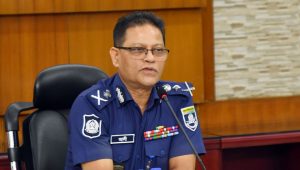
Mohammad Akhtar Hossain, deputy commissioner of Dhaka Metropolitan Police’s Media and Public Relations Division, told TIMES, “Different incidents may have different causes. However, the police are considering the possibility that a group is carrying out or attempting sabotage to create panic among the public.”
He said police were also examining whether anyone was trying to create such a situation by using others without being physically present at the scenes. Police officers working in the field are coordinating with intelligence officials to uncover the circumstances behind the incidents, he added.