Police across the country are facing mounting pressure to prevent flash marches organised by the banned Awami League and its affiliated organisations.
In several cases, officers-in-charge (OCs) of police stations have been transferred after failing to prevent such gatherings.
The practice has caused unease within law enforcement agencies. Senior officers are putting pressure on their subordinates to protect their own positions, leaving frontline police personnel bearing the brunt. Many are working long shifts without adequate rest.
With ousted prime minister Sheikh Hasina announcing plans to return to Bangladesh in December, signs are emerging that the situation could turn volatile as early as November. Crude bomb explosions and incidents of buses being set on fire are being reported almost daily in different areas. Clashes with police and road blockades have also taken place.
Police officers have been attacked in several incidents, while police vehicles have also been set ablaze.

The Dhaka Metropolitan Police (DMP), Cumilla District Police and several other units have explicitly warned OCs that they will be transferred if flash marches by the banned organisation take place in their jurisdictions.
DMP’s Sher-e-Bangla Nagar police station OC Mohammad Monirul Islam was transferred to the Detective Branch’s Wari division on Monday. At the same time, Jatrabari police station OC Mohammad Raju was transferred to the DB’s Mirpur division.
The two officers faced disciplinary action after leaders, activists and supporters of the banned organisation staged several marches, including torchlight processions, in the areas under the two police stations over the past few days.




Police Inspector Rubel Hawlader of the Transnational Crime Division has been appointed the new OC of Jatrabari police station, while Muhammad Shahidul Islam, an inspector (investigation) at Dakshinkhan police station, has been made the new OC of Sher-e-Bangla Nagar police station.
Gulshan police station OC Mohammad Daud Hossain has also been transferred for the same reason.
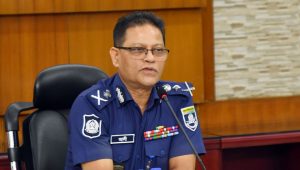
DMP Commissioner Mosleh Uddin Ahmed told TIMES: “The OC of any police station where a march by a banned organisation takes place is asked to explain the incident. Everyone was informed of this policy in advance and warned.”
After Cumilla District Police warned OCs, officers in charge of the district’s 18 police stations stepped up patrols, intelligence gathering and monitoring through their own sources.
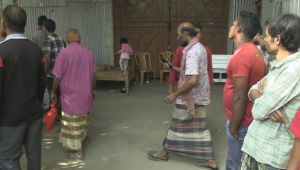
Speaking to TIMES, several OCs expressed frustration over the directive. They said each police station’s jurisdiction included numerous narrow lanes and alleys in addition to main roads. Flash marches could suddenly take place in any of these locations and then be circulated on social media. They questioned whether preventing such spontaneous gatherings was realistically possible.
Muhammad Umar Faruq, chairman of the Department of Criminology and Police Science at Mawlana Bhashani Science and Technology University, said the directive was harmful to the police.
“There is no legal basis for such transfers, nor are they provided for in the rules. This is unprofessional conduct by the government,” he told TIMES.

He said the orders were politically motivated and would undermine police morale, create disorder and give criminals an opportunity to exploit the situation.
Several inspectors working in the DMP said police officers did not have fixed duty hours even under normal circumstances.
Meanwhile, garment workers have blocked roads, vandalised factories and set vehicles on fire in several areas, including Mirpur-Pallabi in Dhaka, Savar-Ashulia, Gazipur and Narayanganj. Police have had to pay additional attention to garment factories in industrial areas.
Their regular duties also include handling cases, conducting operations and patrols, responding to public complaints through the National Emergency Service 999 and providing VIP security in many locations. OCs are also being held responsible for intelligence failures.
Bangladesh Police Association President Inspector Kamrul Hasan Talukdar told TIMES: “Ongoing circumstances are being taken into account when OCs are transferred. Small-scale marches are taking place, but those involved are also being arrested. It is not the case that an OC will now be transferred every time a march takes place.”