


Israel’s 27 October election gave neither side a clear victory. Gadi Eisenkot’s opposition bloc secured 48 seats, while Arab-led parties won a record 19. Local media projected 53 seats for Likud and its allies, so no camp reached the 61 needed for a majority. Yet momentum has shifted. This week the Knesset voted 66-52 to elect Eisenkot’s ally Matan Kahana as speaker, and the bloc is already advancing bills to repeal the judicial overhaul and investigate 7 October.
Across Western capitals and Israeli liberal circles, the expectation is that Netanyahu’s exit will mean a gentler Israel. That expectation confuses style with substance. For Palestinians, the man who may replace Netanyahu is not a corrective to the logic of the last three years. He is one of its authors.
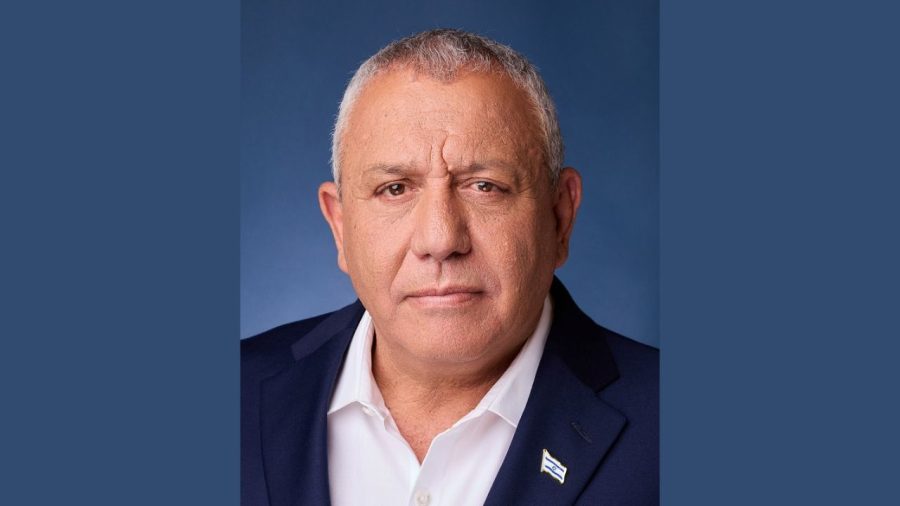
Eisenkot spent four decades in uniform. He rose through the Golani Brigade, commanded the Judea and Samaria Division during the Second Intifada, led Northern Command, and served as Chief of the General Staff from 2015 to 2019. He is a product of the security establishment, not a critic of it. His break with Netanyahu came in June 2024, when he left the war cabinet. His complaint was that Netanyahu let coalition survival override strategy and that the war had no political endgame. It was not that the war itself was wrong.
Eisenkot objects to how the war was run, not to the principle of overwhelming force.

In 2008, as head of Northern Command, Eisenkot articulated what became known as the Dahiya doctrine, named for the Beirut suburb flattened in 2006. Its premise is that any village from which fire is directed at Israel should expect disproportionate destruction, and that such villages be treated as military bases rather than civilian communities. He called it an authorized plan, not a recommendation.
Developed with strategist Gabriel Siboni, the doctrine rests on two ideas. Israel cannot sustain long wars of attrition, so it must end them fast with overwhelming firepower. And by making reconstruction ruinously expensive, it should make adversaries and their host populations think many times before provoking conflict.
Human rights organizations and legal scholars have long called this a violation of proportionality under international humanitarian law, and some describe its application as collective punishment. Yet it became IDF orthodoxy, guiding operations in Gaza in 2008–09, 2012 and 2014, and the devastation after 7 October. Eisenkot has never disavowed it. Recently, amid cross-border escalation, he said it had never been more relevant for Lebanon.




On the central Palestinian question, Eisenkot offers no opening. Like Netanyahu, he opposes an independent Palestinian state, seeing it as an unacceptable security risk after 7 October. He supports continued Israeli military control in the West Bank and the retention of existing settlement blocs.
His differences are real but narrow. He wants a postwar Gaza administration backed by moderate Arab states and reformed Palestinian technocrats, and he has pledged to rein in extremist settler violence, which he regards as a drain on the army and a strain on allies. Both are managerial fixes. Neither touches the underlying structure of occupation, and a better-managed occupation is still an occupation.
Eisenkot prefers a diplomatic arrangement pushing Hezbollah north of the Litani River, but only until diplomacy fails, at which point he has said the IDF must strike with uncompromising force. On Iran, he urged Netanyahu toward “restraint and prudence,” warning against operations driven by political survival. But the restraint is procedural. As Chief of Staff he oversaw the covert campaign of thousands of strikes on Iranian transfers and proxies across Syria. His condition for confrontation is coordination with Washington and readiness, not a rejection of war.
Even a reformist instinct would run into the Knesset. Eisenkot’s bloc is short of a majority and includes Naftali Bennett, who opposes Palestinian statehood and has advocated annexing large parts of the West Bank, and Avigdor Lieberman, a longtime advocate of aggressive deterrence. Yair Golan’s progressive voice is heavily outnumbered.

The Arab parties offer little leverage. Bennett and Lieberman refuse to sit with them, and the Joint List has said it does not intend to join an Eisenkot-led coalition, though it could support one from outside. That leaves Eisenkot courting ultra-Orthodox parties whose electorates have moved right. After three years of war, the national center of gravity has moved with them. Removing Netanyahu removes a polarizing figure, not a consensus around military dominance and territorial skepticism.
Under Eisenkot, Israel would likely become more predictable. Ties with Washington would be repaired, decisions would be less hostage to far-right ministers like Ben-Gvir and Smotrich, and judicial and institutional guardrails would be restored. Those are meaningful gains for Israeli democracy and for allied diplomacy.
They are not gains that Palestinians in Gaza or under occupation should expect to feel. A steadier government with better alliances may simply prosecute the same strategy more efficiently and with more international cover.
Eisenkot’s defenders say this overstates the continuity. Prioritizing hostage deals, planning for a postwar Gaza, and restraining settler violence could change daily realities on the ground, and a government that coordinates with Arab states and Washington may be harder to push into reckless escalation. Even critics concede that institutional accountability is no small thing. The open question is whether those improvements amount to a different future for Palestinians, or only a more disciplined version of the present.