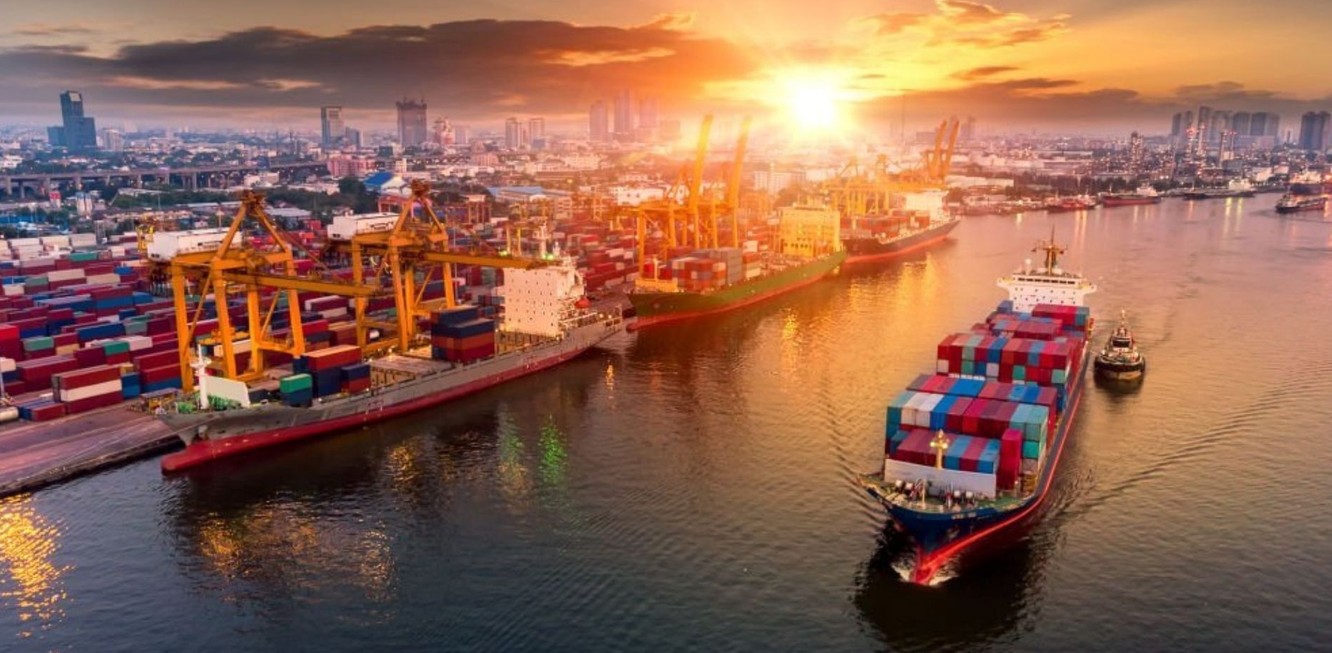



Bangladesh is a maritime country because of its geographical position and its historical and strategic importance. It borders the Bay of Bengal, has a long coastline, rich maritime resources, and seaports, and lies at the centre of major sea routes, providing significant geopolitical and economic opportunities. In addition, Bangladesh asserted its sovereignty over the sea in 2012 and 2014 by settling maritime boundary disputes with Myanmar and India, respectively. So a key question remains: Bangladesh has asserted its maritime rights; does it have a comprehensive maritime vision to translate those rights into national military power and prosperity? There is a serious national discussion about a comprehensive National Maritime Policy, and it’s not just about lifting the ban, or just about the ban. This should be a document that captures the country’s maritime aspirations. It has to be a strategic plan to operationalise Bangladesh’s vision of the sea, streamline institutions, set priorities, bring maritime interests into national development and security planning, and mobilise resources.
The Bay of Bengal is becoming a strategic hub of the Indo-Pacific. Its geopolitical significance has changed amid rivalry among key players, enhanced regional connectivity, growing maritime trade, energy exploration, and shifting security threats. China, India, the United States, and Japan have become increasingly interested in the area through investments in infrastructure, strategic cooperation, maritime cooperation, and connectivity programmes. The maritime future of Bangladesh is therefore not just about port development and shipping, but also linked to its social, cultural, and domestic development. It requires multi-sectoral security, trade, diplomacy, environmental protection, scientific, fisheries, and energy work, and technological development in the maritime sector. This could be provided in an all-encompassing National Maritime Policy.
The Bay of Bengal is turning into an economic and strategic contest arena. It has come to the fore in the new Indo-Pacific context, where deep-sea ports, connectivity projects, and energy infrastructure projects are underway, as well as energy corridors. Bangladesh’s location is a hub for multiple competing projects, such as China’s Belt and Road Initiative, India’s regional connectivity plans, and the Indo-Pacific Strategy championed by the United States. No, these developments should not be seen solely through the prism of rivalry between powers. Instead, it should draft a maritime policy that benefits the country while maintaining harmony and goodwill with all related parties. A well-crafted National Maritime Policy would help policymakers assess foreign investments, port development plans, security cooperation, and connectivity plans based on national interests, not short-term geopolitical considerations.
The blue economy has great development potential in Bangladesh. Fisheries, aquaculture, marine biotechnology, offshore energy, coastal tourism, shipbuilding, and maritime transport are among the sectors that may offer significant employment and investment opportunities for economic diversification. However, one has to avail these opportunities to realise a sector that may be appealing. In Bangladesh, an integrated strategy for sustainable resource exploration and management, investment, and environmental governance is required. For instance, marine fisheries need better support for scientific research, sustainable fishing, and monitoring and enforcement measures against Illegal, Unreported, and Unregulated (IUU) fishing. Exploration of offshore oil & gas requires technology, a clear regulatory regime, and environmental protection measures.

This policy is further exacerbated because of the onset of climate change. Major threats faced by the coastal communities of Bangladesh are sea level rise, coastal erosion, saltwater intrusion, and ecosystem destruction from cyclones. The mangrove forests of the Sundarbans are also an ecosystem of great value to the world and need to be conserved on an ongoing basis. A national development planning process must thus be more integrated with climate resilience, disaster preparedness, adaptation to coastal and marine environments, and protection. There can be no development slogan in the blue economy. It should be developed based on a sustainable maritime economic model that takes the interests of coastal communities and ecosystems while safeguarding and preserving the sea’s resources.
Another essential element of a nation’s maritime vision is maritime security. Bangladesh has many maritime traditional and non-traditional security challenges like maritime trafficking, piracy, illegal fishing, human trafficking, maritime terrorism, environmental crimes, etc., and threats to critical infrastructure in its maritime domain. Ports, offshore facilities, undersea communication cables, and maritime transport networks are also growing in significance and are susceptible. Both the Bangladesh Navy and the Bangladesh Coast Guard play a vital role in protecting Bangladesh’s interests at sea. However, it demands good coordination among the Navy, Coast Guard, port authorities, maritime administration, customs and law enforcement agencies, intelligence organisations, and relevant ministries, using modern technologies. Bangladesh must strengthen engagement with neighbouring countries, along with regional organisations such as BIMSTEC, IORA, and other relevant Indo-Pacific forums. The development of a National Maritime Policy for Bangladesh should therefore be based on an inclusive, evidence-based process, and it should be comprehensive.




The policy should develop a long-term national maritime vision and put it into concrete strategic goals. Firstly, the government should consider creating a national maritime coordination mechanism at the highest level, including all government ministries, defence and security institutions, port authorities, research institutions, and industry participants. Secondly, the policy should identify measurable elements of shipping, offshore energy, fisheries, marine infrastructure and port efficiency, marine research, and protection of the marine environment. It must also establish a realistic funding structure, such as by opening opportunities for public-private partnerships and responsible foreign investment. Thirdly, maritime education and research in Bangladesh need improvement. Universities, especially the International Relations, Maritime Affairs, Oceanography, Marine Sciences, and Environmental Studies departments, should be involved in the policy process. Fourthly, the policy needs to acknowledge the value of international maritime law, especially the United Nations Convention on the Law of the Sea (UNCLOS). Bangladesh must protect its sovereignty and jurisdiction in executing its international obligations. Lastly, a policy should include an implementation plan with short-, medium-, and long-term objectives, institutional responsibilities, financial commitments, and periodic reviews. It is not a national strategy if mechanisms for action do not accompany a vision.
Bangladesh is at a pivotal moment and needs to make decisions that are strategic and smart. Its coastal towns are the starting points for moving beyond defending maritime rights to effectively exercising them. However, if the country does not build the institutional capacity and direction to manage its maritime domain, its maritime potential will be underutilised. It should be viewed as a policy framework for implementing Bangladesh’s maritime vision, not another sectoral policy. It should connect with economic development and national security, diplomacy and regional cooperation, technological innovation and scientific research, resource utilisation and environmental protection.


Bangladesh can become a future opportunity, connecting and influencing the Bay of Bengal. If this future is not realised, it will result in the state’s lack of effort to develop its geographical and maritime resources. This will rely on the country’s capacity to formulate a vision and put it into practice through policy. The sea areas have now become part of the territory of the country Bangladesh. Bangladesh has been able to assert its rights in sea areas, and it has been successful.

The next step is to turn these rights into strategic influence, capabilities, and opportunity. It’s now time to move towards realising this vision of Bangladesh as a Maritime Country, including a comprehensive National Maritime Policy, so the seas can be protected and Bangladesh’s future secured.
The views expressed in this article are solely those of the author
The writer is a Professor, Department of International Relations, University of Chittagong, Bangladesh. Director, Hong Kong Research Center for Asian Studies-Bangladesh Center (RCASBC). Email: [email protected]