


The highest court in the world found Myanmar guilty of committing genocide along with some serious crimes against humanity as a ‘State’. This verdict set a new precedent in international legal jurisprudence. Until now, the outcome of all adjudicated cases of this nature found specific person/person’s or organisations’ liabilities and did not hold any ‘independent state’ as guilty of such crimes. Therefore, the long-term consequences of this verdict warrant active conversations among the stakeholders, victims, legal scholars and international agencies. One could argue that this verdict has paved the way to hold responsible other vicious actors of crime of same/ similar nature in the coming days, which is certainly a ray of light for the victims/aggrieved party.
From the perspective of the host nation of Rohingya refugees’, Bangladesh felt a solid relief for two specific reasons: first, the order passed by the highest court has a binding implication in international law and second, the international community would accept priority discussion about the ultimate solution of the crisis – Rohingyas must return to their homeland. Ironically, the post-judgment legal procedure remains ambiguous and also uncertain. As a matter of fact, the court that delivered the verdict doesn’t have any direct authority to compel the perpetrators to carry out the orders.
However, the verdict would pave the way to take the matter to the International Criminal Court (ICC), and also the parties could take the matter to the UNSC for proper implementation. Furthermore, a huge challenge remains in the UNSC as well, due to the ‘veto’ power of any 5 permanent states of the Security Council. Regardless of this complexity, the judgment has its organic and meaningful consequences more specifically ethical obligation on the international community to act accordingly for upholding the international law, procedure and world order.

The court has recognised the Rohingya as a ‘distinct ethnic group’ from the state of Rakhine, Myanmar, as the Ratio decidendi (essential legal finding) of the verdict. This particular finding eventually settled the longstanding misinterpretation by the Myanmar military Junta/ present government that the Rohingya are from Bangladesh. It is imperative to understand that there is no appellate forum to challenge this ruling; therefore, the facts, figures, orders and outcomes of the case stand as they are, without any scope to challenge the whole or part of the judgment. Any state or party or community who would be aggrieved or differ from the judgment will be held responsible for ‘non-compliance /defaulter /willful disobedience’ irrespective of its geographic, economic or legal positioning. All these explanations indicate an important objective view, that is, the judgment weighs heavily on moral and ethical obligation if not directly implementable under strict international law.
Bangladesh welcomes this verdict immediately. In contrast, the guilty/responsible party pronounced denial by officially refusing the highest court’s order, which made them a non-compliant party already. Now, any party that actively or indirectly engages, assist, or provides any military or similar deals with Myanmar would be considered the same as a non-compliant party to the highest court’s order. This makes the post-judgment scenario more complicated, because doing so, those nations or regional or international groups will risk being seriously in violation of international legal and ethical obligations. For instance, there was no immediate official reaction by the regional organisation ASEAN (the Association of Southeast Asian Nations). This suggests that they didn’t pay attention to the judgment; rather, they have deeply divided opinions within the bloc.


Quite similarly, India, as another immediate neighbour of the Myanmar and Bangladesh still playing diplomatic passive role which demonstrate its position towards international law and ethical stand with regards to the verdict of genocide. Admittedly, India’s security imperatives and strategic investment remain valid concerns for it; however, as a treaty signatory state and a ‘neighbourhood first policy’ issuer, it cannot overlook the international legal and ethical obligations for its own reputation as an important player of the Global South. On the other hand, the Western bloc is also divided, while it requires a strong response, except for the UK and the European Union, which demanded strict compliance. The division in accepting the very legal foundation created by all after the Second World War now seems weaker for reasons best known to them.
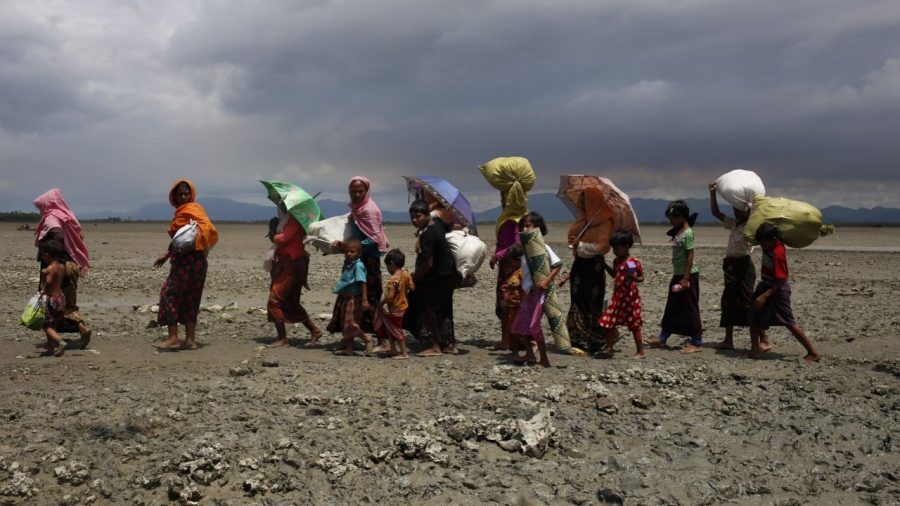
In the end, executing the ICJ’s judgment is an objective test of our collective integrity towards a settled principle of legal and ethical values. Whether we would keep on building a fair, reasonable and just world order or play a silent diplomatic or non-compliant role against a set legal framework is up to the international community. A child who was a victim of severe atrocity by the then Myanmar authority fled to neighbouring Bangladesh as refugee, is a teenager now, a legal right pronounced by the highest court of the world would give him a mere hope, but a safe repatriation to the land he belongs is a right that the world owes him. Their petition is not strange. Major powers and neighbouring states are equally encumbered with a binding legal and moral obligation to facilitate a reasonable process that this teenager – together with more than a million displaced Rohingya – can finally be able to reclaim their homeland in dignity and peace.


Finally, our gratitude to the Government of the Gambia, more specifically to its former Justice Minister Abubacarr Tambadou, who took the initiative to file the historical case The Gambia v. Myanmar, ICJ Case No. 178. This act of benevolence and sincere commitment to international legal and ethical responsibility will be remembered and will inspire the future generation.

The views expressed in this article are solely those of the author
The writer is the General Secretary, Bangladesh Society of Legal Ethics, and Lawyer, Appellate Division, Bangladesh Supreme Court. Email: [email protected]