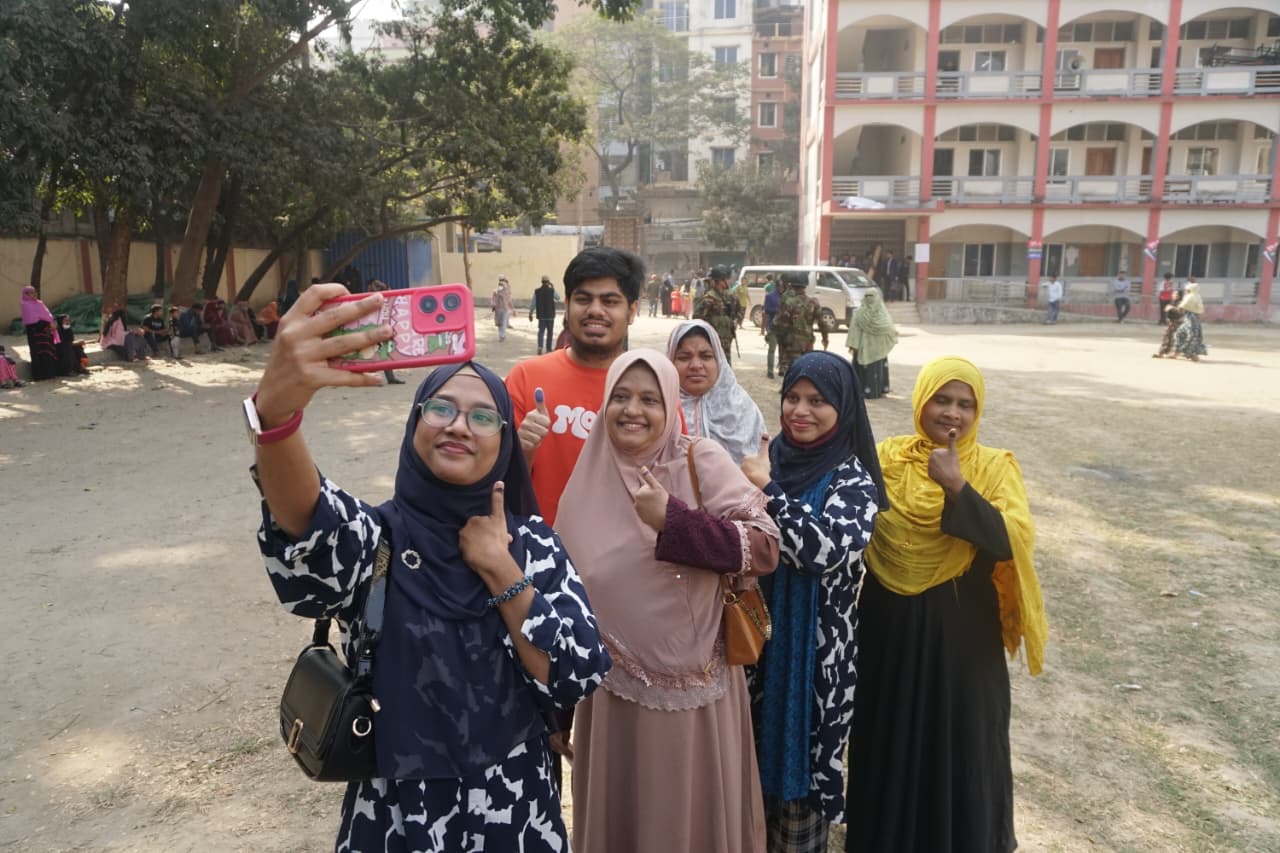

In the 13th national parliamentary election, the people of the country responded more to promises of family-centered economic security than to ideological issues, with the impact of economic and welfare promises particularly noticeable among female voters. While ideological promises also saw success, but only in specific regions.
This is according to a report published by research organisation INNOVISION, presented at a press conference held on Sunday at the BDBL building in the capital’s Karwan Bazar. Partner organisations Voice of Reform and BRAIN were involved with the survey that contributed to the report, which used a random sampling method on 5,147 voters across 64 districts.
Additionally, 19.5 percent of people, the highest proportion, wanted to see an improvement in the law-and-order situation from the elected government. Controlling the prices of essential commodities was mentioned by 18.3 percent, the second-highest, followed by employment creation at 13.4 percent.
In the last survey report published by the organisation in January, results indicated that BNP was ahead of Jamaat by 21.80 percent of the vote. The election results, however, showed that the Jamaat alliance received 17 percent fewer votes.

The difference can be attributed to the changes brought about by alliances formed among parties.
According to the survey data, before the election, 63 percent of BNP supporters said that the “Family Card”, 57 percent said the “Health Card”, and 66 percent said that promises of “road development” would play a role in their decision.




52 percent of female voters believed the “Family Card” would play a major role in their decision. On the other hand, 65 percent of Jamaat supporters considered Islamic governance, 43 percent considered the trial of the Awami League, and 28 percent considered anti-India politics as major issues.
It was also informed at the press conference that the BNP’s economic promises, in addition to their ability to draw a significant portion of Awami League voters, played an important role behind their major success.
The survey showed that about 33 percent of Awami League voters and 13 percent of Jamaat alliance voters said they leaned towards the BNP in the election. The remaining 41 percent of voters were undecided, and 11 percent of voters did not express any opinion.
Managing Director of INNOVISION Mohammad Rubaiyat Sarwar said, “The educated, working-class population and the younger generation have become more aware. A reflection of this was seen in their voting this time.”
Executive Director of BRAIN Shafiqur Rahman informed that a significant change has occurred in the psychology of voters in constituencies under city corporations across the country, including Dhaka. Previously, if a party won a landslide victory, they would win by large margins in all parts of the country. But this time, there has been an exception.
Although BNP won a landslide victory, the margin of votes in urban areas has narrowed significantly. Even new parties like Jamaat and NCP achieved significant success in urban constituencies this time.