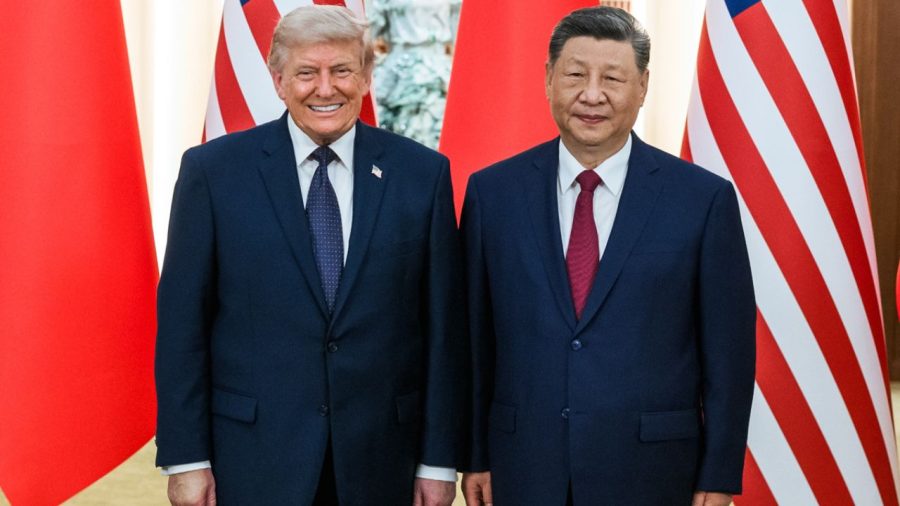



When Donald Trump, Xi Jinping and Vladimir Putin meet in Shenzhen, the format will matter more than anything they sign. Reuters, relaying a New York Post report, says the trilateral is planned for Thursday on the sidelines of the APEC summit. It would be the first trilateral summit of the three leaders. Expect modest outcomes rather than a new order: a commitment to keep talking about arms control, and perhaps a channel for AI incidents. The useful question for policymakers is whether the leaders produce something small enough to agree and concrete enough to check.
Nuclear arms control is the headline issue and the least tractable. New START expired in February, leaving the United States and Russia without legally binding strategic caps for the first time in more than fifty years. Washington wants any successor framework to cover China, whose arsenal Pentagon estimates put above 600 warheads. That is far fewer than the US or Russian stockpiles, which is why Beijing resists binding limits.
Even the agenda is contested. The Financial Times reported that agreeing on an agenda was a main obstacle, with Trump wanting to focus on nuclear arms control. Analysts describe the meeting as a coup for Moscow, while Beijing appears lukewarm. A host that is lukewarm about the format is unlikely to sign away much inside it.

The most plausible deliverable is also the least glamorous. Treasury Secretary Scott Bessent says the US has proposed a notification mechanism so the world’s two biggest AI powers can alert each other to serious incidents. Further US-China AI talks are due in Shenzhen. Experts do not expect technological cooperation or comprehensive AI governance, but think an incident notification mechanism is possible.
The design is attractive because it asks little. One proposal stresses that the channel would be lightweight and voluntary, closer to notification than to regulatory reporting. A Tsinghua researcher says it could become the first US-China mechanism aimed specifically at AI crisis management.



The caveats matter. A Xinhua readout acknowledged that AI was discussed but did not describe agreement on a notification system, and Greer said chip export controls are not part of these talks. Reporting has not established the incident thresholds, participating agencies or required information exchange. An announcement at Shenzhen would be a start, not proof of trust.
Washington arrives with a fuel problem. On Oct. 9, Treasury issued a waiver allowing Russian diesel to be sold and imported, including into the US, until April 7, 2027. The relief looks limited. Goldman estimated early shipments would lower wholesale diesel prices by only $1–$2 a barrel. Experts expect banks to be reluctant to finance deals, and see legal questions about whether the waiver is enough. Democratic lawmakers have accused Trump of easing pressure on Russia.
For Moscow, that is sanctions relief without a visible concession. For Washington, it suggests the summit opens with energy costs shaping its posture, not strength. Brent was about $108 a barrel in mid-October.
This is my judgment, not reporting. Likely outcomes are a pledge to continue arms control discussions and an announced AI dialogue or incident channel. Possible outcomes include a joint statement on nuclear risk or crisis communication. Unlikely outcomes are a binding trilateral arms limit or a Ukraine settlement. If the summit delivers only the first group, it should be judged as a success of process, not of substance.

SCMP notes that trilateral talks would signal that Russia’s isolation is ending, but could leave US allies in strategic limbo. The “Yalta 2.0” label is imperfect, since Washington has said Ukraine talks run on a separate track. But the perception of great powers bargaining over others’ security can do damage regardless of substance. European and Indo-Pacific governments should seek early, detailed readouts and keep their own channels open with both Washington and Beijing.
Four markers will show whether Shenzhen delivered substance or only spectacle. The first is whether the trilateral happens at all or collapses into separate bilateral meetings. The second is whether the readouts commit to arms control talks with dates or working groups attached, rather than a vague promise to keep discussing. The third is whether Beijing publicly endorses an AI incident channel instead of merely acknowledging that AI was discussed. The fourth is whether the Trump–Kim meeting that some outlets have floated materializes: some reports suggest Trump may seek one at the summit.