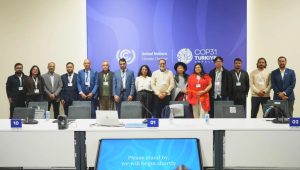
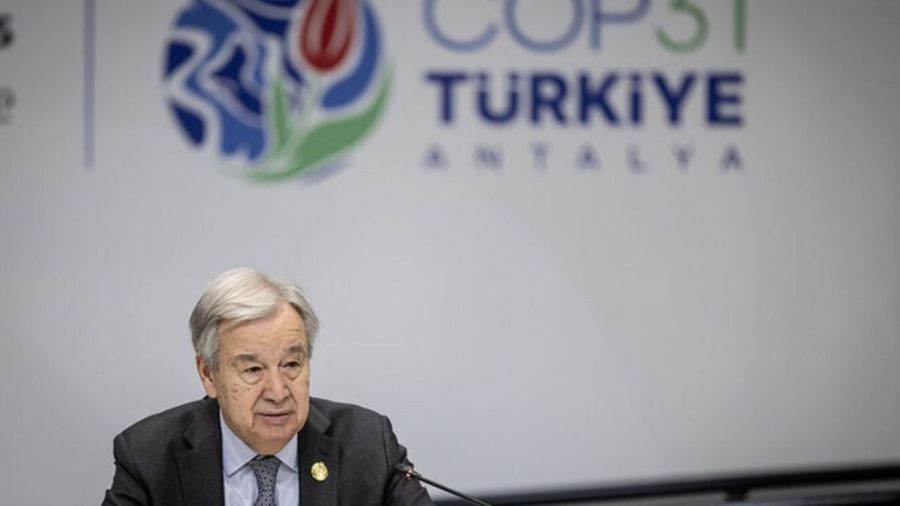



Enough of posturing, platitudes and rhetoric – that seemed to be the motivating line when UN Secretary-General Antonio Guterres faced the media, reportedly for the final time at COP31 in Turkey.
Dismissing the applause before speaking, a sombre Guterres, did not beat about the bush.
The climate crisis is spinning dangerously out of control, he observed, sounding the caution: “more needs to be done on all fronts by countries to contain it.”
My message as I leave Antalya is simple: Face the facts. Follow the science. Choose the future; and never give up, said the UN’s top boss.
Guterres also said unequivocally that peace cannot be built on a burning planet and a better future cannot be promised to the young of today when the natural systems on which their future depended are being destroyed.

The word ‘war’ was not directly used which is a bit of a shame because many of the climate related aberrations are triggered and exacerbated by conflict.
Wars destroy nature, create obstacles in our effort to have a united, global drive to bring down temperature, unceremoniously brushing aside the importance of clean energy, triggering displacement of millions and turning international summits on climate change into discourse-based charades. If we recall Greta Thunberg’s usage of ‘blah, blah, blah’ in 2021 at the Youth4Climate summit.
At the COP 31, representatives of nations engaged in protracted conflict were present but the word ‘war’ was not directly used with the absence of a clear narrative condemning ongoing conflicts.


Eminent climate activist Thunberg, lashed out at developed nations lamenting that the governments of rich nations were not taking the crisis seriously, adding with her usual vehemence: “the planet is not dying, it is being killed and we know by who.”
The latest reports from Climate Action Tracker (CAT), released to coincide with the COP31, warned that collective climate action had stalled for the fifth consecutive year.
The report, however, lauded China’s rapid electrification drive, India’s deployment of renewables at a record pace plus the global increase in the usage of electric vehicles.
The rate of decrease in the usage of fossil fuels is still slow the report stated, adding that fossil fuel based industries are the major causes for global warming.
Evident from all climate related seminars and summits is the fact that those who are the least responsible for global warming and the fallout of climate change are the ones facing the worst scenarios.

This is where adaptation finance becomes crucial.
PM Tarique Rahman, during his address at the summit, highlighted among other issues, the importance of adaptation finance, stressing on the need for vulnerable nations to have easy access to climate friendly technology.
Regrettably, the reality of climate finance is not that encouraging, because at the ongoing summit, leaders from low-income and island nations pointed to the slow application process for climate financing, alluding to Nepal, which reportedly waited seven years for Green Climate Fund approval.
With several climate activists and the UN secretary general sounding a tone of consternation, how optimistic should the general people be about the dedication of big nations to tackle the repercussions of climate change?
Realistically speaking, developing nations, in addition to keeping up their demand for assistance in finance and technology, should also adopt their own clean energy and green initiatives through ramping up solar usage, promoting sales of electric vehicles, developing wind power facilities and, at the very individual level, encourage a reduction of reliance on fossil fuels.