The US Supreme Court on Wednesday delivered a 6-3 ruling that curtails a central provision of the 1965 Voting Rights Act (VRA), with legal experts warning the decision could make it significantly harder for minority voters to challenge electoral maps as discriminatory, reports Reuters.
The ruling, driven by the court’s conservative majority under Chief Justice John Roberts, comes months before congressional elections in November and blocks a Louisiana electoral map that had created a second Black-majority US House district.
The Voting Rights Act, long considered a cornerstone of the civil rights movement, has steadily lost force under the Roberts-led court, scholars said. Wednesday’s decision focuses on Section 2 of the law, which had allowed plaintiffs to challenge voting rules and district maps that disproportionately harmed minority voters.
Experts said the judgment effectively reshapes how Section 2 operates, narrowing its scope and raising the bar for legal challenges. It shifts the emphasis towards proving intentional discrimination, rather than relying on the “results test” that had been central to cases for decades.
“The metaphor is a wrecking ball,” said Rick Hasen, an election law expert at the University of California, Los Angeles. “There are still parts of the VRA that are operative, but the two main pillars are now virtually dead letters.”

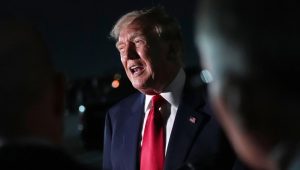
President Donald Trump welcomed the ruling and suggested Republican-led states could revisit and redraw electoral maps in response.
Supporters of the decision argued it reinforces constitutional principles. John Yoo, a former Justice Department lawyer under President George W. Bush, said the ruling “continues the court’s campaign to ensure that the government obeys a color-blind Constitution.”
However, the court’s three liberal justices sharply disagreed. Justice Elena Kagan, writing in dissent and joined by her colleagues, described the ruling as the “latest chapter in the majority’s now-completed demolition of the Voting Rights Act.”
Kagan linked the decision to earlier rulings that weakened the law, including a 2021 judgment upholding Republican-backed voting measures in Arizona that a lower court had found disproportionately affected Black, Latino and Native American voters.




She also pointed to the court’s 2013 decision in Shelby County v. Holder, authored by Roberts, which invalidated a key part of Section 5 of the VRA. That provision had required jurisdictions with a history of racial discrimination to obtain federal approval before changing voting laws.
The Voting Rights Act was enacted after the 1965 “Bloody Sunday” march in Selma, Alabama, where peaceful demonstrators were attacked by state troopers.
Days later, President Lyndon Johnson urged Congress to act, leading to legislation banning discriminatory practices such as literacy tests and poll taxes.
Section 5 established a “preclearance” system for certain states and localities, while Section 2 — amended in 1982 — allowed challenges to voting rules that diluted minority voting power, even without direct evidence of discriminatory intent.
For more than 40 years, courts applied the results test under Section 2, enabling plaintiffs to succeed by demonstrating discriminatory impact.
Wednesday’s ruling, authored by Justice Samuel Alito and joined by Roberts and four other conservative justices, said Section 2 must align with the Constitution’s 15th Amendment, which prohibits intentional racial discrimination in voting.
Alito wrote that interpreting Section 2 to require a specific number of majority-minority districts would go beyond what the amendment guarantees.
Legal scholars said the shift could have far-reaching consequences. Harvard Law School Professor Nicholas Stephanopoulos said the results test is now “effectively dead.”
“It is there in theory but now impossible to satisfy in fact,” he said.
Activists expressed concern about the broader implications. Press Robinson, one of the Louisiana residents involved in the case, said the ruling could reshape representation nationwide and weaken minority political influence.
He warned the effects could be felt across all levels of government and feared a rollback of progress made since the civil rights era.
The decision adds to a series of rulings over the past decade that critics say have steadily eroded protections under the Voting Rights Act, leaving its remaining provisions significantly constrained.