





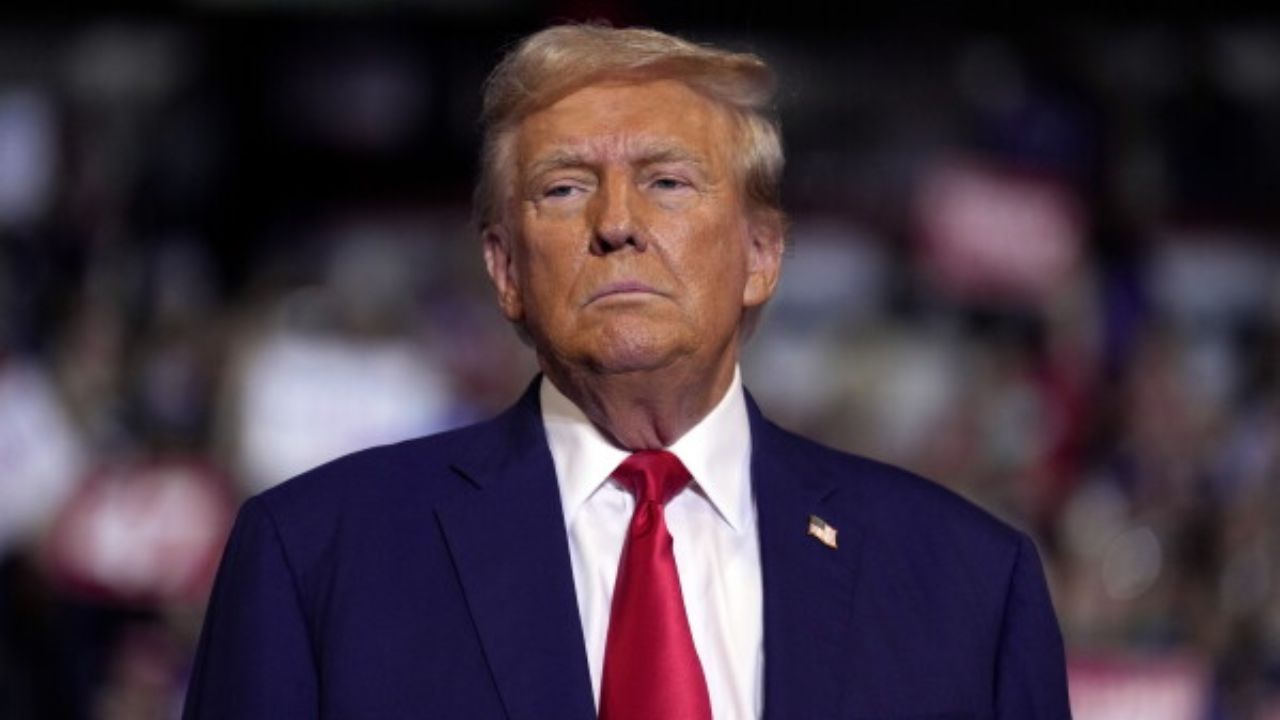
US President Donald Trump has signed an executive order renaming Lake Ontario, which is shared by the United States and Canada, as “Lake America”, amid a spiralling trade war between the two countries.
At a news conference in the Oval Office on Thursday, Trump signed the order and said the name change would take effect “immediately”, reports Al jazeera.
Asked what message he intended to send to Canada through the renaming, Trump criticised the country’s trade relationship with the US, claiming Canada “has been ripping us off for a long time”.
“Well, they haven’t treated us well. The Canadian officials have treated us very badly. They’re nasty people,” Trump told reporters.
“So the lake change- the Lake of America- was something I’ve been thinking about for a long time, actually.”
Canadian Prime Minister Mark Carney, who is involved in a renewed trade dispute with the US, dismissed the order in a post on X.
“We know that America is changing. Their trading relationships, their foreign policies, their national monuments, their hydronyms,” Carney wrote. “Canadians also know that naming reality means calling it Lake Ontario – then, now and always.”
Trump’s order came days after negotiations between the two countries broke down, just hours before an August 22 deadline to avoid 50% tariffs on $20 billion worth of Canadian goods.
Canada responded with retaliatory measures, imposing taxes on about 700 US products worth roughly the same amount.
Thursday’s order is not the first time Trump has renamed a geographical feature since beginning his second term.
After returning to the White House in January 2025, Trump signed an executive order renaming the “Gulf of Mexico” as the “Gulf of America”.
In that order, Trump said the gulf “has long been an integral asset to our once burgeoning Nation and has remained an indelible part of America”.
However, cartographers and governments have used the name “Gulf of Mexico” for nearly 500 years, long before the United States became a country.
Despite sharing its name with Canada’s most populous province, Lake Ontario takes its official designation from the Huron Indigenous people’s word “oniatari”, meaning “lake of shining waters”. The province, founded in 1867, took its name from the lake.
In the same 2025 order that renamed the Gulf of Mexico, Trump also reversed former President Barack Obama’s decision to change the federal name of Alaska’s Mount McKinley to Denali, the name historically used by Indigenous people in the area for North America’s highest peak.
Trump said he restored the mountain’s former name to honour the 25th US president, William McKinley.
Critics of Trump’s renaming policy, including some members of his own Republican Party, condemned Thursday’s order.
“With all the challenges facing our country, this is what the President chooses to spend his time doing today and communicating to the American people and the rest of the world,” former New Jersey Governor Chris Christie wrote on X. “Childish. Completely childish.”
Trump’s former deputy press secretary Sarah Matthews was more blunt.
“I bet this goes so f***ing hard if you’re stupid,” Matthews wrote.
Despite the criticism, Thursday’s order is largely symbolic and does not require Canada to recognise the new name. It only changes how the US federal government refers to the lake.
Mexico, for example, does not recognise Trump’s “Gulf of America” rebranding, while many other countries and international organisations have also not adopted it. However, Alphabet, the technology giant behind Google Maps, implemented the change for users conducting searches within the US.
Trump’s renaming policy has also caused friction with news organisations. Last year, he sought to bar The Associated Press from certain White House events over its continued use of the term “Gulf of Mexico”.
During Thursday’s Oval Office signing, Trump hinted at possible America-themed name changes for other bodies of water bordering the US.
“We have a gulf and we have a lake. Now all we need is an ocean,” Trump said. “So maybe we’ll have to change the name of the Atlantic and or the Pacific. Maybe we’ll change them both.”


