






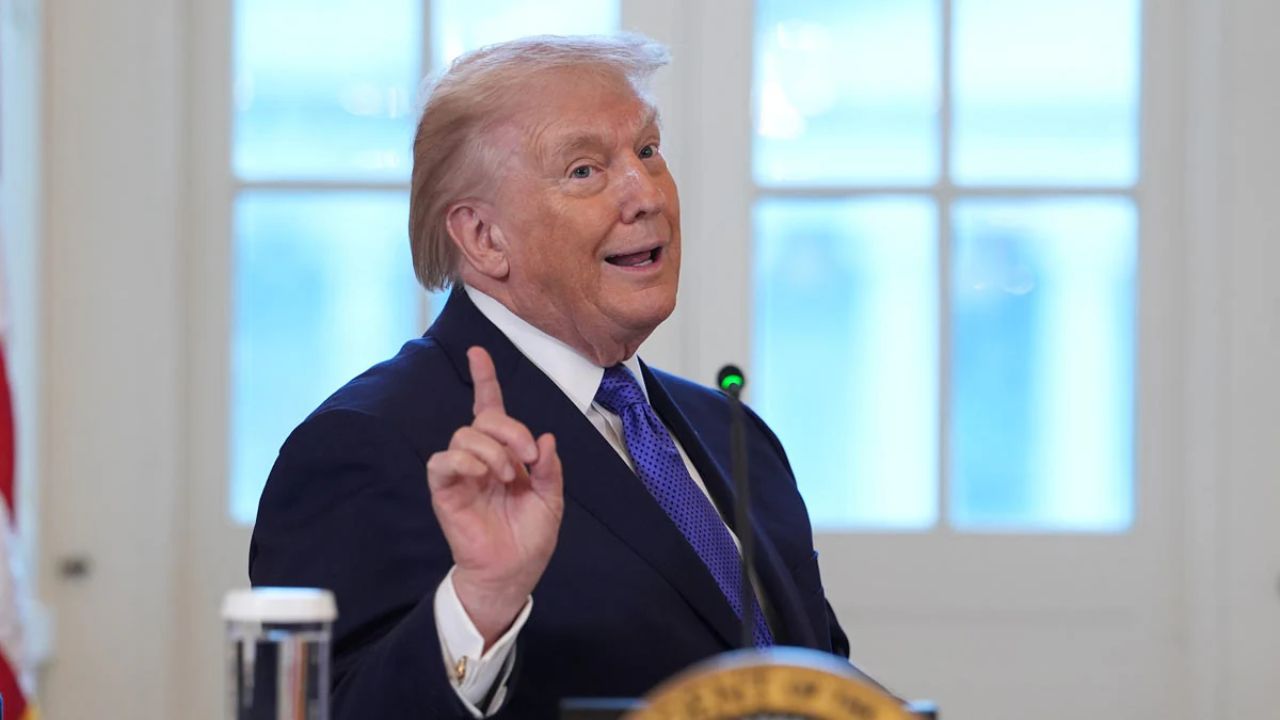
US President Donald Trump has signed a new executive decree on Thursday introducing a 15 per cent tariff on all imported items containing polysilicon, a pivotal raw material required for the assembly of microchips and solar panels.
The newly signed mandate, which also establishes floor prices for imports of the material and its derivatives, comes in the wake of an official federal probe into how foreign manufacturing of the substance impacts US national security, reports BBC.
This trade measure is designed to shield American producers from the rapid expansion of China’s semiconductor sector, which remains a primary point of geopolitical and economic contention between Washington and Beijing.
Reacting to the announcement, the Chinese embassy in Washington issued a sharp rebuke, accusing the US of “abusing state power” to target its commercial enterprises.
Embassy officials warned that the policy “seriously disrupts” bilateral trade and declared that Beijing would take necessary steps to defend its domestic firms, adding that protectionist strategies would fail to improve American competitiveness.
The executive action was taken after Trump approved a set of policy proposals submitted by US Commerce Secretary Howard Lutnick.
Scheduled to take effect in December, the new regulations will be accompanied by a government-backed incentive scheme aimed at revitalising domestic polysilicon manufacturing.
Trump pointed out that for decades, the US had permitted foreign enterprises to undermine domestic manufacturers within the polysilicon sector.
He highlighted that while the material is indispensable for advanced electronics and military hardware, overseas competition had caused the US share of worldwide polysilicon manufacturing to plummet from 50 per cent in 2005 to under 2 per cent by 2024.
Because China maintains a near-monopoly on the supply of this substance, the directive is expected to directly benefit the primary US-based producers of the material, namely Hemlock Semiconductor and Wacker Chemie.
The battle over microchip manufacturing is central to the ongoing technological race between the two superpowers to master artificial intelligence (AI).
While a broader trade dispute involving tit-for-tat tariffs had been paused since May 2025, analysts cited by the Chinese state-run outlet Global Times viewed this latest move as a clear escalation in Washington’s strategy to block Beijing from crucial tech supply networks.
The semiconductor tariff comes on the heels of previous US import barriers targeted at Chinese drones, humanoid robotics, and other high-tech goods.
In response, Beijing introduced its own retaliatory measures earlier this week, including stricter export regulations on drones and a national security investigation targeting imported copiers and printers.


