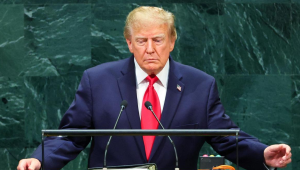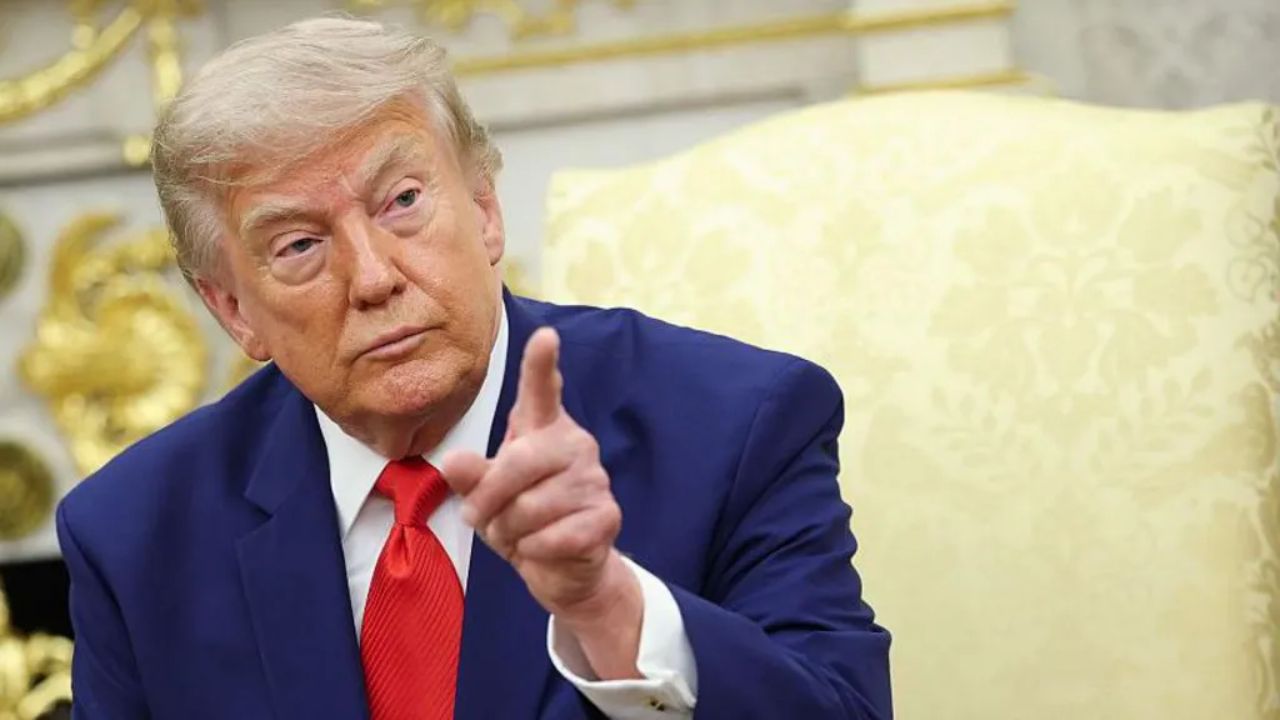



US President Donald Trump has demanded compensation from Iran for what he claimed were deaths and damage caused by Tehran, as talks over the reopening of the Strait of Hormuz continue.
Speaking to reporters at the White House on Monday, Trump said his administration would seek compensation covering “50 years” of damage caused by Iran, reports Al Jazeera.
His remarks came after Tehran made war reparations and an end to US sanctions conditions for reopening the strategic waterway.
Iran has refused to reopen the Strait of Hormuz unless Washington agrees to pay war reparations and lift sanctions.
About one-fifth of the world’s oil and liquefied natural gas passed through the strait before the US-Israel war on Iran.
Tehran’s demands broadly reflect the terms of an interim peace agreement signed in June. That agreement later collapsed amid a dispute over control of the waterway.
Iran and Oman are continuing talks on arrangements for the strait, which separates the two countries.
However, Trump’s demand for compensation could further complicate efforts to restore shipping through the vital maritime route.

“They asked for reparations, you might say. Or they asked for money for the damage that we’ve done. I said that’s a good idea,” Trump told reporters. “Well, we’re going to ask for money for the damage they’ve done over a 50-year period.”
Trump said the compensation would include deaths among US forces in the region as well as civilian protesters in Iran. He claimed 52,000 people had been killed in Iran over the past four months.
Tehran, however, says about 3,117 people died during antigovernment protests that swept across the country in January, before the US-Israel war began.
The US-based Human Rights Activists News Agency (HRANA) reported in February that about 7,000 people had died, including 6,500 protesters.
Banter
Trump also said Iran should compensate the families of 17 US sailors killed in an October 2000 attack on the USS Cole in Yemen. Al-Qaeda, rather than Iran, has been blamed for that attack.
“Also, with respect to the Iran negotiations, Iran should be responsible for the damages and death caused to the people of Lebanon, Syria, Yemen, and Gaza!” Trump wrote in a Truth Social post.
Since the US-Israel war on Iran began on 28 February, Trump has repeatedly shifted between threatening further escalation and suggesting that a peace agreement was close.
Last week, he threatened to “hit” Iran “very hard” before backing away and indicating that a deal could be near. Over the weekend, he said he was “low-keying” his approach, signalling that he might rely on economic pressure rather than launch additional military strikes.
Charles Kupchan, a former special assistant to former US President Barack Obama, described Trump’s compensation remarks as “banter”.
He said both Tehran and Washington had strong reasons to reach an agreement.
“Unfortunately, we are just looking at some back-and-forth banter here, where neither the Iranians nor the Trump administration is being serious,” he told Al Jazeera.
“Iran cannot survive if it won’t be able to export its oil”, he said, adding that Trump would not want to enter the US midterm elections with high petrol prices. Kupchan also pointed to pressure on the Pentagon following reports that US munitions stockpiles were running low.
Iran-Oman talks on Hormuz
Iran has said it is close to reaching a final agreement with Oman on new shipping lanes through the Strait of Hormuz.
However, Tehran has again stressed that Washington must meet its conditions, including ending military threats.
The strait has remained effectively blocked since the war began, contributing to higher oil prices and inflation.
Iranian Foreign Ministry spokesman Esmaeil Baghaei said on Monday that negotiations with Oman were “progressing smoothly and constructively”. He said the two sides had agreed on a map for a shipping route, although some technical issues remained unresolved.
Baghaei said the talks also addressed services that would normally require payment, including safe navigation, environmental protection, maritime services and efforts to combat crime.
He said continued US “hostile actions” in the Strait of Hormuz had made the passage unsafe. Tehran considers the US naval blockade of Iranian ports an “act of aggression”, he added.
US Central Command said on Monday that it had redirected 55 commercial vessels since reinstating the blockade in July and had “disabled” at least two.
Maritime intelligence firm Windward said the blockade had resulted in a “complete halt” to Iranian oil exports from Kharg Island in the Gulf.
Trump on Monday described the blockade as a “steel wall” and said “the only one that has control of the Strait of Hormuz right now is the United States Navy”. He also claimed that the waterway remained open and that US forces had cleared it of mines.
Shipping data firms, however, reported a sharp fall in traffic through the strait over the weekend. MarineTraffic said the number of crossings fell from 15 on Friday to 11 on Saturday and six on Sunday.
The data showed that 17 vessels used the Iran-designated route, while another 10 travelled along a route classified as “undetermined”.