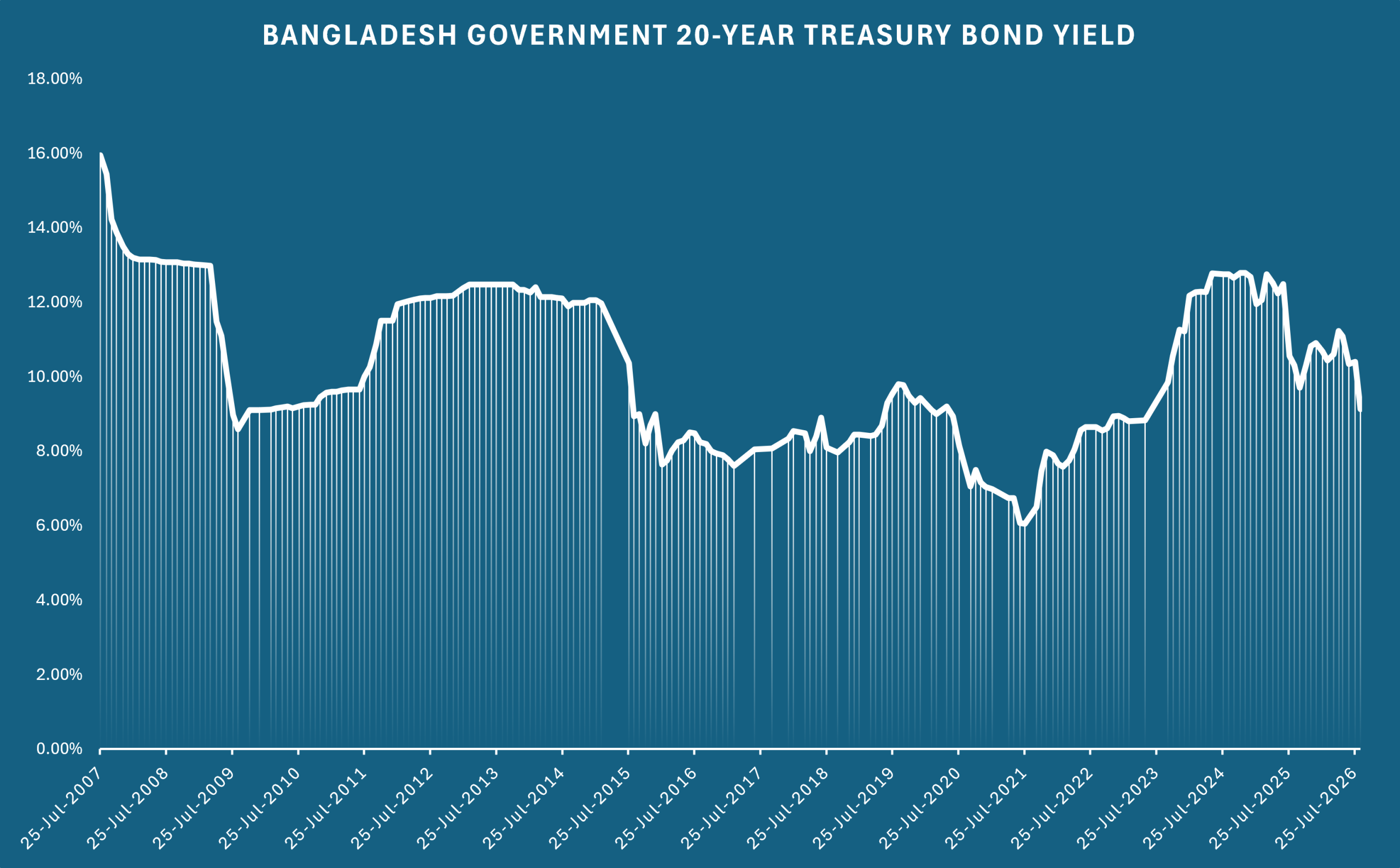
In a reversal of the sharp downtrend, the yields on treasury bills and bonds have rebounded to over 10%, after dipping to single digits last month.
Analysts have termed the rebound as temporary, attributing it to an upward market correction following a sharp decline of around 250 basis points in the July-September quarter.
The drop was linked to the central bank halting dollar purchases since mid-October, which led to a reduction in liquidity injection.
In the primary auction on Tuesday, the five-year treasury bond’s cut-off yield stood at 10.15%, up from 9.34% in September, which had fallen from 12.4% in June.
Shahidul Islam, Managing Director of VIPB Asset Management, and many other analysts believe that this surge is a temporary upswing after the sharp decline.

“Almost nothing rises or falls continuously. I expect all yields to fall below 9% within the next 4 or 5 months,” he said.
Chartered Financial Analyst Asif Khan, chairman of Edge Asset Management, pointed out that banks were not satisfied with the single-digit yields in September when Bangladesh Bank maintained its policy rate at 10%.
He believes this reluctance is driving yields back into double digits when he predicts that the upswing will be limited to yields around 10.5%.



Earlier this month, the yields on 91-day, 182-day, and 364-day treasury bills ranged from 10.04% to 10.3%, reflecting a rise of more than 50 basis points in just one month.
Yields started climbing in late October, following the central bank’s halt on dollar purchases, which coincided with a surge in import bill settlements for Ramadan commodities, said Md Sakib Chowdhury, Head of Wealth and Advisory Business and Research.
In October, an additional $400 million in import bills were settled.
Unlike the previous three months, when the central bank mopped up over a billion dollars from commercial banks in exchange for local currency, the halt of liquidity flow led to higher yields, said Chowdhury.
“November will continue to see this rising trend,” he said, expecting both short-term bills and long-term bonds to be issued at yields between 10% and 10.5% this month.
The 10, 15, and 20-year bonds are yet to be auctioned this month.
Chowdhury also noted that macroeconomic factors suggest that treasury yields will drop again once the central bank resumes dollar purchases.
Bangladesh Bank Governor Ahsan H Mansur has hinted at a policy rate cut early next year, with analysts expecting it to drop to 9.5%.
If the central bank’s inflation target of 7% or lower is met, rates may fall up to 8% by June, Chowdhury said.
He added that capable banks have idle liquidity, and without fresh demand for private sector loans, it will continue.