





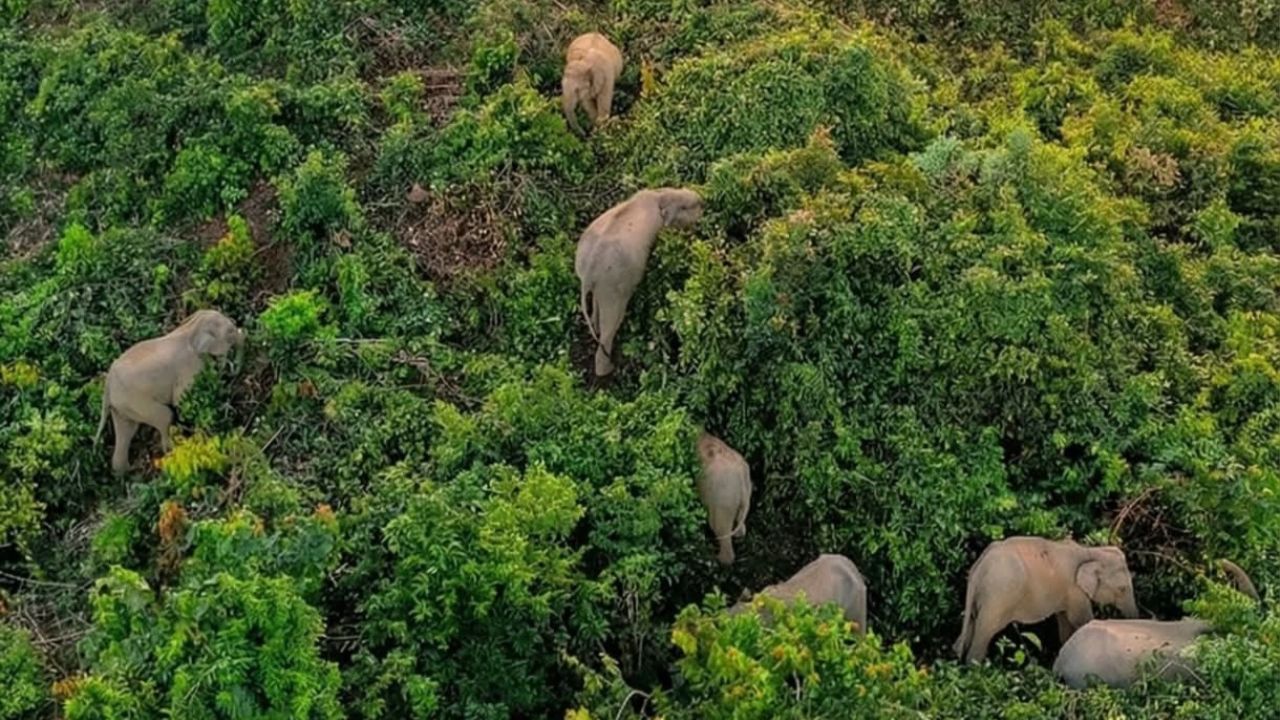
Driven from shrinking, sun-baked canopies by blinding hunger and parching thirst, Bangladesh’s endangered Asian elephants are straying from the forest shadows into rural villages.
What follows is a desperate, tragic tug-of-war for survival, with both sides paying with their lives.
Across the Cox’s Bazar-Teknaf forests and the rugged Garo Hills, the forest floor has become a battleground.
Forest Department figures reveal a stark toll over the past 12 years: at least 84 wild elephants and 57 people have perished in a relentless spiral of human-elephant conflict.
This crisis is fuelled by environmental decay and human ambition.
Deforestation, land grabs, hill cutting, and expanding towns continue to erode the wilderness.
Crucially, ancient migration corridors have been severed, whilst erratic weather patterns have reduced natural forest streams to dry, dusty beds.
In southmost of Cox’s Bazar, the massive Rohingya influx since 2017 brought vital sanctuary for refugees, but placed immense pressure on essential elephant habitat.
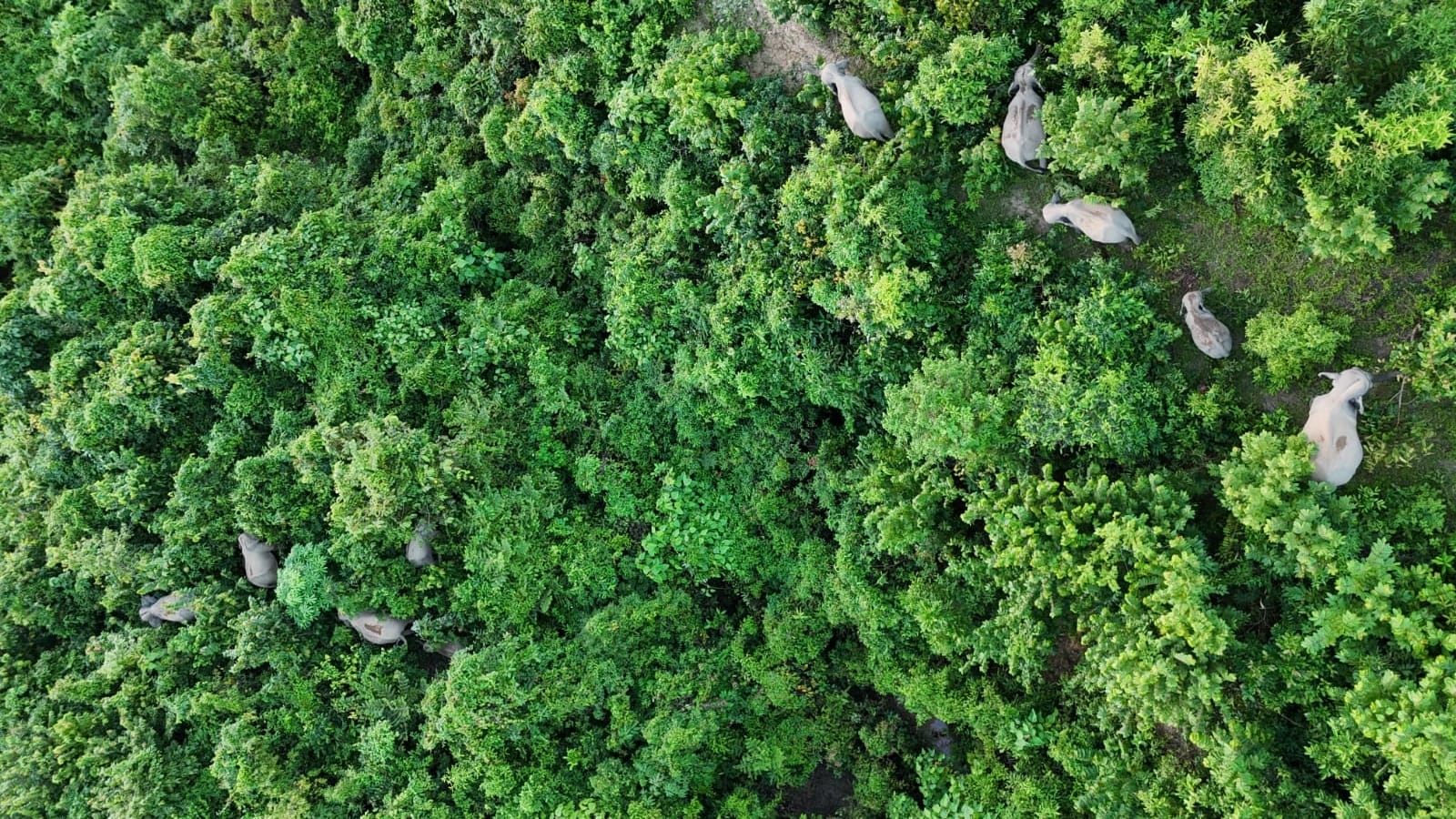
Vast swathes of woodland were cleared for camps, roads, and infrastructure, effectively walling off three historic migration routes.
In the Garo Hills in the north, relentless tree felling has wiped out the giants’ natural pantry – wild banana, bamboo, Indian gooseberry, haritaki, and bahera.
Starving and disoriented, the elephants wander down into croplands and hamlets. Terrified farmers, desperate to protect their livelihoods, retaliate with live electric wires, poisoned bait, and flaming torches.
It is a vicious cycle of fear and fury, where the price of the standoff is written in blood.
Silent corridors, severed lifelines
There was a time when the Ukhiya-Ghumdhum, Tulabagan-Panirchhara, and Naikhongchhari-Rajarkul corridors were open highways for elephants, allowing herds to roam freely from Myanmar towards Teknaf, Ukhiya, Ramu, and Chakaria.
Today, those ancient paths are blocked by refugee camps, illegal encroachments, tarmac roads, and concrete structures.
Cut off from their ancestral routes, bewildered elephants are forced to march straight through backyards, farmsteads, and schoolyards.
The consequences are devastating. Data from the Cox’s Bazar South Forest Division reveals that between December 2018 and July 2026, 25 wild elephants lost their lives across the region. Whilst 15 died of natural causes, disease, or old age, seven were killed by human hands, trapped by electric fences, felled by gunshots, or targeted.
Human life has hung in the balance, too: eight villagers were killed in elephant encounters between the 2020-21 and 2025-26 financial years.
The scale of space lost tells the story. Of the Cox’s Bazar South Forest Division’s 1,20,534 acres, roughly 8,000 acres accommodate 33 Rohingya camps, whilst a further 12,420 acres have been unlawfully occupied. Though
the Forest Department managed to reclaim over 4,800 acres by June, vital migration arteries remain dangerously constricted.
Now, an estimated 40 to 54 wild elephants remain trapped in the fragmented forest pockets of Ukhiya and Teknaf, clinging on for survival.
The bloodied border of the Garo Hills
If Cox’s Bazar is a crisis point, the Garo Hills and its surrounding border districts are a tragedy in full view.
Between 2014 and 2026, desperate raids and tragic encounters claimed 49 human lives across Sherpur, Mymensingh, Netrakona, and Jamalpur. Over that same period, 35 elephants died after stepping into live electric traps or consuming poisoned bait.
Sherpur bears the deepest scars, recording a harrowing 30 human deaths and 30 elephant fatalities.

The year 2015 stood out as the grimmest on record, with seven elephants dying across the region in a single twelve-month stretch.
Consider the needs of a giant: an adult elephant requires up to 270 kilograms of food and 300 litres of water every single day. Today’s depleted forests simply cannot meet that demand.
Currently, around 120 elephants are crammed into just 8,330 acres in the Balijuri Range, a population density forest officials quietly admit the land cannot support.
“They have no food or drinking water inside the forest,” says Ramzan Ali, a farmer from Balijuri. “Where else will they go? But people set wire traps and chase them with torches. Elephants die, and when they become enraged, people die too. We want an end to this bloody war.”
For local farmer Md Abdur Rashid, the fear is financial as much as physical. Herds often trample crops grown on heavy bank loans days before harvest. His plea is simple: safeguard farmers’ livelihoods, but feed and water the elephants in the hills so they never feel compelled to leave.
A changing climate, a deepening rift
The ecological collapse is being accelerated by shifting climate patterns.
Professor Mohammad Rokonuzzaman, a zoologist and former vice-chancellor of Jamalpur Science and Technology University, notes that erratic rainfall is fracturing the forest’s delicate food web. Without regular rains, native trees fail to regenerate and mountain streams vanish into dry earth. Prolonged dry spells stop forage plants from growing, leaving hungry herds with no choice but to march downhill.
It is a recurring scene. Recently, a herd of up to ten elephants wandered into the Dochhari area of the Ukhiya Range. Only the rapid intervention of a local Elephant Response Team managed to gently guide them back into the trees before disaster struck.
Forest officials warn that without structural intervention, these tense close calls will soon become daily emergencies.
‘The elephants are not to blame’
To those living on the forest fringe, the arrival of a herd brings pure terror, crushed timber, ruined harvests, and shattered lives. Yet beneath the anger lies a profound understanding: the animals are not the villains here.

Jaydango, a resident of the Garo Hills, remembers a gentler time. “There used to be wild banana trees, Indian gooseberry, haritaki, and bahera everywhere,” he recalls. “Back then, the elephants stayed up in the hills. Now they only come down when we plant our crops, and return when it’s time to harvest.”
Environmentalists agree: the animals are merely following memory-drawn paths carved out over centuries, routes that are now choked by human infrastructure.
HM Nazrul Islam, organising secretary of the Cox’s Bazar unit of Bangladesh Poribesh Andolon, insists that re-opening the region’s three main corridors is non-negotiable. He is calling for an immediate ban on lethal electric traps, boosted forest patrols, expanded response teams, protected water points, and the aggressive replanting of elephant-friendly vegetation.
A race against time
Authorities insist that the wheels are moving.
In the Balijuri Range, dedicated forage plantations covering 115 hectares are being planted to restore the elephants’ natural buffet. Nationally, a major conservation initiative plans to construct around 40 artificial lakes and reservoirs deep inside forest zones to quench the herds’ thirst during dry seasons. Down in Cox’s Bazar, the Forest Department is focusing on reclaiming illegally occupied land, dismantling unapproved structures, securing movement pathways, and training local communities in peaceful coexistence.
Yet, conservation experts offer a stark warning: piecemeal, band-aid projects will fail. The long-term survival of Bangladesh’s remaining wild elephants depends on linked, healthy forests, open corridors, protected water tables, and real financial support for the frontline farming communities bearing the brunt of the crisis.
Unless sweeping, permanent action is taken soon, this tragic conflict will continue to claim lives on both sides, not because humans and elephants are born enemies, but because two vulnerable worlds are being forced to fight for the exact same vanishing earth.



