




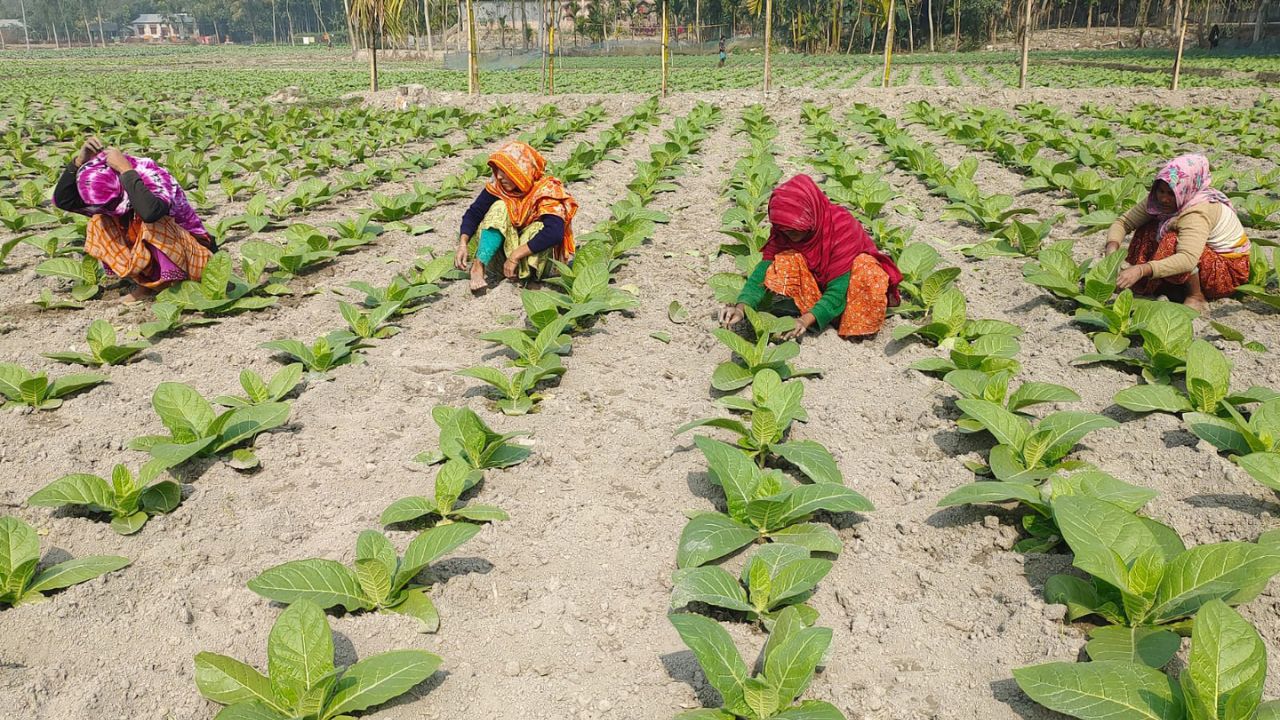
Once known as a breadbasket, Lalmonirhat district is now shrouded in the toxic veil of tobacco. The green fields of paddy, maize, potatoes, and vegetables have surrendered to the grey expanse of tobacco cultivation, pushing public health and the environment to the brink.
Lured by attractive incentives and logistical support from tobacco companies, farmers are increasingly turning to this hazardous crop. This shift is depleting soil fertility and exposing the general population, including children, to severe health risks.
According to the Department of Agricultural Extension (DAE), tobacco is being cultivated on 18,225 hectares of land across five upazilas this season, an increase of 2,650 hectares from the previous year.
However, private surveys indicate the actual figure is much higher, exceeding 22,000 to 24,000 hectares, with all 45 unions of the district now dominated by the lethal leaf.
On-site visits reveal that the banks of the Teesta, Dharla, Ratnai, and Sarnamati rivers, once verdant with vegetables, are now ruled by tobacco. The fertile silt deposits, which should host abundant crops, are instead being contaminated by toxic pesticides and chemicals from the fields, polluting river water. This is severely disrupting fish breeding and threatening aquatic biodiversity.
Local farmers say multinational and domestic companies, including British American Tobacco, Japan Tobacco, Abul Khayer Tobacco, and Akij Tobacco, are entangling them by providing free seeds, fertilisers, interest-free cash loans, and purchase guarantees at the start of the season.
Driven by capital-free business models and the promise of higher profits, farmers are diving headlong into this self-destructive cultivation.
This process of farming and leaf curing extensively employs the labor of women and tender-aged children, leading to a worrying decline in school attendance among children in the area.
Dr Abdul Hakim, civil surgeon from Lalmonirhat, warned that tobacco’s influence has multiplied the risks of respiratory complications, stroke, skin diseases, and cancer in the region. Children and pregnant women are at extreme health risk due to indirect exposure, he emphasised.
“We are discouraging farmers through meetings, seminars, and courtyard sessions,” said Dr Md Saikhul Arifin, deputy director of the DAE. “But, tempted by the loan facilities and higher profits offered by these companies, farmers are ignoring our advice and showing interest in tobacco cultivation.”
Experts warn that tobacco farming destroys soil fertility in the long term. They stress that immediate stringent policies and motivating farmers towards profitable alternative crops are crucial to protect environmental balance and ensure safe food.


