


In the early 1960s, a young cinema enthusiast would often tell his friends that one day Bangladesh would become an independent country, and when that day came, he would invite legendary filmmaker Ritwik Ghatak to make a film there.
They laughed when he said it.
The idea seemed impossible.
Bangladesh did not yet exist, Ghatak was already one of the most celebrated yet uncompromising filmmakers in Bengali cinema, and the young man making such bold declarations had never even met the director he admired so deeply.
His friends dismissed the dream as fantasy, jokingly calling him mad.
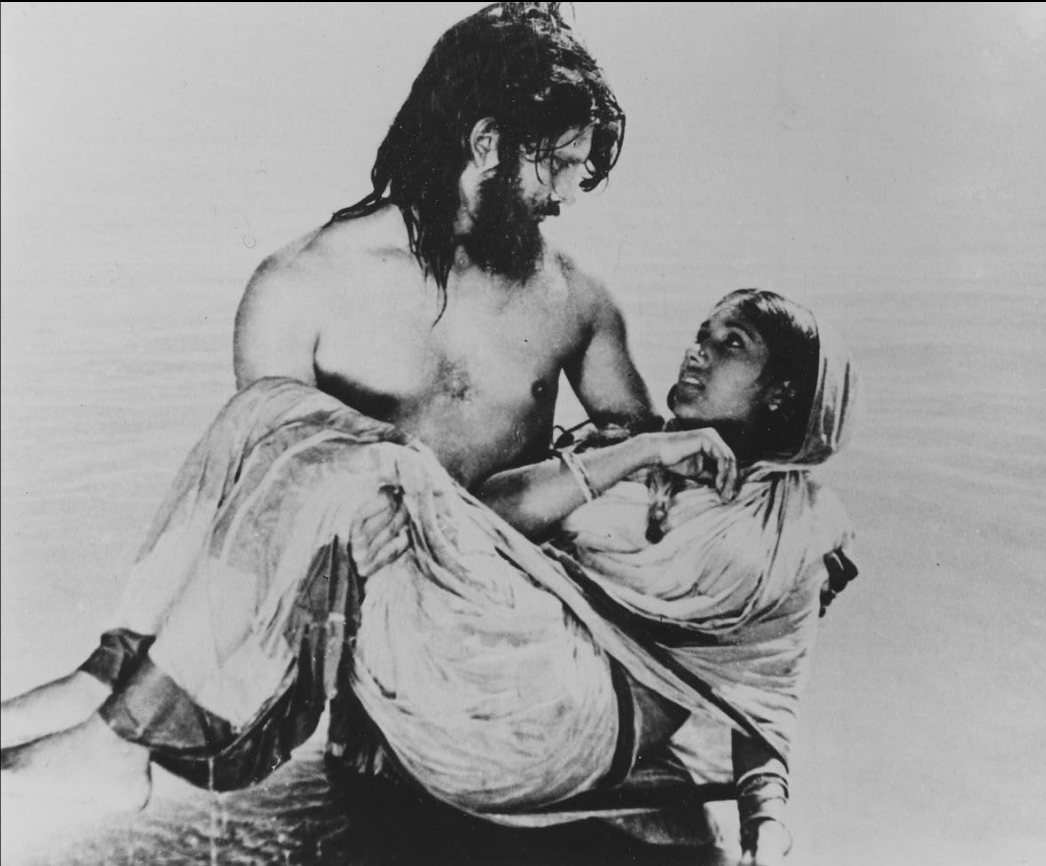
Nearly a decade later, that seemingly impossible promise would give birth to Titas Ekti Nadir Naam (A River Called Titas), a film now regarded as one of the greatest achievements in Bengali cinema.
More than five decades after its release, the film continues to inspire filmmakers and cinephiles around the world, although few know the remarkable story of how it came to be.
At the heart of that story is Habibur Rahman Khan, who was just 27 years old when production began.
Now 82, the veteran producer still recalls every stage of the extraordinary journey with remarkable clarity.
Speaking exclusively to TIMES of Bangladesh, Khan reflected on the dream that many thought impossible, his unforgettable collaboration with Ritwik Ghatak, and the making of a film that would eventually outlive its disappointing box-office run to become a landmark of world cinema.
For Khan, however, Titas Ekti Nadir Naam was never simply another film. It was the fulfilment of a promise he had made to himself years before Bangladesh won its independence.
Habibur Rahman Khan’s admiration for Ritwik Ghatak dates back to his school and college years in 1963 and 1964.
More than the filmmaker’s cinematic brilliance, it was Ghatak’s unwavering refusal to accept the Partition of Bengal that deeply resonated with the young Khan.
At the time, he was associated with a secret organisation known as Nucleus, whose members believed East Pakistan would one day emerge as an independent nation.
The conviction shaped his outlook and strengthened a dream that few around him took seriously.
Khan recalled with a smile. “They laughed at me. They used to call me mad.”
History, however, unfolded in ways even Khan could not have imagined.
The Liberation War had barely ended when he began searching for a way to contact the filmmaker whose work and ideals had inspired him for years.
The opportunity arrived in March or April 1972, during preparations for a programme organised by the Bangladesh Nationalist Cultural Organisation to mark Language Movement Day.
Khan was serving as the organisation’s treasurer, while legendary filmmaker Satyajit Ray attended the event as a guest.
Accompanying Ray was Barun Bakshi, who unexpectedly asked Khan whether he would be interested in producing a film with the acclaimed director.
For most aspiring producers, it would have been the opportunity of a lifetime.
Khan’s response surprised everyone.

“I told him that I certainly wanted to produce a film,” he recalled. “But not with Satyajit Ray. If I ever got the chance, I wanted to work with Ritwik Ghatak.”
It was a remarkable answer, particularly at a time when Satyajit Ray had already achieved international acclaim. Yet Khan never wavered from the dream he had nurtured for nearly a decade.
Not long afterwards, a telephone call arrived from Kolkata inviting him to meet Ghatak.
Without hesitation, Khan purchased an Air India ticket for just Tk120 and travelled to Kolkata, unaware that the journey would mark the beginning of one of the most significant chapters in Bangladesh’s cinematic history.
Working with Ritwik Ghatak
His first meeting with Ghatak took place at a house on Beniapukur Lane in Park Circus, where the filmmaker was recovering after falling ill.
Ironically, despite admiring him for years, Khan had never actually watched one of Ritwik Ghatak’s films.
The following day, Ghatak invited Khan to the miniature auditorium inside Kolkata’s Jyoti Cinema Hall to watch Subarnarekha, one of the director’s most celebrated works. For Khan, it was a transformative experience.
Seeing Subarnarekha on the big screen, seated beside its creator, left an indelible impression.
“As we came out of the theatre, I bowed before him,” Khan recalled. “I had never experienced cinema like that before.”
It was after the screening that Ghatak revealed the project he wanted to make next an adaptation of Adwaita Mallabarman’s acclaimed novel Titas Ekti Nadir Naam.
The novel’s film rights were held by a trustee board that included Satyajit Ray, who reportedly believed Ghatak was the most suitable filmmaker to bring the story to the screen. For Khan, the decision required no deliberation.
He secured the rights for Tk5,000, taking the first concrete step towards turning a long-held dream into reality.
Within weeks, preparations were underway. By May 1972, Ritwik Ghatak had arrived in newly independent Bangladesh, marking the beginning of one of the most ambitious film productions the country had ever witnessed.
Khan worked closely with the director during pre-production, introducing him to actors he believed would fit the various roles. While Khan made the initial suggestions, the final casting decisions rested entirely with Ghatak.
“He selected every actor himself,” Khan said.
The ensemble eventually included Kabari, Rozi Samad, Prabir Mitra, Golam Mustafa, Rowshan Jamil, Abul Hayat, Rani Sarkar and Sufia Rustam, bringing together some of the finest performers of the time.




Behind the camera, acclaimed cinematographer Baby Islam took charge of photography, while Bashir Hossain was entrusted with editing.
Months of planning culminated on 16 July 1972, when cameras finally rolled on the banks of the Bangshi River in Savar.
The opening day’s shoot featured Kabari and Rozi Samad before the production unit boarded a launch and travelled towards the Titas River region, where much of the film would be made.
A large riverside set was constructed at Gokarna Ghat beside the Titas, while additional sequences were filmed at the Bangladesh Film Development Corporation (BFDC) in Dhaka, Aricha Ghat, Bodar Bazar and several other locations across the country.
Unlike many productions of the era, Titas Ekti Nadir Naam did not attempt to compress nature into a studio schedule.
Ghatak wanted the river to become a living character in the film, allowing the changing landscape to shape the story itself.
To capture that authenticity, filming continued through both summer and the monsoon.
The production waited for changing skies, rising waters and shifting light rather than attempting to recreate them artificially.
What was initially expected to be a relatively straightforward shoot gradually evolved into an eight-to-nine-month production, an unusually long schedule for Bangladeshi cinema at the time.
For Khan, however, there was never any question of compromise.
Every additional day of filming brought the production closer to the vision Ghatak had imagined.
More than five decades later, Khan speaks of Ritwik Ghatak with the same admiration that first inspired him as a student.
Beyond his reputation as one of the greatest filmmakers in Bengali cinema, Khan remembers a director whose commitment to authenticity shaped every decision on the set.
“He knew exactly what he wanted,” Khan said. “Once he had made up his mind about a scene, he would not settle for anything less.”
Although Ghatak’s health remained fragile throughout much of the production, Khan said it rarely affected his dedication to the film.
The director continued working despite recurring illness, determined to complete what he believed would become one of his most important works.
“He wasn’t completely well during the shooting,” Khan recalled. “But he continued working. It was only towards the end that his condition became much worse.”
As Ghatak’s health deteriorated, Indian Prime Minister Indira Gandhi arranged a special helicopter to fly him back to India for treatment—a gesture that underscored the filmmaker’s stature on both sides of the border.
Khan also sought to correct what he describes as one of the most persistent misconceptions surrounding Titas Ekti Nadir Naam.
According to him, contrary to a widely circulated belief, Ghatak himself completed almost the entire editing of the film before leaving Bangladesh.
“People often say someone else edited the film after he left,” Khan said. “That isn’t true. He had already completed almost all of the editing. After recovering and returning to Dhaka, he made only a few minor changes.”
For Khan, the months spent working alongside Ghatak remain among the defining experiences of his life not simply because they produced a masterpiece, but because they fulfilled a promise that had once seemed impossible.
A masterpiece before its time
After nearly nine months of filming across rivers, villages and changing seasons, Titas Ekti Nadir Naam was finally ready for audiences.
The film premiered on 27 July 1973, opening simultaneously in six cinemas—four in Dhaka and two in Chattogram. For Khan, it marked the culmination of a journey that had begun years earlier with what many had dismissed as an impossible dream.
The reception, however, was far from what he had hoped.
Despite the scale of the release and the anticipation surrounding Ritwik Ghatak’s first film made in newly independent Bangladesh, audiences did not immediately embrace Titas Ekti Nadir Naam.
Within a week, cinemas began withdrawing the film because of poor commercial performance.
“It didn’t run,” Khan recalled matter-of-factly. “The halls started taking it down within a week.”
It was a painful outcome for a production that had demanded extraordinary commitment from everyone involved.
Yet Khan believes the film’s failure lay not in its quality but in the fact that it arrived before audiences were ready for it.
That was a view Ghatak himself shared.
“After the film was released, he told me we had made a film that was 20 years ahead of its time,” Khan said.
History would eventually prove the filmmaker right.
While the film struggled to find an audience in Bangladesh, its reputation steadily grew among critics, scholars and cinephiles.
Nearly two decades after its original release, Titas Ekti Nadir Naam finally reached Indian audiences when it was released in Kolkata on 11 May 1991, almost 18 years after its premiere in Bangladesh.
Today, the film is widely regarded as one of the defining works of Bengali cinema—a remarkable turnaround for a production that was once considered a commercial disappointment.
For Khan, producing Titas Ekti Nadir Naam was never a business venture.
Unlike most Bangladeshi productions of the early 1970s, the film was made without a fixed budget. Every expense was calculated only after production had been completed.
When the final accounts were prepared, the total cost stood at approximately Tk824,000 to Tk825,000, an extraordinary figure for the time.
To put that into perspective, Khan noted that a typical Bangladeshi feature film in the early 1970s could be made for between Tk100,000 and Tk125,000, while a bigha of land in Gulshan cost around Tk40,000.
The entire production was financed with money provided by Khan’s father.
“My father gave me the money,” he said. “But he never really supported my decision.”
Instead, it was his mother who became his greatest source of encouragement throughout the project.
“My mother always stood beside me,” Khan recalled.
He also laughed while remembering the role his wife played during those uncertain months.
“My wife had little choice but to support me as well.”
The financial return never matched the emotional investment.
Because the film disappeared from cinemas so quickly, Khan was unable to recover the money spent on its production. Invitations to international film festivals, including one in Russia, followed in later years, but they did little to offset the financial losses.
Looking back today, however, Khan says he has no regrets.
“I made the film because I loved Ritwik Ghatak.”
For him, that was reason enough.
When the world finally caught up
Although Titas Ekti Nadir Naam was overlooked by mainstream audiences upon its release, time transformed its legacy.
Over the decades, the film earned recognition as one of the finest achievements in Bengali cinema and secured a place among the greatest films in an international critics’ survey conducted by the British Film Institute (BFI).
Its influence gradually extended far beyond South Asia, introducing new generations of audiences to Ghatak’s deeply human portrayal of life along the river.
One of the film’s most significant moments of recognition came in 2010, when the World Cinema Foundation, established by acclaimed filmmaker Martin Scorsese, selected Titas Ekti Nadir Naam for restoration.
The painstaking restoration was carried out by Cineteca di Bologna and L’Immagine Ritrovata Laboratory in Italy, in collaboration with the Ritwik Memorial Trust and India’s National Film Archive.
Later that year, the restored version premiered in the prestigious Cannes Classics section of the Cannes Film Festival, introducing Ghatak’s masterpiece to yet another generation of international audiences.
For Khan, that global recognition became the greatest reward of his career.
“No financial success could ever equal the satisfaction of seeing the film receive this kind of appreciation,” he said.
Now living a quiet retired life in Gulshan, the veteran producer continues to follow the changing landscape of cinema with optimism.
While he acknowledges the challenges facing the industry, he believes technology has opened new possibilities for filmmakers, allowing films to reach audiences far beyond traditional cinema halls through television and streaming platforms.
Asked what advice he would offer young filmmakers, Khan’s answer reflected the same conviction that led him to pursue an impossible dream more than half a century ago.
“Before becoming a profession, filmmaking must become a passion. Only then can true success follow.”
Looking back, the memories of 1972 remain as vivid as ever.
The long days spent beside the rivers, the changing seasons that became part of the film itself, and the unwavering determination of a team driven not by commercial ambition but by an enduring belief in cinema.
Looking back today, Khan still smiles at the memory of those who once laughed at his dream.
Time, however, had the final word. Titas Ekti Nadir Naam outlived its disappointing box-office run to become one of the defining achievements of Bengali cinema.
More than five decades later, Khan sees that journey as its own reward.
The film no longer belongs only to those who made it.
It has become part of Bangladesh’s cultural heritage, a reminder that some dreams demand extraordinary courage, survive early rejection and, in time, find the recognition they always deserved.