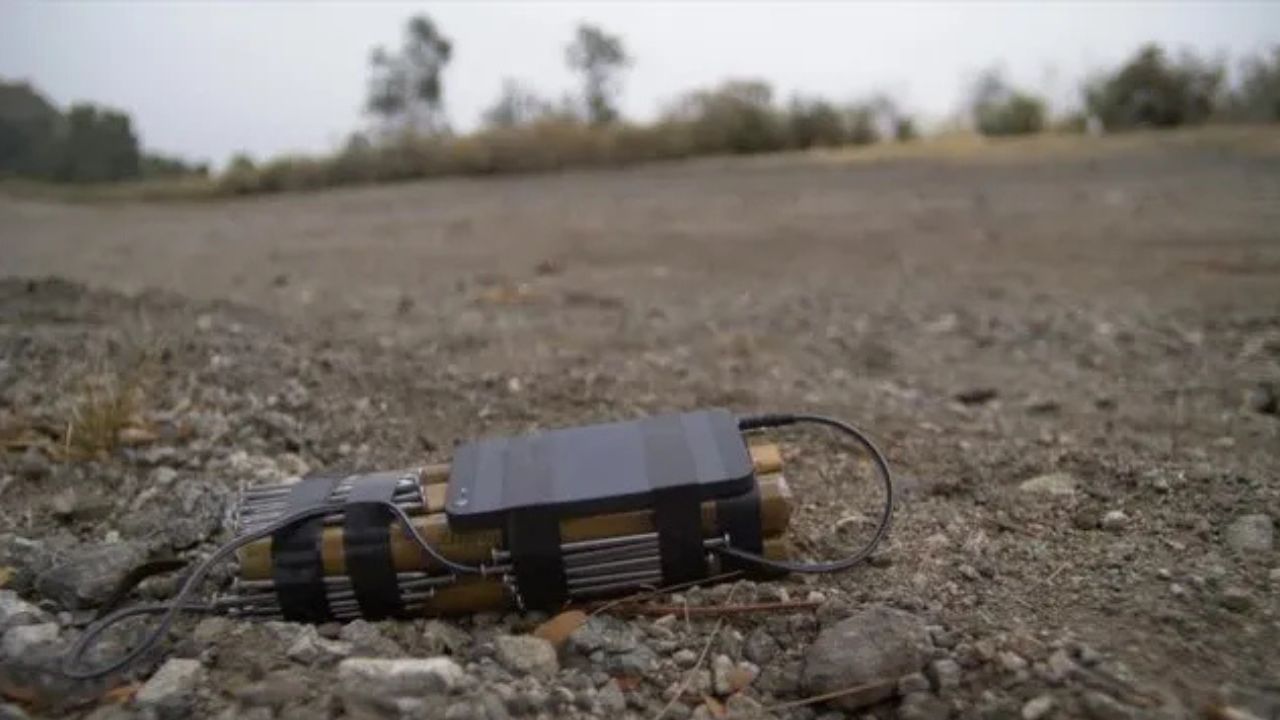



Security concerns have spiked across Dhaka following the discovery of a live IED disguised inside an umbrella beneath Motijheel metro station—the latest threat in a wave of attacks and explosive seizures sweeping the capital.
Police said the device was found inside an umbrella at around 7:30pm on Friday. The Dhaka Metropolitan Police bomb disposal unit later defused it.
A preliminary police investigation identified the bomb as an improvised explosive device, or IED, a type of explosive widely used by terrorist and insurgent groups around the world.
Investigators are trying to determine where the bomb came from, who placed it there and whether an extremist network was involved.
Niaz Mehdi, additional deputy commissioner of the DMP’s Media and Public Relations Division, told TIMES of Bangladesh that similar powerful bombs had been used by extremist organisations in different parts of the world.
“We are investigating the recovery of such a bomb in the capital with utmost importance,” he said. “Alongside the police, specialised intelligence units are working to identify its source.”
Several police officials said the organisational activities, field-level operations and online presence of extremist groups in Bangladesh were under regular surveillance.
They said technology-based monitoring had also been intensified alongside conventional intelligence surveillance to detect possible sabotage plans in advance.

What is an IED?
Improvised explosive devices are regarded as among the deadliest weapons used in modern terrorism and guerrilla warfare.
Insurgent groups extensively used IEDs during the Iraq War after 2003. Similar attacks were later reported in conflict zones including Afghanistan, Syria and Pakistan.
According to the United Nations and other international organisations, Tehrik-i-Taliban Pakistan, Islamic State, Al-Qaeda, the Taliban and several other extremist groups have used IEDs at different times.
Such explosives are commonly used to target security forces, military vehicles and public gatherings. They can be small, easy to conceal and relatively inexpensive to manufacture, but their destructive capacity can be extremely high.
Security agencies worldwide therefore consider IEDs a major security threat.




Previous explosions remain unresolved
On 27 December last year, a powerful explosion at Umm Al Qura International Madrasa in Hasnabad, South Keraniganj, shook the entire building.
The blast blew away the walls of two rooms, caused cracks in the roof and beams, and damaged nearby rooms. Four people, madrasa director Sheikh Al Amin, his wife and their two children, were injured.
Police recovered crude bombs, chemicals, flammable substances and a large quantity of bomb-making materials from the scene.
Three days earlier, on 24 December, Siam, an office assistant at a car showroom, was killed in a crude bomb explosion in New Escaton, Moghbazar.
Witnesses said he was standing beside the road when a powerful crude bomb thrown from the flyover struck him on the head. He died at the scene.
Over the past one and a half years, law enforcement agencies have recovered explosives, cocktails and bomb-making materials from different parts of the capital on several occasions.
Investigators believe the materials may have been stockpiled to carry out sabotage, spread panic or demonstrate organisational strength.
Police, however, have not disclosed the final findings of the investigations into those incidents.
Those concerned believe extremist groups attempted to regroup by taking advantage of the deterioration in law and order following the fall of the government in August 2024.
The escape of more than 700 militants from prisons also drew attention at the time. Several individuals were arrested during the same period over alleged links with foreign-based extremist organisations.
In July last year, law enforcement agencies arrested Shamin Mahfuz and Md Faisal over alleged links with the Pakistan-based Tehrik-i-Taliban Pakistan.
Police said Shamin Mahfuz faced several cases under the Explosives Act, Arms Act and Anti-Terrorism Act.
He was previously accused of being a leader of Jama’atul Mujahideen Bangladesh and later a key member of Jama’atul Ansar Fil Hindal Sharqiyya. However, he is legally innocent unless the allegations are proven in court.
On 21 December last year, Mullah Nur Ahmad Nur, also known as Mullah Jawandi, director general of the First Political Division of the Afghan Taliban government’s foreign ministry, visited Bangladesh.
During his nearly week-long stay, he visited several Qawmi madrasas in Dhaka and elsewhere and met several religious and political figures.
Intelligence officials said they had not been formally informed about his visit. The foreign ministry also said it had no information showing that he had officially notified the government before entering Bangladesh.
Towhidul Haque, assistant professor of sociology at the University of Dhaka and a crime expert, said the arrest of members of new extremist organisations, showdowns involving flags bearing the Kalima and repeated bomb recoveries were sending serious warning signals.
“The arrest of members of new extremist organisations, showdowns with flags bearing the Kalima and incidents of bomb recoveries give us some important messages,” he told TIMES.
He said state institutions, law enforcement agencies and political parties must work together to resist extremist organisations.