





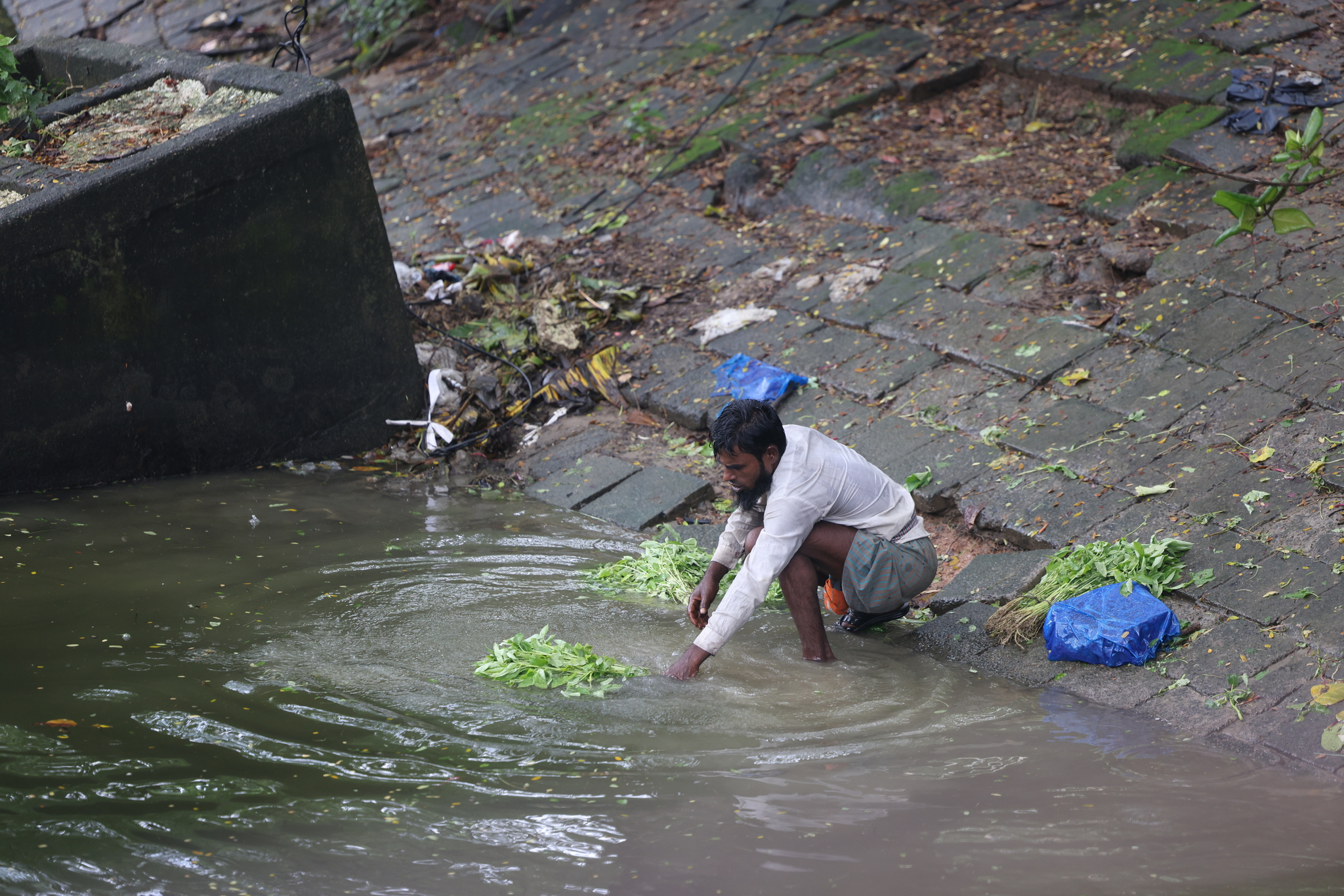
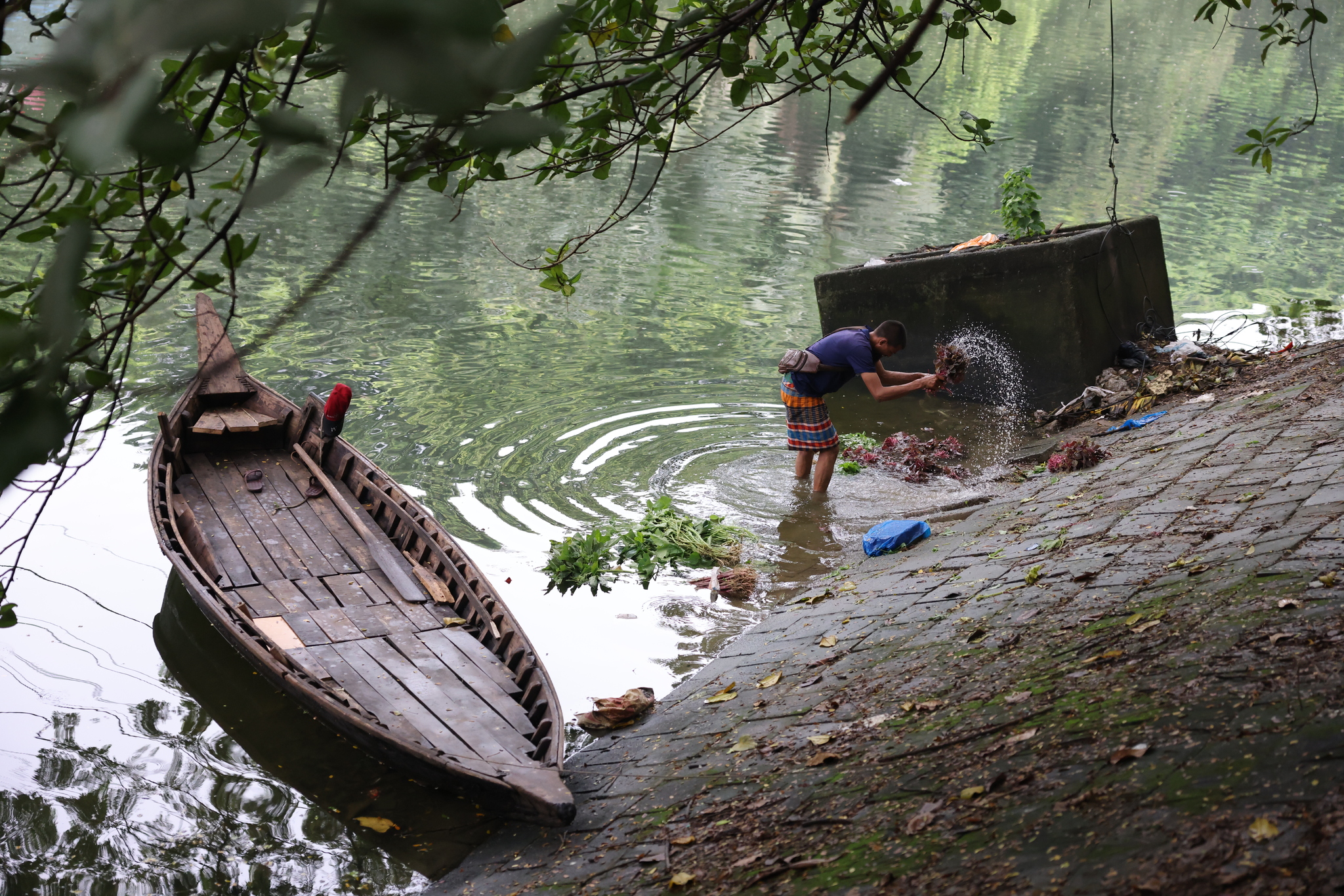
At dawn by the murky edge of Dhanmondi Lake, a man bends over. In his hands are bundles of spinach. He dips them repeatedly in the polluted water, rinsing what he believes will make them look fresher. Moments later, he scoops some of the same water into a yellow plastic can and walks off, ready to sell what many will soon take home as “fresh vegetables.”
For many city dwellers, this is a common sight easily overlooked, a man at dawn, washing vegetables beside the lake. But beneath this ordinary act lies an unsettling truth about what we eat, and how invisible dangers seep into our plates.
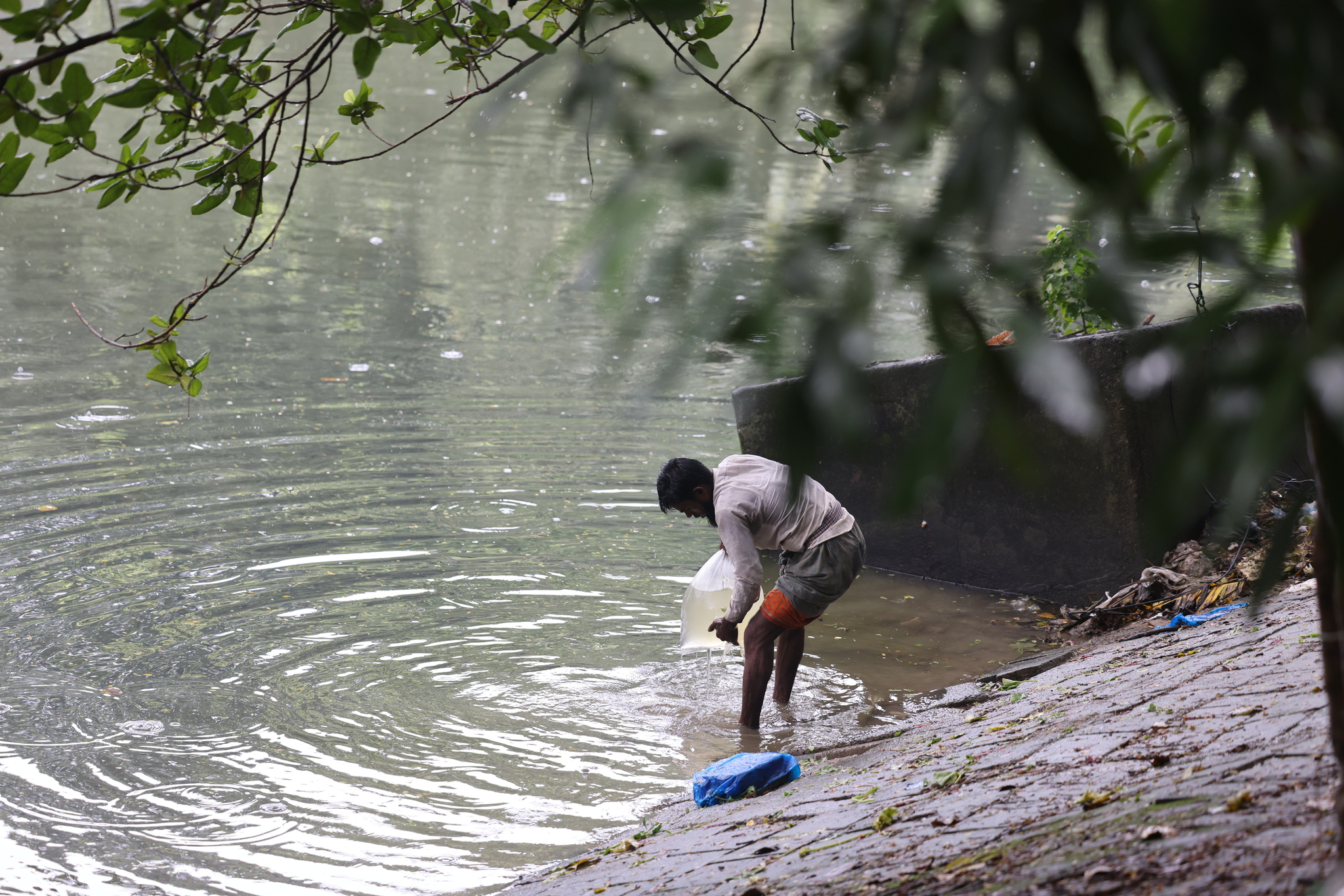
Leafy greens like spinach (palong shak), red spinach (lal shak), Malabar spinach (pui shak), taro leaves (kochu shak), radish greens (mulo shak), and water spinach (kalmi shak) are dietary staples in Bangladeshi homes. They are affordable and essential for families trying to balance nutrition on tight budgets. Yet their journey from farm to kitchen often takes a dangerous detour through contamination.
Many small-scale vendors, known locally as shobjiwala, wash their produce in lakes, drains and canals; places where water barely moves and garbage floats freely.
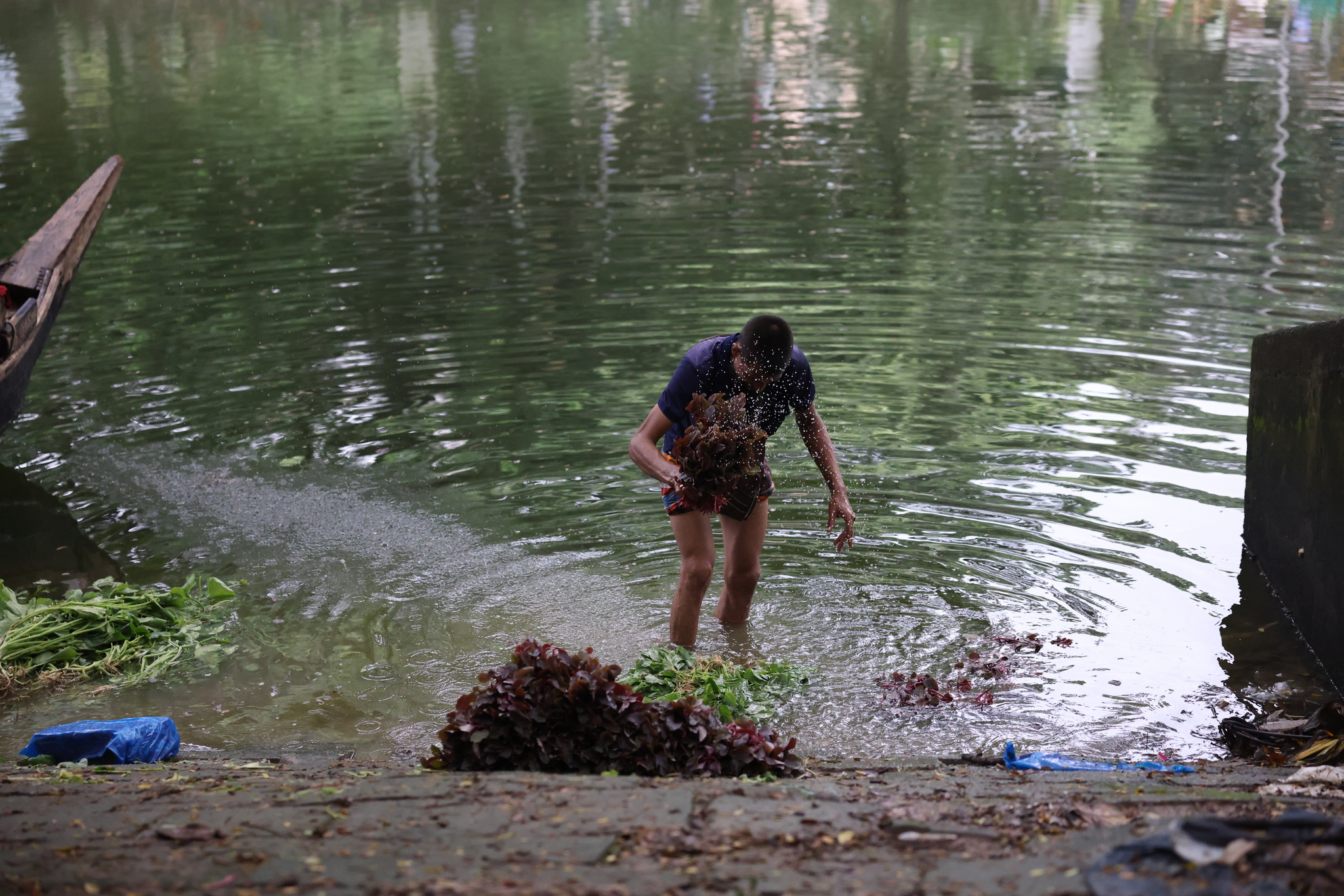
Dhanmondi Lake, once a symbol of calm beauty, has become one of many urban water bodies used for this unhygienic ritual. Vendors, after collecting vegetables from wholesale hubs like Karwan Bazar, stop by these polluted banks to “freshen” their stock. The reason is simple but tragic; it’s free and nearby. Water from taps costs money, but lake water costs nothing.
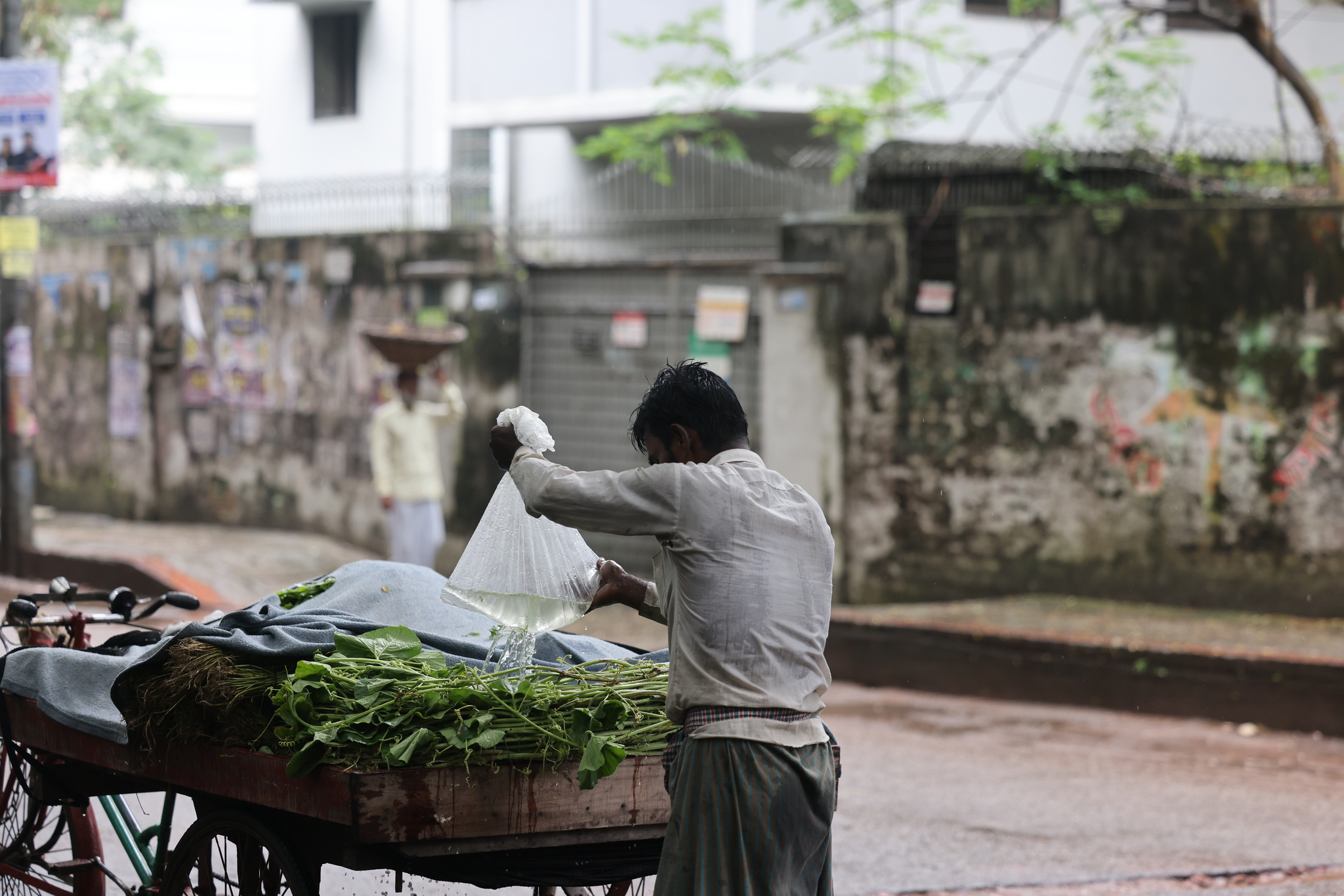
The illusion of freshness is everything in Dhaka’s open-air markets. Wet, shiny leaves attract buyers; wilted ones don’t sell. To keep up the illusion, vendors repeatedly sprinkle lake water over their vegetables throughout the day. That sheen of moisture hides a toxic truth. The water they use is often teeming with bacteria, mosquito larvae and chemical pollutants.
Public health experts have long warned that vegetables washed in such contaminated sources can harbour pathogens responsible for cholera, typhoid, dysentery and other waterborne diseases. The danger doesn’t vanish with cooking or rinsing at home; by the time these greens reach kitchens, they’re already compromised.
The man by the lake does not see himself as part of a problem. He is just surviving. His story is not one of malice, but of neglect. It’s a symptom of systemic failure where urban poverty, poor regulation and environmental degradation intertwine.
Until we confront the toxic chain that connects our lakes, markets and kitchens, Dhaka’s “fresh” vegetables will remain what they have quietly become: a green illusion, nourished by polluted water and public indifference.


