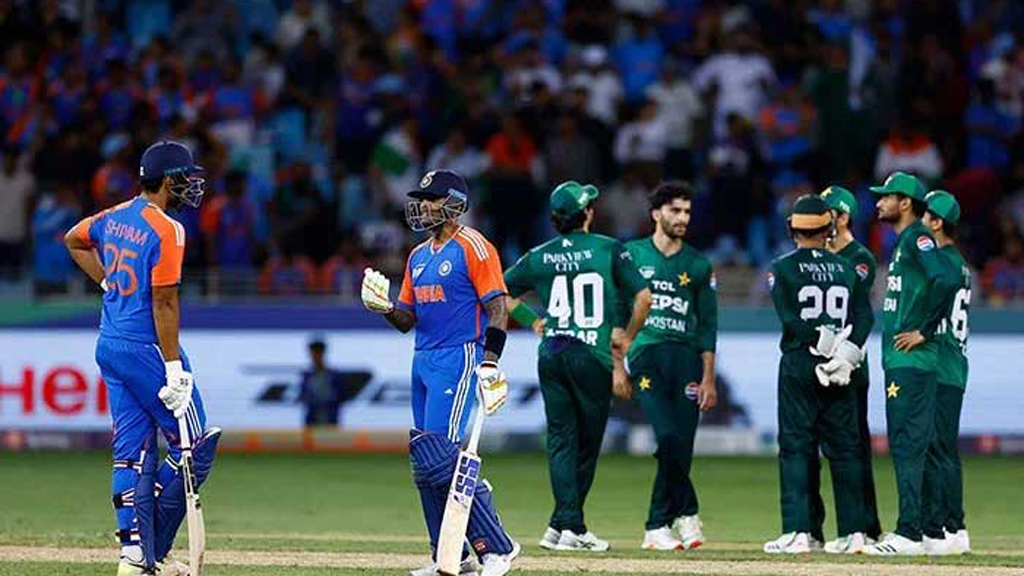

Few sporting events command attention quite like India versus Pakistan. Provocative, unpredictable and perpetually compelling, their T20 World Cup group clash arrives at the R. Premadasa Stadium in Colombo on Sunday, 15 February 2026.
There is rarely any middle ground when India and Pakistan meet. After weeks marked by off-field tension including a brief boycott stance from Pakistan, dialogue between governing bodies ensured the fixture would proceed. With confirmation secured, the focus sharpens on spin match-ups, selection dilemmas and a weather forecast that could yet have the final say.
India enter as favourites. In T20 World Cup history, they hold a commanding 7–1 record over Pakistan. Yet such numbers rarely matter once the first ball is bowled. The emotional charge, regional context and global audience transform this into a contest unlike any other.
India have shown flashes of dominance but also minor vulnerabilities. In earlier matches they suffered brief middle-order collapses, losing wickets in clusters before being rescued by Suryakumar Yadav, Ishan Kishan and Hardik Pandya. With Abhishek Sharma likely to return to the playing XI, India’s top order will receive a further boost. However, Against stronger opposition, those lapses could prove costly.
Pakistan, meanwhile, have benefited from being stationed in Colombo under the tournament’s hybrid arrangements. That familiarity with local conditions may offer them a tactical edge, particularly on a surface expected to favour spin.
Premadasa pitch report
The Premadasa surface is traditionally black soil, offering early bounce before slowing considerably. As the match progresses, the pitch tends to grip and turn, bringing spinners into play.
Seamers may extract limited swing with the new ball, especially if humidity remains high. However, variations, cutters, slower balls and changes of pace are likely to be decisive. Batting under lights in a chasing scenario could become increasingly difficult if the pitch deteriorates.

Rain to play spoilsport?
The Sri Lanka Department of Meteorology has warned of a developing low-pressure system over the Bay of Bengal. Forecasts suggest a 70–75 per cent chance of rain in Colombo on Sunday evening, with temperatures hovering around 23°C.
Light winds early in the evening may assist seamers, but scattered thunderstorms are also possible. While rain probability is expected to reduce later in the night, interruptions remain a genuine concern. For a fixture of this magnitude, even a shortened contest would carry enormous implications.
History to Defend, History to Change
Despite the hype and the billing as cricket’s biggest rivalry, Pakistan have struggled against India in World Cups. In the T20 World Cup, India lead the head to head 7-1.
Pakistan captain Salman admitted the record is not in their favour but insisted history will not decide tomorrow’s result.



“We don’t have a good record in the World Cups. But whenever you play a new match, you have to play good cricket to win. You can’t do anything with history. You can only learn from it. We have learned from it and we will try to put in a good performance tomorrow,” he said in the pre match press conference.
India captain Suryakumar Yadav sounded confident despite Pakistan playing all their matches at the Premadasa Stadium, giving them some familiarity advantage.
“They have been playing some good cricket here, so yes, they have a bit of an advantage. But we want to focus on what we need to do, not on them,” Suryakumar said.
Hand shake Saga to Continue?
Since the last Asia Cup, there has been no handshake between Indian and Pakistani cricketers across men’s, women’s and age level cricket amid political tensions following the Pahalgam terror attack.
The question resurfaced ahead of another high voltage clash. When asked whether Pakistan would initiate a handshake, Salman called for the spirit of the game.
“Cricket should be played in the right spirit. My personal opinion may not matter. But cricket should be played the way it has always been meant to be played. It’s up to them to decide what to do,” he said.
Suryakumar avoided giving a direct answer. “Wait for 24 hours. Eat well, sleep well. We will see tomorrow.”
India fine-tune approach with selection calls and smarter batting in focus
India enter the business end of their T20 World Cup preparations balancing selection uncertainties with a need for sharper game awareness. The biggest question surrounds Abhishek Sharma, who missed a recent fixture due to illness. If declared fit, he is expected to resume his aggressive opening role alongside Ishan Kishan. Should he fall short of full fitness, Sanju Samson remains the like-for-like alternative, while Washington Sundar offers a more tactical option given his off-spin on slower surfaces.
The think-tank is also keen to correct the lapses that surfaced in the opening game against USA, where a middle-order slowdown exposed issues with tempo control. Tilak Varma has stressed the importance of reading conditions earlier and selecting shots more judiciously, particularly during overs 7–16 a phase he and captain Suryakumar Yadav are expected to control. Head coach Gautam Gambhir has urged the batters to maintain intent but absorb pressure briefly if wickets fall, rather than forcing acceleration.
Spin readiness remains central to India’s planning ahead of the Pakistan clash in Colombo on 15 February. Axar Patel and Varun Chakaravarthy provide variety, while Jasprit Bumrah continues to spearhead the pace attack with support from Arshdeep Singh and Hardik Pandya. With a potentially tacky Premadasa surface awaiting, India’s balance between aggression and calculation could define their fortunes.
Pakistan place faith in Usman Tariq as spin strategy takes shape
If India are refining, Pakistan appear rehearsed. Their extended training session under lights at the R. Premadasa Stadium carried a notably relaxed yet purposeful tone. Amid mimicry and laughter, including Naseem Shah playfully imitating Usman Tariq’s delayed action, the message beneath the theatrics was clear: Tariq is central to Pakistan’s plan.
Captain Salman Ali Agha has already labelled the tall off-spinner a “trump card”, and preparations reflected that belief. Tariq bowled long spells, honing his variations and angles, particularly against left-handers, a likely nod to India’s batting composition. Net bowlers replicated Axar Patel’s angle and Chakaravarthy’s variations, while Shaheen Shah Afridi and Abrar Ahmed worked through specialised drills under lights.
Pakistan’s strategy leans heavily on spin depth and middle-overs control. Babar Azam anchors the batting, with support from Saim Ayub and Sahibzada Farhan at the top. Shaheen’s new-ball threat and Naseem’s pace provide early penetration, but it is Tariq’s pause, deception and subtle changes of pace that could disrupt India’s rhythm.
Weather forecasts hint at possible rain on match day, yet Pakistan’s clarity of planning stands out. The exaggerated pause in Tariq’s action may have drawn smiles in training, but on Sunday it is intended to halt far more than just momentum, it is designed to tilt the contest.
For all the talk of pitch maps and match-ups, this fixture ultimately demands composure. Both sides must manage external noise and internal expectations. Millions will watch, but execution under pressure will decide the outcome.
Previous meetings in T20 World Cups:
| Year | Winner | Description |
| 2007 Group stage | India | Match tied;India hit the stumps more times than Pakistan, winning the bowl‑out 3–0. |
| 2007 Final | India | Misbah’s valiant 43 went in vain as his scoop was caught off Joginder Sharma, handing India a narrow 5‑run victory. |
| 2012 | India | Virat Kohli’s match‑defining 75* guided India in a dominant chase. |
| 2014 | India | Disciplined bowling set up a comfortable seven‑wicket chase anchored by Kohli and Raina. |
| 2016 | India | India’s disciplined bowling and chase under MS Dhoni secured victory. |
| 2021 | Pakistan | Pakistan chased perfectly — Babar Azam and Mohammad Rizwan unbroken opening stand. |
| 2022 | India | Legendary Virat Kohli 82* anchored chase in a last‑ball thriller. |
| 2024 | India | Tight low‑scoring game; key swing bowling by Jasprit Bumrah defended 119. |