




MD. ABDUL MATIN
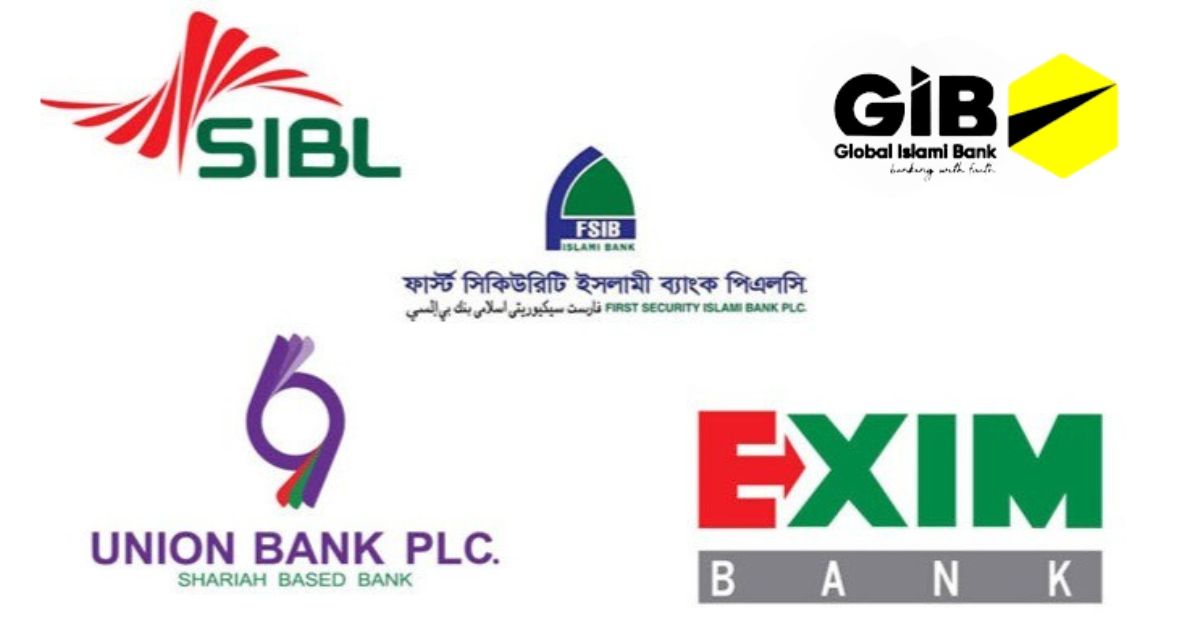
In a landmark decision made in a special meeting on September 16, the Bangladesh Bank has initiated the merger of five financially distressed, Sharia-based banks—First Security Islami Bank, Social Islami Bank, Global Islami Bank, Union Bank, and EXIM Bank—into a new, single state-owned bank, tentatively named “United Islami Bank.” This overhaul and consolidation, driven by the need to address systemic collapse and financial instability, is a critical step by the government for the country’s banking sector. It is a direct response to a banking crisis characterised by widespread mismanagement, governance failures, and catastrophic levels of non-performing loans (NPLs), which in some cases reached as high as 98.5%.

The merger is set to create the largest bank in Bangladesh by assets surpassing state owned Sonali Bank, with a significant government capital injection (from taxes) of Tk20,000 crore to cover a portion of the estimated Tk35,000 crore in capital and provisioning shortfalls, with another Tk10,000 crore expected to be drawn from the deposit insurance fund legalised as a loan, and the estimated remaining amount of Tk5,000 crore from international moneylenders such as the World Bank and the IMF.

Major Challenges Concerning the Merger
While the merger is seen as a necessary measure to protect depositors and stabilise the financial system, it is, as with any amalgamation of such massive scale and significance, fraught with critical challenges.
Financial and Operational Integration
Massive Defaulted Loans: The core challenge is the sheer volume of NPLs, which constitute around 77% of the five banks’ total outstanding loans. The new bank will inherit this toxic debt, requiring a robust and transparent strategy for recovery and asset management.
Capital and Provisioning Shortfalls: The combined capital shortfall and provisioning deficit of the merging banks are substantial. The government’s planned capital injection, while significant, may not be sufficient to fully address the deep-seated financial weaknesses and restore the bank to a stable footing.
Operational Consolidation: Merging 5 different operational frameworks under 3 different banking systems with their branch networks and IT systems under one is a monumental and complex task. In addition to the creation of a functional cohesive leadership, aligning the administrative processes, service rules and operational guidelines, and integrating a vast network of 779 branches, 698 subbranches and over 1,000 ATMs and incompatible software, as well as data migration issues pose a significant operational hurdle and might impede the new bank’s evolution into a viable institution. Consolidating five weak banks will not necessarily give rise to a stronger bank.
Governance Issues
The merger is a direct result of chronic governance failures and a legacy of mismanagement, particularly a history of large-scale loan irregularities linked to politically influential business conglomerates such as S. Alam Group and NASSA Group both associated with the corrupt erstwhile government and under investigation by the current interim government. Ensuring that the new state owned entity is free from the same political and business influences that crippled its predecessors is a paramount challenge.
Legal Opposition
The merger, particularly its mandatory nature, has faced legal complications. Sections of the Bank Resolution Ordinance, which provides the legal framework for the merger, have been challenged in court. This legal uncertainty could delay or complicate the consolidation process.
Employee and Public Perception
Job Security and Morale: While the central bank has assured that there will be no job cuts, the rationalisation of a combined workforce of over 16,000 employees is inevitable. Employee anxiety over job security, potential salary cuts, and the integration of different work ethics and organisational cultures could cause friction and severely impact morale and operational efficiency.
Depositor Confidence: The announcement of the merger has already triggered deposit withdrawals, particularly at the banks in the best financial health. While the government has guaranteed the safety of all depositors’ funds, restoring and maintaining public trust in the new entity will be a long and arduous process, particularly given the history of banking scandals in the country.
Sharia Compliance and Identity
The new bank must strictly adhere to Islamic banking principles. Integrating 5 different Sharia Supervisory Boards and ensuring a consistent and transparent approach to Sharia compliance will be essentially required to maintain the trust of Islamic banking customers, which will also depend on the new bank’s ability to build a new brand identity that is distinct from the troubled legacy of its merging entities.
Strategic Recommendations
Although the Central Bank has outlined strategies to facilitate a smooth transition in the proposed merger process, I believe that addressing the challenges mentioned earlier requires additional focus. In alignment with the measures already undertaken by Bangladesh Bank, I would recommend the following strategic steps to ensure long term success and build a more sustainable banking sector:
Establish an Independent and Professional Governance Structure
Appoint a Proper Technocratic Board: The government should appoint a new, independent Board of Directors composed of highly qualified and experienced professionals from banking, finance, and risk management, and completely insulated from political and business influence.
Strengthen Bangladesh Bank’s Regulatory Authority: Amend the existing banking laws and the Bank Resolution Ordinance to give Bangladesh Bank with greater autonomy and legal authority to enforce corporate governance standards, conduct regular audits, and penalise non-compliant institutions.
Incentivise Good Governance: Introduce performance-based contracts for the management and board of the new bank tying compensation and job security directly to key metrics, such as NPL reduction, profitability, and customer satisfaction. The long-term goal should be to reduce state ownership and bring in a diverse set of private and institutional investors, subjecting the bank to market discipline and reduce the potential for political interference.
Conclusion
In my view, the merger of these five Islamic banks represents both a serious risk and a historic opportunity for Bangladesh. Having worked in the banking sector for many years, I firmly believe that if this consolidation is executed with strong governance, strict transparency, accountability, and genuine political commitment, it can become a turning point toward a more stable and trustworthy financial system. In this connection, the recapitalization cost cannot be ignored. With a tax-to-GDP ratio of only 7.4%—among the lowest in the world, every taka is critical. Committing Tk20,000 crore to rescue failing banks inevitably means fewer resources for essential sectors like health, education, social protection, and climate resilience. Yet, as difficult as this fiscal trade-off is, failure to act would be even more damaging, jeopardizing not just public funds but also the credibility and long-term stability of the entire banking industry.
As a banker, I believe this merger must go beyond short-term fixes. It is an opportunity to reset the system through structural reform, stronger oversight, and a renewed focus on restoring confidence in Bangladesh’s financial sector.
The writer is Founder & CEO, VFMA


