


Every monsoon, the same three ingredients reappear on Bangladeshi stovetops: Ginger grated into the evening cha, turmeric stirred into a warm glass of milk, tulsi leaves steeped for a sore throat.
As low-pressure systems keep the region’s humidity and rainfall elevated this week – conditions doctors associate with a seasonal uptick in colds, viral fever and respiratory complaints – these household staples are once again being reached for as a first line of defence.
The science behind them is real, if more modest than the phrase “immunity booster” implies. Turmeric’s active compound, curcumin, has documented anti-inflammatory and antioxidant properties in laboratory studies, and pairing it with black pepper measurably improves how much of it the body absorbs.

Ginger contains gingerol, a compound linked to anti-inflammatory effects and mild relief of nausea and throat irritation. Tulsi has long been used in South Asian traditional medicine for coughs and congestion and shows antioxidant activity in preliminary research.
None of this amounts to clinical proof that any of the three prevents flu or Covid-19 infection outright – the evidence mostly supports symptom relief and general anti-inflammatory support, not immunity in the sense of blocking a virus from taking hold. Doctors are typically careful to describe these herbs as supportive, not protective.




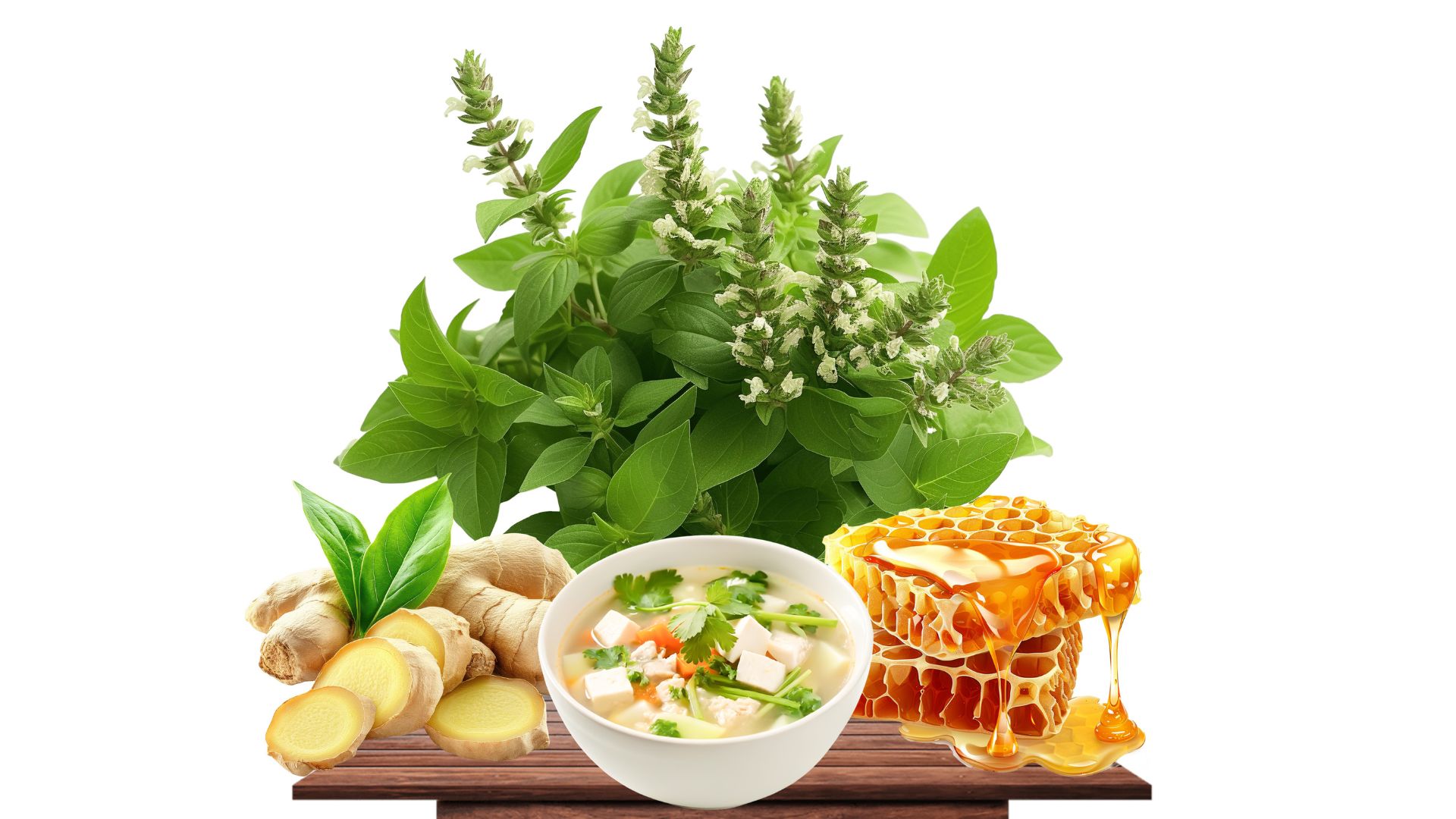
A simple turmeric tea can be made by simmering a teaspoon of turmeric powder in a cup of water for about 10 minutes, straining it, and adding a pinch of black pepper and a little honey to taste. For a tulsi brew, boil a handful of fresh tulsi leaves in two cups of water until reduced by half, then strain and sweeten lightly with honey; this is traditionally taken once or twice a day at the first sign of a sore throat or congestion. Fresh ginger, grated into tea, daal or a simple soup, adds the same warming, anti-inflammatory profile without needing a separate preparation.
None of these remedies replace the measures with actual clinical evidence behind them: The seasonal flu vaccine, where available, consistent handwashing, adequate rest and hydration, and staying away from crowded spaces while symptomatic. Herbal teas are reasonable, low-risk additions to a monsoon routine – they are unlikely to cause harm in normal food quantities and may genuinely ease a scratchy throat or a stuffy head.
But for children, the elderly, pregnant women, or anyone with a persistent fever, breathing difficulty, or symptoms lasting more than a few days, doctors advise seeking medical attention rather than waiting out the illness with tea alone.
The kitchen cabinet, in other words, remains a reasonable first stop this monsoon – just not the last one, if the fever doesn’t break.