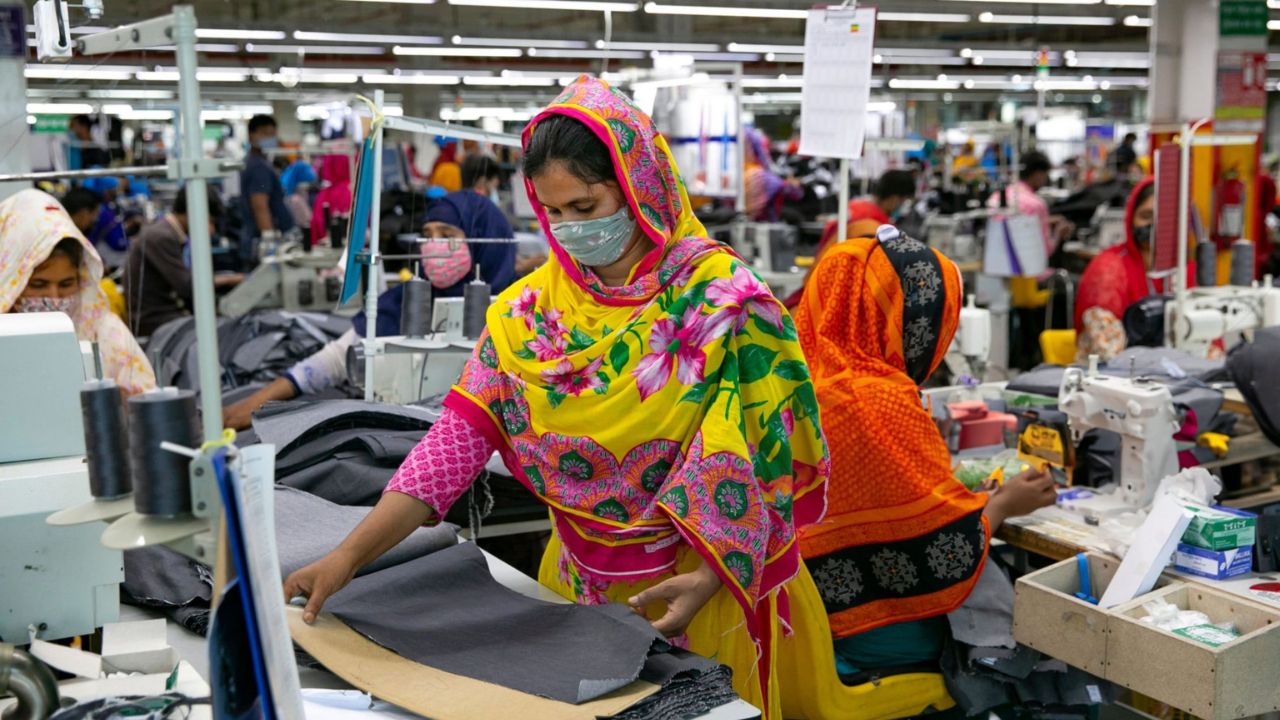
As Bangladesh prepares for the upcoming election on 12 February, the nation’s primary political factions are competing for the loyalty of a frustrated youth and an economically strained public through pledges of direct cash assistance, interest-free credit, and massive employment targets.
With Awami League excluded from the upcoming polls following the collapse of Sheikh Hasina regime, the political landscape is now dominated by BNP-led alliance and a rival bloc spearheaded by Jamaat-e-Islami, which has formed partnerships with liberal groups like the National Citizen Party (NCP).
Both sides are currently using the final stage of the campaign to address widespread grievances regarding food inflation, job scarcity, and institutional corruption, according to an analysis by Al Jazeera.
BNP’s welfare and technology roadmap
The BNP has placed its flagship “family card” at the heart of its social safety net proposal.
This card, to be registered in the name of a female household member, would initially support four million families with a monthly cash stipend of TK2,000 to Tk2,500 or an equivalent supply of staple foods like rice, pulses, and oil.

Regarding the job market, the BNP has vowed to generate 10 million positions within 18 months and offer financial subsidies to the “educated unemployed.”
Amir Khosru Mahmud Chowdhury, a senior BNP leader and former commerce minister, highlighted a shift towards a “digital economy,” promising to create 800,000 IT-related roles and integrate global payment systems such as PayPal to assist freelancers.
The party’s education plan includes a “one teacher, one tab” scheme and the teaching of third languages – including Arabic, Chinese, and German – at the secondary level to enhance the global competitiveness of Bangladeshi workers.


Jamaat’s ‘smart’ governance and fiscal cuts
Jamaat-e-Islami is advocating for a “smart social security card,” a digital framework designed to consolidate National ID, healthcare, and taxation data.
Its employment strategy focuses on upskilling 10 million young people over five years and launching “job banks” at the district level to facilitate five million placements.
The party has also proposed interest-free monthly loans of up to Tk10,000 for jobless graduates, spanning a two-year period. Mokarram Hossain, a Swansea University professor advising the party, clarified that these funds are intended as repayable credit rather than “token cash.”
On the economic front, Jamaat intends to reduce corporate tax to 19% and VAT to 10%. They argue that by eliminating administrative corruption and closing tax loopholes, the state could reclaim between Tk1.05 trillion and Tk2 trillion.
Additionally, the party has pledged to freeze industrial utility rates for a period of three years.
Economic challenges
Analysts warn that these expansive promises must contend with a difficult economic environment. Bangladesh’s annual growth has dropped to 4%–5%, while inflation remains stubbornly high.
The country’s tax-to-GDP ratio sits below 7%, significantly trailing neighbours like India (12%) and Pakistan (10%).
Towfiqul Islam Khan, additional director at the Centre for Policy Dialogue (CPD), pointed out that implementing the BNP’s family card alone would require nearly doubling the current social protection expenditure to approximately Tk1.2 trillion.
He noted that quality social security is difficult to maintain with a budget representing only 2% of GDP.
Hossain Zillur Rahman, executive chairman of the Power and Participation Research Centre (PPRC), expressed doubt over the efficacy of interest-free loans, labelling them a “populist measure.”
While acknowledging that the interim government under Muhammad Yunus provided some macroeconomic stability, he criticised it for being “extraordinarily inattentive” to the financial struggles of individual households and failing to stimulate private investment, which remains stalled at 22%-23% of GDP.