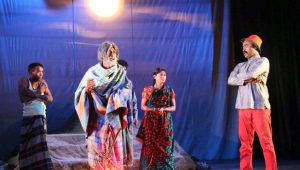





In Bangladesh, a field researcher is documenting the gradual disappearance of traditional wedding songs rooted in rural women’s oral culture, as modernisation, urbanisation and changing social attitudes reshape celebratory practices across the country.
For Shamol Shishir, memories of rural festivities in the 1990s remain vivid: dusty village paths, crowded courtyards and weddings filled with jari, sari, jatra pala and wedding songs that once formed an inseparable part of the rural way of life.
Shishir grew up in Jagai Pur village under Lahiri Para Union in Bogura and began his early career in jatra pala as an assistant director. Over time, however, he noticed that the folk sounds of his childhood were quietly disappearing.
The turning point came in 2020 while he was working as chief assistant on the production ‘Saatao’ in Lalmonirhat. During the filming of a wedding scene, the team needed women who could sing traditional wedding songs. Despite searching, none could be found.
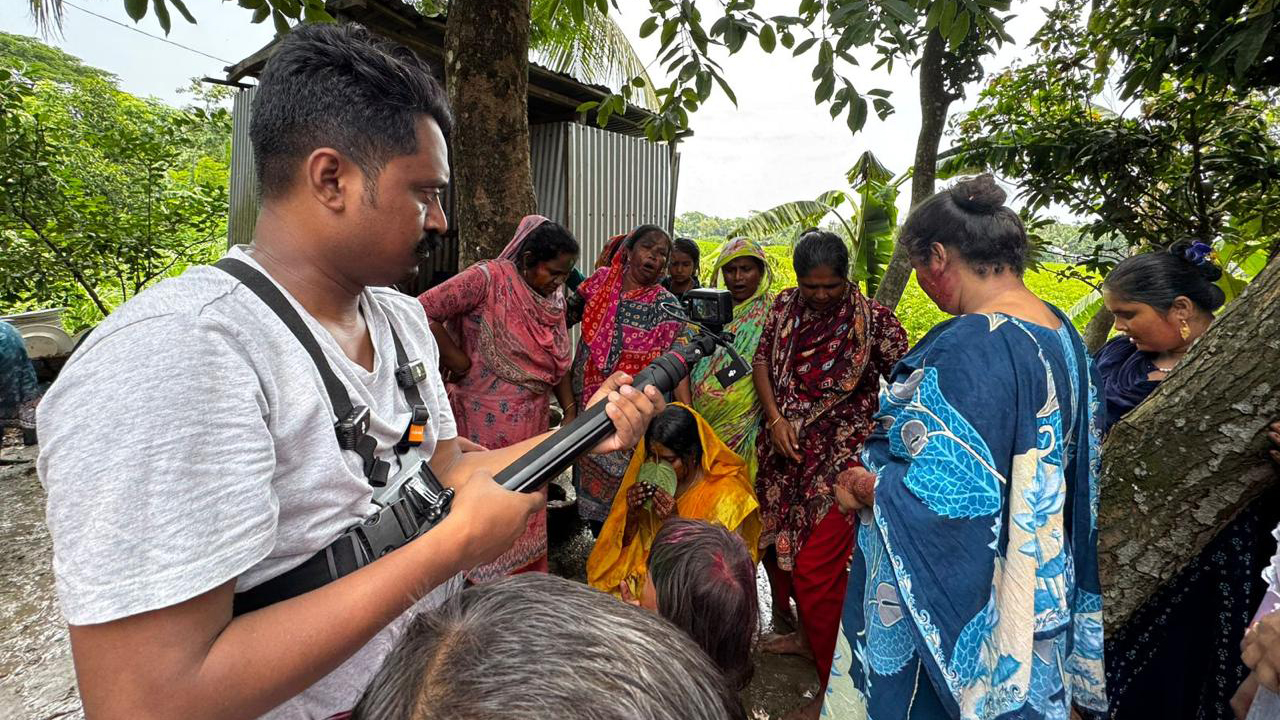
The absence deeply affected him. He recalled how, in earlier times, women in villages would gather days before a wedding, singing collectively to transform the atmosphere into a festive celebration. The question of where that tradition had gone prompted him to begin a sustained search.

He started speaking with people from all walks of life, including rickshaw pullers, shopkeepers, farmers and homemakers, documenting what remained of wedding song traditions. What began as a search for material for a documentary gradually developed into long-term research.
Initially, Shishir’s aim was to produce an archival documentary for future generations. However, fieldwork led him to a broader understanding that wedding songs were not merely entertainment, but an important part of women-centred oral history in Bengal.
Shishir’s research traces the tradition back centuries, with references in ancient Vedic literature to music and dance associated with marriage rituals. He describes wedding songs as a reflection of marginalised women’s lived experiences, capturing joy and sorrow, love and separation, humour, protest and social commentary.




Different stages of marriage once had distinct songs, including rituals such as the turmeric ceremony, the bride’s farewell, the wedding night and the day after.
These songs also conveyed informal guidance for newlyweds, offering advice on marital life through humour, innuendo and metaphor, functioning as a form of folk-based education around intimacy and relationships, passed down orally across generations.
Regional variations remain significant. In Sylhet, the tradition is known as ‘dhamail’, in Barishal’s riverine areas it is called ‘hoyla’, while in northern regions it is referred to as ‘biyer gaan’ or wedding songs.
Similar traditions exist among indigenous communities including the Garo, Marma, Chakma and Santal, each with distinct musical and dance forms tied to marriage rituals.
Shishir’s research indicates that only fragile remnants of the tradition survive today in parts of northern Bangladesh, Sylhet and some riverine and disaster-prone areas of Barishal.
He identifies several reasons behind the decline. In some areas, religious conservatism and fundamentalist attitudes have discouraged women from singing and dancing, framing such practices as inappropriate.
At the same time, rapid urbanisation and modernisation have transformed weddings from extended household celebrations into short, venue-based events, where modern and electronic forms of music-making, and contemporary music have replaced traditional forms.
His work has attracted international academic interest. A former chair of folklore studies at Curtin University in Australia is advising his research, and he has been invited to the 49th International Folk Conference, organised with UNESCO support, to be held in Chile next year.

There is a notable lack of dedicated publications on wedding songs in Bangladesh, according to the researcher, who observed that comprehensive or specialised texts on the tradition are extremely scarce. This gap in available material meant that he had to depend on a small number of regional books sourced from both Bangladesh and India prior to starting his work in the field.
So far this research has found limited academic literature on the subject, urging Shishir to collect books from Bangladesh and India before beginning his fieldwork, which later supported his research process.
Although the available texts did not provide complete coverage of the subject, they offered valuable contextual support during the early stages of his research, helping him frame his field inquiries and guide his documentation process.
To date, he has conducted fieldwork across Bogura, Dinajpur, Shariatpur, Sylhet and Sunamganj. His longer-term ambition is to build a comprehensive archive covering the linguistic and cultural diversity of wedding songs across at least 30 to 40 districts in Bangladesh.
However, financial constraints remain a major obstacle. Shishir has already spent approximately Tk6 to Tk7 lakh from personal funds and has received limited institutional support despite approaching government bodies, cultural organisations and corporate entities.
The research work is being sustained largely through personal savings and small contributions from supporters.