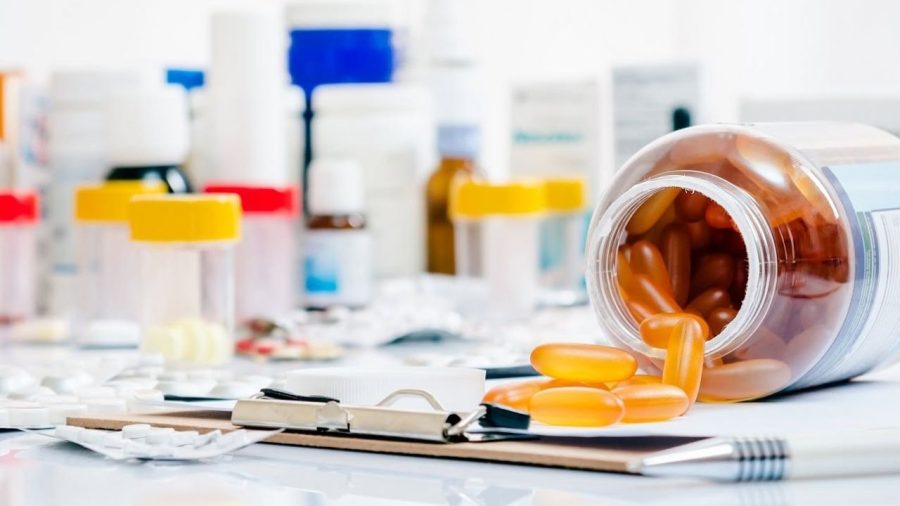



More than half of the medicine samples submitted to Bangladesh’s national drug testing laboratory remained untested in the first 10 months of 2026, leaving a substantial gap in quality checks.
The regulator blamed severe staff shortages that weakened the regulator’s ability to detect substandard and counterfeit medicines.
Of the 4,699 samples received between January and October, the National Drug Control Laboratory (NDCL) tested just 1,891, finding 79 that failed to meet quality standards, reveals Directorate General of Drug Administration (DGDA) data.
The remaining 2,808 samples represent nearly 60 per cent of those received during the period.
The testing shortfall comes as 308 of the regulator’s 720 sanctioned posts remain vacant, including 47 of its 52 specialised testing positions.
The shortages have disrupted inspections of pharmacies and pharmaceutical factories, collection of suspicious medicine samples, prompting legal action against irregularities, according to the DGDA.
Experts said that the consequences extend beyond regulatory delays.
Medicines that fail quality standards may not deliver the intended treatment and can expose patients to adverse drug reactions.
Failure to detect and control substandard medicines can also contribute to antimicrobial resistance.
Voicing the caution that patients are taking fake medicines without knowing, Abdul Muktadir, President of the Bangladesh Association of Pharmaceutical Industries, told TIMES, “It is risking our healthcare system.”
Being contacted, the regulator has acknowledged that limited technical personnel and laboratory facilities prevent it from testing all medicines, while a recruitment-rule process initiated in 2014 remains unresolved, blocking appointments to 64 posts.
Fewer tests and more non-compliances
The laboratory’s testing figures show that the gap between samples received and examined has widened.

In 2025, the NDCL tested 2,706 of the 4,692 samples received, leaving 1,986 untested.
In the first 10 months of 2026 alone, the untested count reached 2,808, despite the laboratory receiving almost as many samples as it did throughout the previous year.
The proportion of tested samples found non-compliance also rose, from about 2.8 per cent in 2025 to 4.2 per cent in January–October 2026.
The laboratory identified 75 non-compliant samples in 2025, compared with 79 in the first 10 months of this year.
However, the figures reflect only the samples tested and do not establish the prevalence of substandard medicines across the market.
A breakdown of the latest results shows that the NDCL tested 1,215 samples collected before and after marketing, finding 25 non-compliant.
Of another 676 samples obtained from other sources, 54 failed quality checks.
The laboratory received 2,805 post-marketing samples, 906 pre-marketing samples and 988 samples from other sources during the period.
The DGDA, in a written response to TIMES, said it follows a risk-based testing approach because it lacks the personnel and facilities to examine every medicine.


Suspicious products, randomly collected samples and those obtained through surveillance receive priority.
The approach allows the regulator to focus its limited resources on selected samples, but the difference between submissions and completed tests highlights the pressure on its laboratory capacity.
Poor testing capacity let fake, counterfeit and, in some cases, substandard medicines to spread across the country, Abdul Muktadir said, demanding proper testing facilities to match the scale of the pharmaceuticals market plus deployment of enough officials with proper skilling.
“Zero room for negligence in public health,” he stated.
Critical testing posts lie vacant
The staffing shortage is particularly acute in specialised testing, where only five of 52 sanctioned positions are occupied.
Across laboratory-related operations, 92 of 219 posts remain vacant.
The wider DGDA workforce is also stretched, with 412 employees against 720 sanctioned positions, leaving about 43 per cent unfilled.
According to the regulator, the vacancies have slowed regular market surveillance, inspections, sample collection and immediate enforcement action.


Inspections of pharmacies and pharmaceutical factories, along with the collection of suspected counterfeit or substandard medicines, have been particularly affected.
Existing employees have taken on additional workloads, reducing the continuity and depth of surveillance, the DGDA said.
The laboratory has sought to maintain testing by prioritising urgent cases, government medicine supplies and complaints. It is also coordinating work across departments and making maximum use of available equipment.
Nevertheless, the regulator acknowledged that these measures cannot overcome the limitations on the normal pace and volume of testing.
The DGDA has identified recruitment, better coordination among existing employees and stronger digital surveillance as priorities.
It said efforts to recruit specialist and technical personnel were being expedited through the relevant ministry and the Public Service Commission, alongside plans to train existing staff.
Recruitment rules stalled since 2014
The staffing crisis has been compounded by a prolonged administrative process that has prevented recruitment to 64 posts.
The effort to create new positions and update recruitment rules began in 2014, when the Ministry of Public Administration approved, in principle, the creation of 98 temporary posts on 8 May to convert the Drug Testing Laboratory into a National Control Laboratory.

The consent was conditional on completing several administrative steps, including determining salary grades, obtaining approval from the relevant Secretary Committee and updating the DGDA’s organisational structure.
In 2018, the Finance Division agreed to salary grades for 62 proposed National Control Laboratory posts.
On 26 August that year, the Administrative Development-related Secretary Committee recommended creating 62 temporary laboratory posts. It also identified a discrepancy in the salary grades of two positions, calling for further examination of their designations.
On 26 January 2021, the Finance Division conditionally agreed to adjust the salary grade associated with renaming the Assistant Director (Administration) position as Superintendent (Administration).
The recruitment-rules scrutiny subcommittee under the Ministry of Public Administration subsequently decided, at a meeting on 23 November 2021, to incorporate newly created positions into the draft DGDA recruitment rules and recommended referring the proposal to the Secretary Committee.
In April 2023, the Health Services Division prepared a summary seeking the committee’s recommendation on the proposed rules.
The summary covered the integration of the existing DGDA Recruitment Rules 2012 with 60 Drug Testing Laboratory posts, 61 National Control Laboratory posts and 228 newly created DGDA positions.
The proposal reached the sixth meeting of the Administrative Development-related Secretary Committee for the 2023–24 fiscal year on 19 November 2023.
Rather than finalising the rules, the committee instructed the Ministry of Public Administration’s recruitment-rules scrutiny subcommittee to examine the draft further before resubmission.
The subcommittee met on 15 January 2024 and prepared a draft notification and schedules for the proposed Directorate General of Drug Administration (Officers and Employees) Recruitment Rules 2024.
The DGDA subsequently objected to provisions relating to several posts and submitted detailed observations to the Ministry of Health and Family Welfare for reconsideration.
According to the regulator, neither the scrutiny subcommittee nor the Administrative Development-related Secretary Committee has held another meeting since then.
Proposals to add another 58 and 142 posts to the DGDA’s organisational structure also remain under process.
With the recruitment rules unresolved, the regulator has been unable to proceed with appointments to the 64 affected positions.
New laboratory planned to expand capacity
The DGDA is pursuing additional laboratory infrastructure to address its testing limitations.
Construction has begun on a new multistorey building at the existing Drug Testing Laboratory’s Vaccine Wing, supported by the Asian Development Bank and direct government funding.
The proposed facility is expected to provide modern testing and analytical capabilities for allopathic, Unani, Ayurvedic, herbal and homeopathic medicines, as well as medical devices, supplements and cosmetics.
The regulator also plans to procure modern equipment and strengthen laboratory infrastructure at divisional and regional levels.