Iran launched retaliatory attacks on US military bases in the Gulf region after American forces carried out a fresh round of strikes, prompted by US President Donald Trump’s warning that he would hit the country “hard”.
The US Central Command (Centcom) said it completed a second consecutive day of what it described as “self-defense strikes” on Thursday local time, reports BBC.
The attacks came after Trump said Tehran had taken “too long to make a deal” to bring an end to the conflict.
In response, Iran said it targeted US military installations in Bahrain and Kuwait, the same locations it struck during retaliatory attacks a day earlier.
The latest exchange of attacks has further strained a fragile ceasefire that the two countries agreed upon in April.

Following the US strikes, explosions were reported in several cities in southern Iran near the Strait of Hormuz. US forces had also targeted air defence systems, radar installations and other sites in the area during the previous round of strikes.
In the latest escalation, Iran’s Islamic Revolutionary Guards Corps (IRGC) said it had struck two oil tankers travelling through the Strait of Hormuz, according to Iranian state media. However, there was no immediate independent confirmation of the claim.
The development followed reports by Iranian state media that the Strait of Hormuz had been “completely closed to all type of vessel”.
Centcom, however, stated that “commercial ships are continuing to transit in and out of the Strait of Hormuz”.



Oil prices rose shortly after the reported closure of the vital shipping route and news of the apparent tanker attacks.
Brent crude, the global benchmark for oil prices, climbed above $95 per barrel after gaining about 2 per cent during morning trading in Asia.
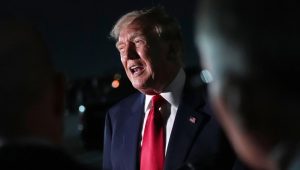
Hours before launching the latest strikes, Trump warned: “We hit them hard yesterday and we’re going to hit them hard again today.”
Writing on Truth Social, Trump said Iranian leaders had “taken too long to negotiate a deal”.
US Defence Secretary Pete Hegseth said Iran had been given an opportunity to reach an agreement but had failed to do so.
He added that bombs would be “dropping on key facilities” in the country. Trump also warned that further attacks would follow if no peace agreement was reached.
Iranian President Masoud Pezeshkian said Iran “will stand firm against any pressure or threat”. Earlier, the Iranian foreign ministry accused the United States of “damaging the diplomatic process through the contradictory messages it sends”.
The United States and Iran agreed to a ceasefire in April that was initially intended to remain in place for two weeks. Since then, both sides have exchanged intermittent fire without returning to full-scale hostilities.
However, efforts to revive negotiations between Washington and Tehran have recently stalled, while attacks have intensified.
On Tuesday, an attack brought down a US helicopter, an incident Washington blamed on Iran.
The IRGC subsequently responded by targeting US military bases across the Middle East.
In a statement posted on X, UN Secretary General António Guterres said the Middle East was “being pulled deeper into crisis” and warned that recent attacks meant “the ceasefire is more like a lesser-fire”.
“We should not minimize the risks of lesser fire becoming full fire. All parties must work towards a diplomatic settlement. No more attacks. No more excuses,” he said in a statement.