The Iranian capital endured what residents described as its most intense night of aerial bombardment on Tuesday, even as United States leadership provided contradictory messages regarding the trajectory of the war.
Israel confirmed its forces had targeted a weapons development facility during the latest wave of strikes. General Dan Caine, the chair of the US Joint Chiefs of Staff, stated that American forces have now struck more than 5,000 sites in Iran in an effort to dismantle ballistic missile and drone capabilities and reopen the Strait of Hormuz, reports The Guardian.
Conflicting US objectives The intensification of the strikes coincided with a lack of clarity from Washington. US President Donald Trump recently suggested that the war was “very complete”.
However, US Defence Secretary Pete Hegseth later countered this by stating that the military would not cease operations until the enemy was “totally and decisively defeated,” adding that Tuesday would see the most aggressive strikes to date.

Hegseth noted that while the final timeline rests with the president, the US is prepared to strike deeper into Iran’s industrial and military infrastructure.
Humanitarian and environmental toll
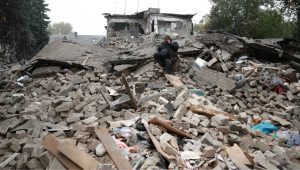
The conflict has resulted in significant civilian casualties, with the US-based Human Rights Activists in Iran group reporting at least 1,245 deaths, including 194 children. In Lebanon, Israeli bombardment has claimed at least 486 lives, while 11 people have died in Israel. The US military has confirmed seven troops killed and 140 injured.
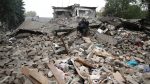
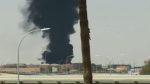

In Tehran, residents reported a near-total collapse of communications and rolling blackouts, with one individual describing the atmosphere as “the last stop before hell”.
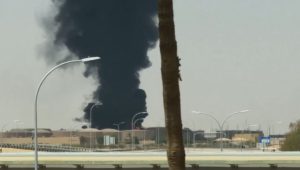
The World Health Organization (WHO) has urged citizens to remain indoors to avoid “black rain” and acidic precipitation resulting from strikes on oil facilities in Tehran and Alborz province. Christian Lindmeier, a WHO spokesperson, warned of severe respiratory risks associated with the polluted air.
Regional spillover and economic alarm
Iran has retaliated by targeting US allies in the Gulf to increase the economic cost of the conflict. In Bahrain, a woman was killed during an attack on a residential building in Manama.
In the UAE, firefighters were deployed to petrochemical plants following drone strikes, and four migrant workers were killed by falling debris. Despite the violence, life in Dubai has reportedly continued with some normalcy, though business has slowed and many tourists have departed.
Global markets remain volatile as fuel prices skyrocket. Economists have warned that continued disruption in the Strait of Hormuz – a vital transit point for 20 per cent of the world’s oil – could trigger a global energy crisis comparable to that of the 1970s.
Iranian defiance Iranian officials have maintained a defiant stance. Ali Larijani, head of the National Security Council, dismissed American threats and suggested that Iran could target President Trump personally.
Domestically, Iran’s police chief, Ahmad-Reza Radan, warned that any citizens protesting against the regime would be treated as “the enemy,” stating that security forces remain “ready to defend” the revolution with their fingers on the trigger.
In Lebanon, the Lebanese Red Cross condemned an Israeli strike on one of its ambulances in the Tyre district, which left two emergency workers injured as Israel continues to target the southern suburbs of Beirut.