
Pakistani fighter jets struck what security officials called militant hideouts in eastern Afghanistan early on Monday, killing 28 suspected fighters, according to two Pakistani security sources.
Kabul, however, said the raids killed only three civilians, in the latest flare-up between the neighbours that risks further cross-border fighting and complicates mediation efforts by regional powers, including China, according to a report from AP.
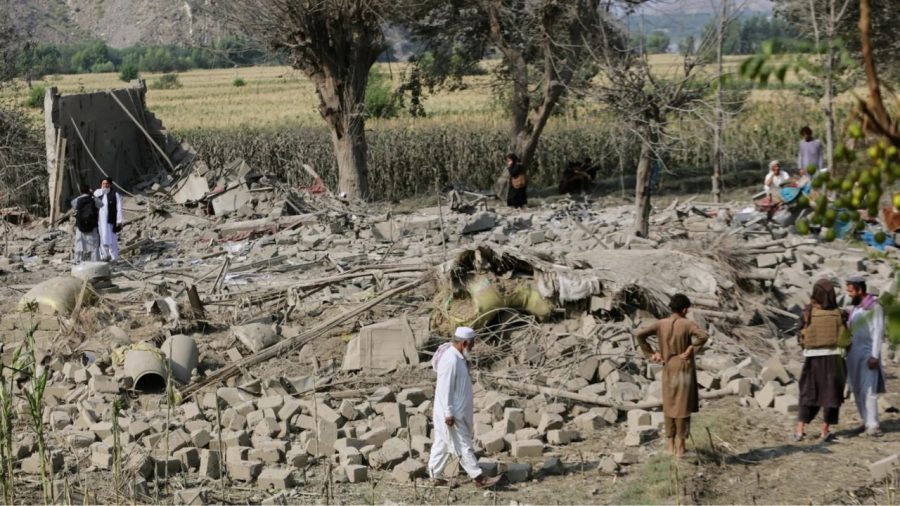
The bombing raids hit Nurgal district in Kunar province and Barmal district in Paktika province at around 3am, Afghan deputy government spokesman Hamdullah Fitrat said.
He said a house belonging to a villager, Noor Ahmad, was destroyed in Nurgal’s Pathan village, killing Ahmad and two relatives and wounding four others.
Separate strikes in Barmal’s Rakhah and Tor Kundi areas destroyed a shop and an empty house but caused no casualties.

The two Pakistani security officials, who spoke on condition of anonymity as they were not authorised to brief media, maintained that 28 militants had died in the operation.
Pakistan’s military had not issued an official statement on the strikes by Monday evening, and neither side’s casualty figures could be independently verified.
Afghan Taliban government spokesman Zabiullah Mujahid denounced the raids on social media platform X, describing them as a repeat of past aggression and vowing retaliation.



He accused Pakistani military circles of using such action to distract from domestic security failures, and said Kabul would respond.
The strikes represent a sharp escalation in hostilities that have simmered since February, when Afghanistan launched retaliatory attacks after an earlier round of Pakistani air raids on its territory.
Hundreds of people have died in the cross-border violence since then, as Islamabad has stepped up military action against fighters it accuses Kabul of harbouring.
Pakistani authorities have pinned much of the recent bloodshed on the Pakistani Taliban and allied militant factions.
Although distinct from the Afghan Taliban administration that seized power in Kabul in 2021, the group, formally called Tehrik-e-Taliban Pakistan (TTP), is considered a close ally of Afghanistan’s rulers. Islamabad has long accused the Kabul government of sheltering TTP commanders and turning a blind eye to cross-border raids, an allegation Afghan officials consistently reject.
Monday’s air raids followed a surge of deadly violence inside Pakistan over the preceding days.
Six Pakistani security personnel, among them two army officers, were killed on Sunday during a shootout with militants in Hangu district of the northwestern Khyber Pakhtunkhwa province, close to the Afghan frontier.
That clash came just days after an assault on Friday in the city of Kohat, where a suicide bomber detonated explosives at a mosque within a police compound while eight armed attackers stormed nearby offices, triggering a gun battle that lasted some 20 hours.
Pakistani officials said at least 21 people, mostly police officers, were killed and more than 100 wounded in the assault.
No group had claimed responsibility for either the Kohat or Hangu attacks by the time of Monday’s air raids, though suspicion has fallen on the TTP, which has escalated attacks against Pakistani police and security forces in recent years.
Islamabad’s information ministry said on Saturday that Pakistan possessed both the resolve and the ability to eliminate terrorist threats regardless of where they were based, blaming the Kohat attack on militants it said were operating from Afghan soil.
The ministry urged Kabul to take credible and sustained action to dismantle alleged militant sanctuaries and training networks operating within its borders, warnings that preceded Monday’s cross-border strikes by little more than 48 hours.