


Md. Nurul Haque
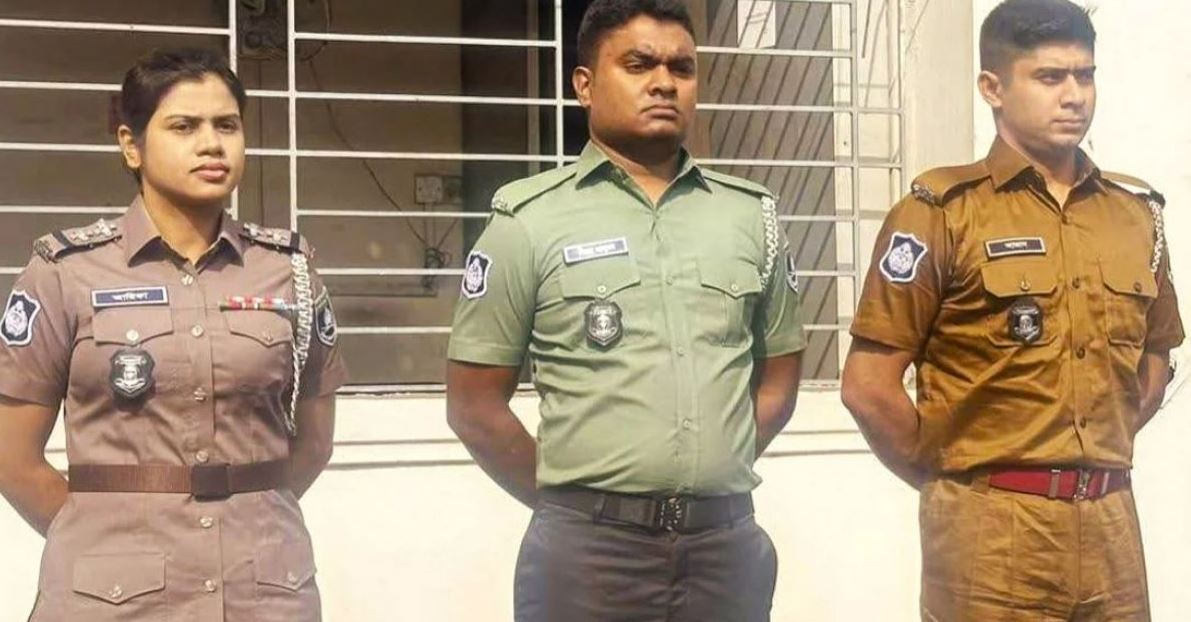
Will a change of dress change a troubled mind? Can a fresh uniform erase the stains of a tarnished legacy? These are not merely rhetorical questions- they cut to the heart of Bangladesh’s newest experiment in policing: aesthetic reform in place of moral resurrection. The nation watches as the police unveil their new attire, as if a redesigned fabric could redesign public faith. But a uniform, however modern, cannot bleach a reputation soaked in fear.
The story begins under the British Raj, where khaki-clad policemen stood as colonial extensions of surveillance and subjugation. Pakistan inherited that uniform along with its authoritarian reflexes. After 1971, Bangladesh sought its own identity- retaining the colonial cut but hoping the spirit would change. Over the decades, shirts tightened, colors shifted, badges modernized but the soul beneath remained stubbornly untouched.
The uniform became a palimpsest of regimes. Every government wrote its own orders on the same body of men. Through khaki, navy blue, bottle green- one truth persisted: the Bangladeshi policeman was never truly his own master. The uniform looked national, but the behaviours stayed borrowed from colonial barracks- command first, compassion last.
Now, in 2025, another rebranding arrives. Sleeker fabrics, sharper fits. But history whispers: a new collar cannot unchain an old command structure.

Look abroad. The British police wear high-visibility jackets as symbols of service, not fear. In Japan, police booths (kōban) are designed so officers greet the public like neighbours. Scandinavian countries favour soft uniforms and softer approaches; their police often look like social workers in disguise. Even in the U.S., where police militarisation is debated, the badge still bears a cultural weight of accountability; citizens demand it, courts enforce it, media scrutinise it.
Uniforms matter, yes. But only as mirrors of institutional philosophy. Where policing is a public covenant, the cloth reflects trust. Where policing is a political weapon, the cloth becomes camouflage.
Let us speak without euphemism. Bangladesh Police today finds itself at the center of a severe image crisis. For more than 16 years, the force was not merely politicised; it was weaponised. It became a shadow institution, operating not as guardians of the republic but as the shock absorber of a ruling party.




The ledger of misconduct is long and bloody. Extrajudicial killings, enforced disappearances, torture chambers, extortion, and harassment became routine, and blind loyalty turned into institutional oxygen. In effect, the police became the armour of the state, not the arteries of the people. They survived the last regime not by merit but by obedience. Discipline replaced by subservience; autonomy replaced by political oxygen. No wonder public trust ran out like water through cracked hands. And now, the new uniform arrives like a bandage on a gangrened limb.
The police in any civilised state have three sacred duties: to protect life and liberty, to maintain order impartially, and to serve the citizen first, the state second, and the ruling party never. These are not ceremonial obligations; they are the foundational pillars of a legitimate police force. Yet Bangladesh Police has repeatedly failed to uphold them. Autonomy was a stranger in the barracks, and professionalism was suffocated under political directives. Whenever political winds blew, the force swayed. Whenever power whispered, it obeyed. Whenever citizens cried, it turned away. Years of politicisation hollowed out its professional dignity, leaving a force performing without purpose and surviving without honor.
Police in developed nations act from a foundation of institutional independence. Their promotions are not political gifts; their transfers are not punishments; their failures are not brushed aside. A British officer can arrest a minister. A Japanese officer bows to apologise for a mistake. A Scandinavian officer can be dismissed for raising his voice unnecessarily. A German officer faces trial if he fires his weapon unjustly. These nations understand a simple truth: accountability is the backbone of dignity.
In contrast, a Bangladeshi policeman often draws pride from political endorsement rather than professional competence. Abuse becomes routine because accountability becomes rare. While global police forces fight crime, ours often fight citizens. The difference is not in the uniform. The difference is in the spine.
Bangladesh stands at a crossroads. Without police reform, the state risks dysfunction. No democracy can survive when law enforcement kneels before political masters. No public institution can be trusted when its loyalty is leased. No nation can dream of justice when its police operate with borrowed conscience.
Autonomy is not a luxury; it is oxygen. Professionalism is not optional; it is foundational. Authority is not for intimidation; it is for stabilisation. Bangladesh needs a police force that can say ‘no’ to power when power is wrong. Only then can the state restore balance, legitimacy, and public faith.
And so, we return to the original question: Can a uniform change a soul? Changing the dress without changing the ethos is like repainting a collapsing house. Fresh colour, same cracks. New buttons, old behaviours. A uniform stitched in foreign fabric, but worn by a colonial mindset.
The truth is blunt: reform cannot be tailored. It must be taught. It must be lived. It must be defended.
If Bangladesh Police truly wishes to be reborn, the transformation must begin behind the badge, not on top of it. They must evolve from torturers to protectors, from political tools to public servants, from owners of the street to servants of the nation. Otherwise, the new uniform will become a national puncture in a new bottle, old fear in a new fabric.
Clothes can cover a body, but they cannot cover a conscience. Only a reformed mind can reform a nation. Only principled police can protect their people. And unless the spirit changes, the uniform will remain nothing more than a costume- worn daily, trusted by none.
The writer is a Assistant Professor of English at IUBAT and a PhD candidate at UPM, Malaysia