In Dhaka, sound pollution is no longer just an environmental nuisance; it has become a public health crisis. Every day, the city’s streets are filled with the blaring horns of vehicles, loudspeakers, construction noise and mechanical chaos. This relentless noise not only assaults our ears but also damages our brains, nerves and hearts.
Traffic jams dominate Dhaka and with them comes the habit of excessive horn-honking. Most drivers seem to forget that it’s possible to drive without laying on the horn.

Research shows that battery-run auto-rickshaw horns alone generate 100-115 decibels of noise, sometimes even reaching 125 decibels. Yet, the law clearly states that in designated silent zones, noise levels during the day must remain within 50-60 decibels. Dhaka’s average is well above 75-80 decibels.

“One of the main reasons for sound pollution in Dhaka is road traffic. Unnecessary horn use is a major cause,” said Prof. Dr Md Asadur Rahman, Head of ENT at Dhaka Medical College.
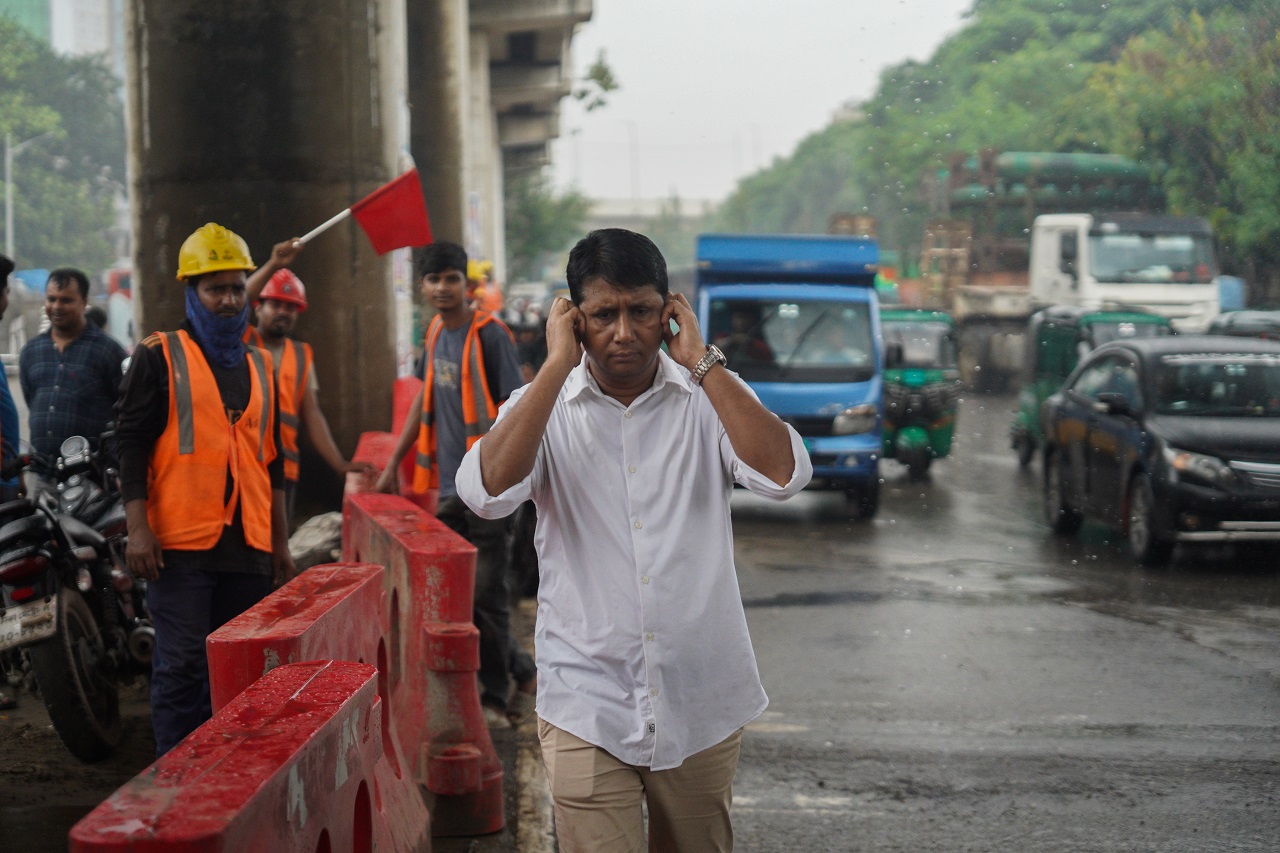
According to the World Health Organization (WHO), prolonged exposure to noise levels above 70-80 decibels is harmful to human health. Surveys show that nearly 8% of the Traffic police are at risk of permanent hearing loss, while another 35% suffer from temporary hearing problems. Ordinary citizens, pedestrians, rickshaw pullers, bus-truck drivers and motorcyclists all face the same risks.



Dr Rahman added, “Sound pollution damages not only our ears, but it also affects the heart. It raises heart rate, creates hypertension, leads to behavioural changes and even triggers migraines. Productivity declines under this constant stress.”
Dr Ahmad Kamruzzaman Majumder, Professor at Stamford University Bangladesh, echoed the concern. “Children are suffering ear damage and infections. Students lose focus on their studies. People are becoming more irritable, impatient, and short-tempered. Along with physical harm, sound pollution is causing serious psychological problems,” he said.
For traffic police, the challenge is different. Sufian Ahmed, Joint Commissioner (Traffic), Dhaka North, DMP, pointed to legal limitations. “Police currently don’t have the authority to fine drivers for honking. We’ve sent requests so that police can be legally empowered to do so. Since we are the ones on the streets, enforcement will only be possible if that authority is given,” he added.

For many, the damage is already done. Commuter Md Imran Sheikh, a member of the Armed Forces, shared, “Since being posted in Dhaka, I’ve noticed I can’t hear properly when I go home. People think I’m speaking loudly, but to me, it feels normal. My hearing has changed because of the constant noise.”
Sound pollution in Dhaka is a silent killer, quietly robbing citizens of their hearing, productivity and sanity. Unless the government, law enforcement and the people themselves act together to tackle this crisis, the city’s future may well be drowned in noise.