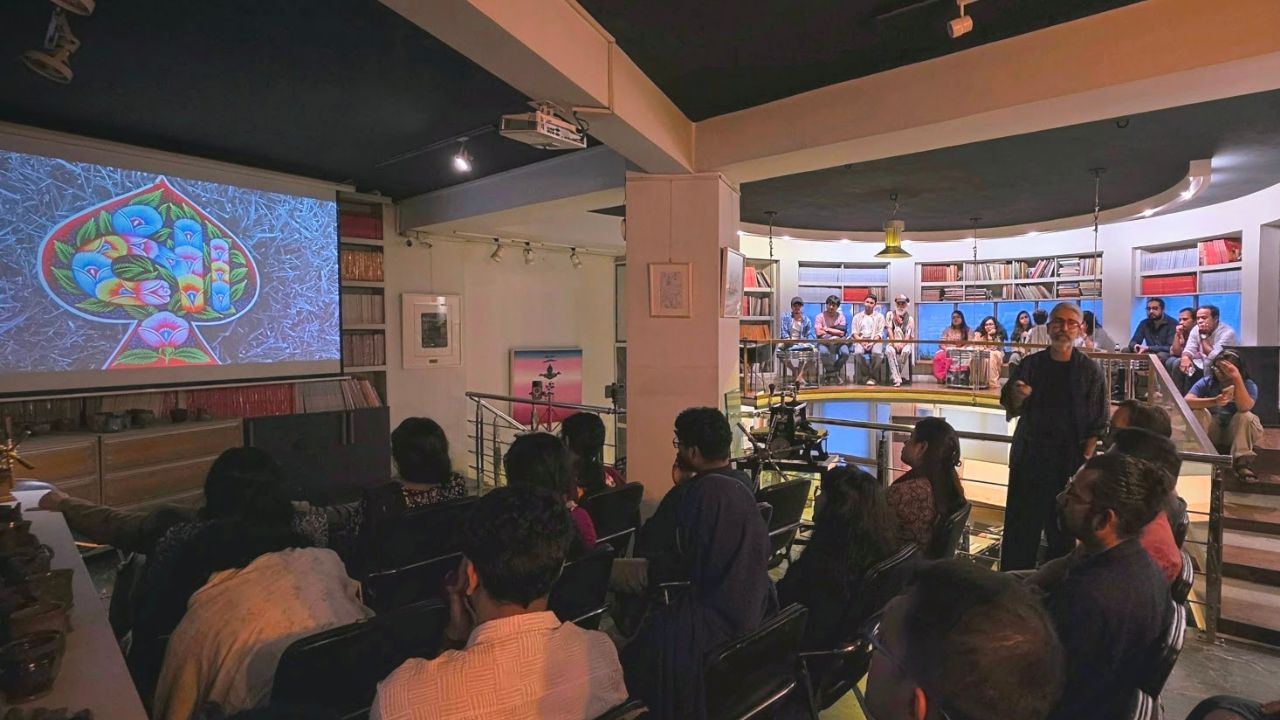
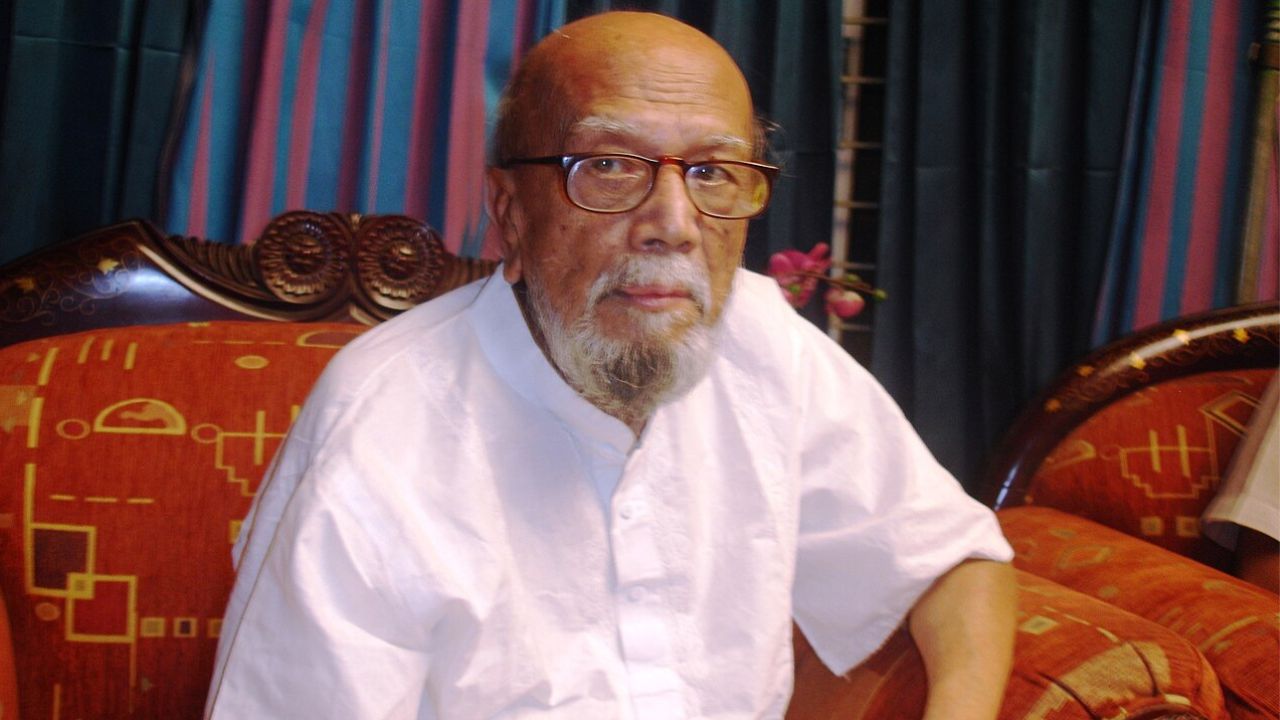
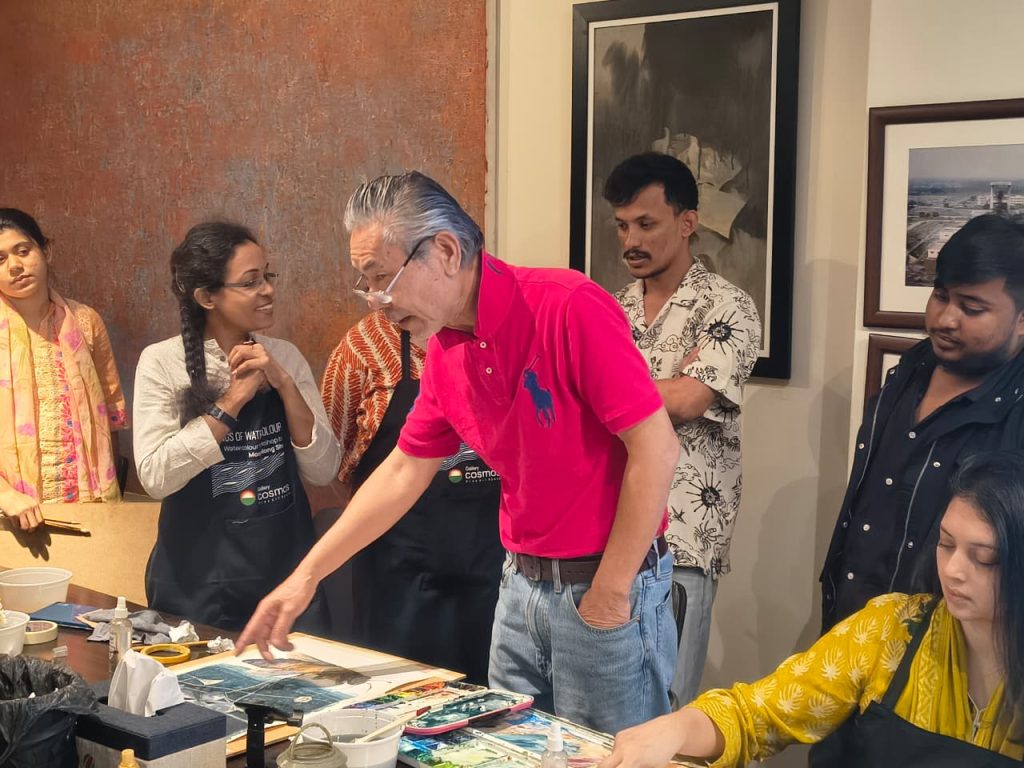
A quiet concentration settled over the room as watercolour enthusiasts dipped their brushes into pools of colour, watching the pigments bloom across wet paper; the daylight caught the gentle movements of water and paint, creating an atmosphere where learning felt almost meditative.
This was the scenario at the Songs of Watercolour workshop conducted by Bangladeshi artist Mong Mong Sho, currently a Lecturer at Yunnan Arts University and a PhD researcher at the China Academy of Art, alongside the master Watercolour Artist Ma Baiqi from China.
The initiative was designed to provide rich artistic insights into the medium for young and contemporary artists. Organised by Gallery Cosmos at Malibagh in Dhaka, the workshop aimed to bring together art enthusiasts eager to explore watercolour with guidance from global masters.
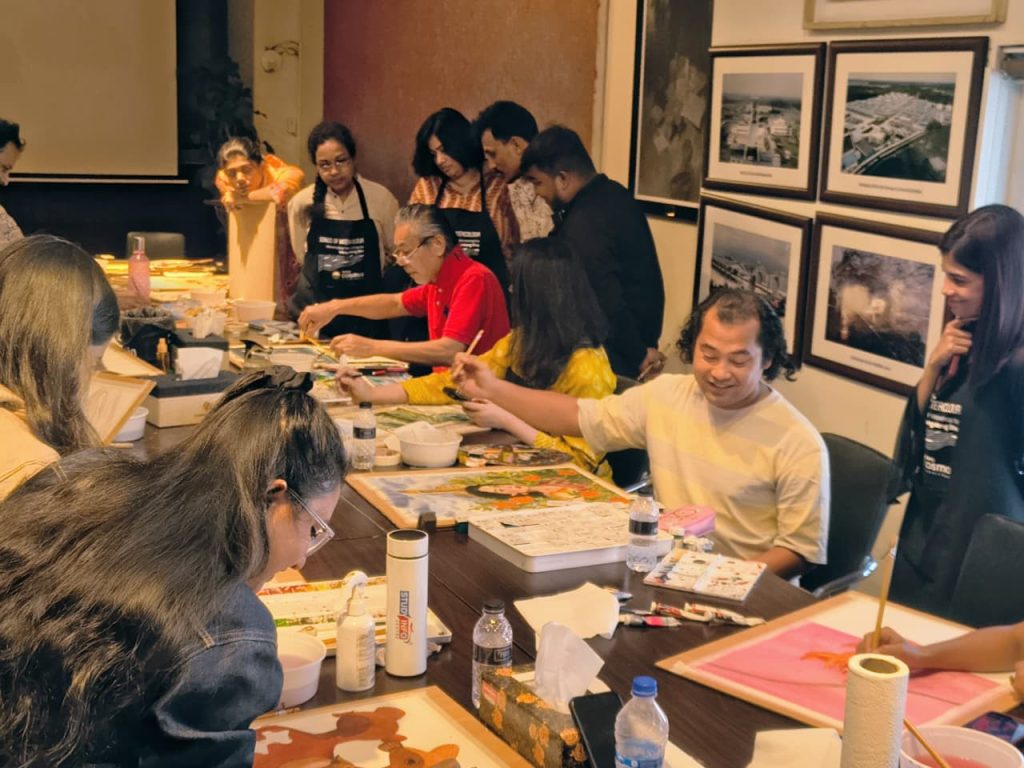
In Bangladesh, where rivers, rain and humidity shape the very rhythm of life, the medium feels almost native. Yet workshops that examine watercolour technically, historically and contextually remain rare. Against this backdrop, the three-day workshop, hosted by Gallery Cosmos from November 14 to 16, offered a much-needed space for hands-on practice and cross-cultural artistic learning.
Mong’s own relationship with watercolour runs deep. Born in Maheshkhali, Cox’s Bazar, he grew up physically and culturally shaped by water.

“I come from a place where the sea, rivers, light and wind define daily life; watercolour became a natural language for me. My surroundings, my culture, the indigenous people I grew up with, they are always present in my art.”
After early recognition through national and international competitions, Mong enrolled at Chittagong University before receiving a Yunnan provincial scholarship in 2012. In China, he completed his Honours in Painting and Master’s in Watercolour at Yunnan Arts University, where he now teaches.
His ongoing PhD research at the China Academy of Art focuses entirely on water-based media, a level of academic investment in watercolour rarely seen in Bangladesh.
Speaking to The TIMES of Bangladesh about the workshop’s structure, Mong explained, “On November 14, I took the first full session. On the 15th, Baiqi and I jointly led a session and on the 16th, we worked side by side with the participants. We demonstrated techniques, discussed ideas and reviewed their works.”
He described Master Artist Ma Baiqi as “a legendary figure in Chinese watercolour” and “a born teacher,” adding, “Just watching him paint is a lesson. His control over light and atmosphere is remarkable.”
Mong pointed out that Bangladesh’s natural environment gives artists an instinctive connection to the medium. “We were born in a riverine country, and countries surrounded by water often excel in watercolour. Our monsoon climate, our rivers, our visual culture, they give us a natural sensitivity and advantage to this medium.”
He also noted that the origins of watercolour practice in the Indian subcontinent trace significantly back to Bengal, a history he believes many young Bangladeshi artists would benefit to explore and learn.
However, he acknowledged the challenges local artists still face. “We lack access to high-quality watercolour materials,” he said. “I’m trying to connect Bangladeshi artists and art stores with international suppliers and practitioners so that the community can grow with proper resources.”
Gallery Cosmos’ Artistic Director Sourav Chowdhury emphasised the workshop’s diplomatic and artistic importance to TIMES. He said the initiative was part of Gallery Cosmos’s broader commitment to celebrating 50 years of Bangladesh–China diplomatic ties.
“We invited Mong Mong Sho and Master Watercolour Artist Ma Baiqi for this exchange. On the final day, they jointly reviewed the participants’ works and shared their experiences,” Sourav informed.
He added that Gallery Cosmos will host a dual exhibition of 30 works by Mong and Baiqi on November 18 at Garden Gallery Cosmos in Baridhara, calling it “an artistic celebration of this 50-year milestone.”
Looking ahead, Mong expressed optimism about future collaborations. “After the November 18 exhibition, Baiqi and I plan to organise another group exhibition with several Bangladeshi watercolour artists,” he said.
Expressing that the medium’s future in Bangladesh is promising, Mong said, “Our watercolour heritage is rich, from Zainul Abedin to Rafiqun Nabi to many young artists today. I think the future is bright and I’m excited to contribute through my knowledge at this workshop and the planned exhibitions.”
The workshop ended with a renewed appreciation for the subtle power of watercolour and a sense of creative possibility among the young participants, reflecting the successful collaboration between Gallery Cosmos and artists Mong Mong Sho and Ma Baiqi.