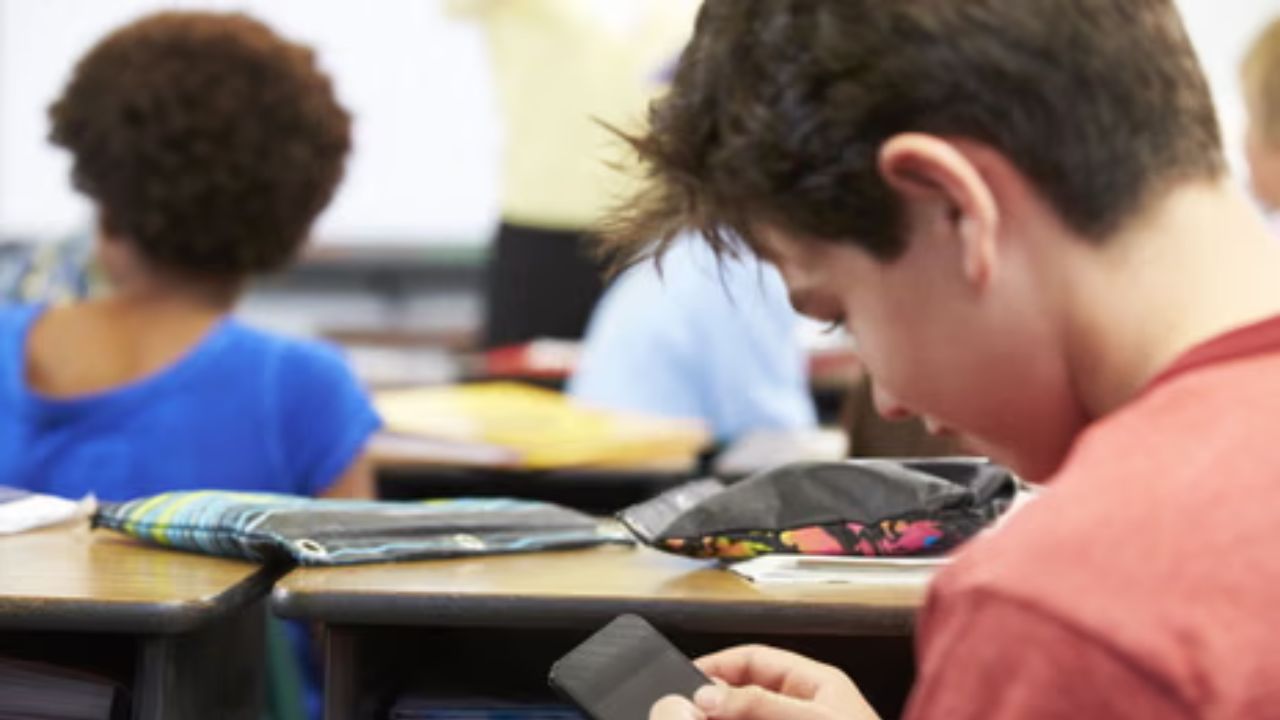



Secondary school students in Singapore will be barred from using smartphones and smartwatches throughout the entire school day including recess and co-curricular activities (CCAs) from January 2026, as part of tightened guidelines aimed at curbing excessive screen time.
Under current rules, students are restricted only during formal lesson hours. With the new measures, the Ministry of Education (MOE) said device restrictions will also apply during supplementary, enrichment and remedial sessions, mirroring the framework implemented in primary schools earlier this year.
In a statement issued on 30 Nov, the ministry said students must keep their phones and smartwatches in lockers or inside their school bags during school hours. Smartwatches are included in the ban as they allow messaging and app access similar to phones, leading to potential distractions and reduced peer interaction.
Schools may grant limited exceptions where necessary, MOE added.
According to the ministry, several secondary schools had already piloted similar restrictions after the 2025 primary school rollout and reported encouraging results including improved focus, better emotional well-being and increased face-to-face interaction during breaks.

The ministry also announced adjustments to usage limits for school-issued personal learning devices (PLDs) such as iPads and Chromebooks. From January, these devices will automatically enter sleep mode between 10:30pm and 6:30am, half an hour earlier than the current default.
MOE said the change is intended to help students reduce late-night screen exposure and encourage healthier sleep patterns.




All PLDs are equipped with a management application that allows schools to block harmful content including pornography and gambling websites and enforce screen time limits. Outside school hours, parents may choose the default settings, adopt a modified set of rules, or turn off the application entirely. MOE urged families using less restrictive options to consider aligning with the new default bedtime lock.
Minister of State for Education Jasmin Lau wrote on Instagram that although technology is deeply embedded in schools, students must learn to balance digital and non-digital activities.
“As a parent, I see how quickly children become curious about screens, even from pre-school age,” she said. Lau added that the revised guidelines would help students build lifelong habits for safer and more mindful tech use.
Schools will brief parents and students on the rollout through start-of-year orientations, handbooks, websites and parent meetings. Institutions also retain autonomy to shape disciplinary rules suited to their student profiles. For misuse of devices, the ministry said schools typically work with families to address underlying concerns rather than opt for punitive measures alone.
While junior colleges and Millennia Institute students will not face similar full-day bans, their use of smartphones during lessons will still require teacher approval.
The new school rules come amid broader efforts by the Singapore government to promote healthier digital habits among young people.
In January, the Ministry of Health updated its national screen use guidelines, recommending no screen exposure for children under 18 months and limiting recreational screen time for those aged seven to 12 to under two hours a day.
A government survey published in September found that about 25% of teens aged 13–17 spent over four hours daily on digital devices on weekdays, rising to nearly half on weekends.
At the National Day Rally, Prime Minister Lawrence Wong pledged stronger measures to support parents and ensure safer digital spaces for children.
As part of this commitment, the Ministry of Digital Development and Information (MDDI) and the Ministry of Social and Family Development (MSF) launched two new initiatives on 30 Nov under the Grow Well SG movement, a nationwide digital parenting programme and a children’s book promoting online safety.