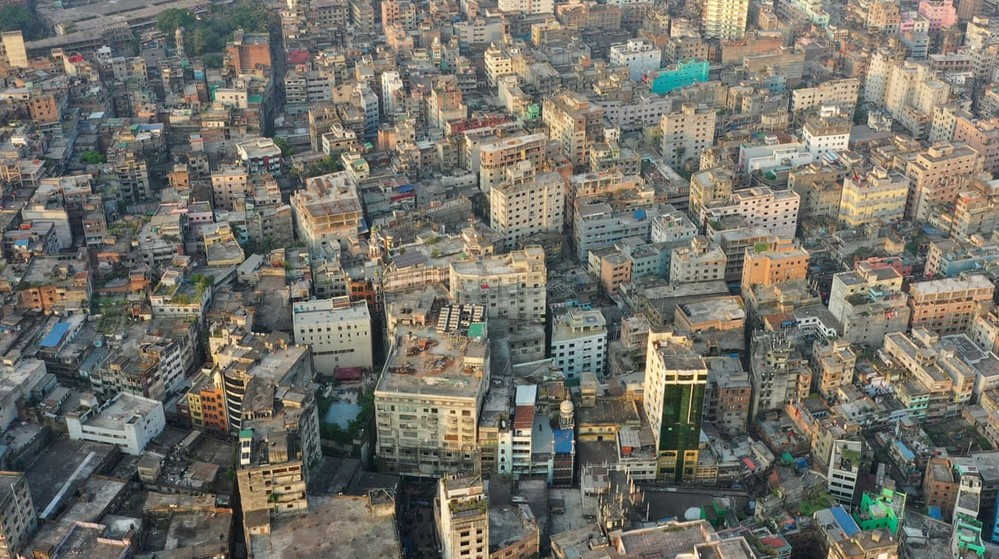

Bangladesh is one of the fastest-developing economies in South Asia. Due to rapid urbanisation and continual infrastructural developments, the nation has made tremendous progress. But beneath this enormous progress, the likelihood of natural or human-caused catastrophic effects is quite high. This has been very much evident due to considerable public relations issues and people’s distraction by several natural phenomena, for instance, flood, cyclone and river erosion; the potential risk of earthquake has been ignored for a long time.
Since Bangladesh is geographically located in a highly seismic zone close to the adjoining Indo-Burmese and Himalayan arc fault zones, the country is under an increasing seismic hazard. Unfortunately, with the peak of urban development, the country is found to be very much unprepared for a test of such scale in seismic vulnerability. For instance, the construction of a building with little adherence to seismic loading standards resulted in a significant gap between the two, as evidenced by the recent sequence of earthquakes, which struck various parts of the country. Despite being of moderate strength, several buildings were found to be damaged significantly and manifest all the typical causes of poor construction, unauthorised modifications, site supervision deficits, substandard building materials and so forth.
Fire hazards are no less significant than the threat to Bangladesh’s urban cities. Based on the Fire Service and Civil Defence’s report, there were more than 27,000 recorded fire incidents across Bangladesh – including urban cities – in 2025, an average of an incident every 21 to 22 days. The majority of the accumulated losses during 2025 occurred in residential and commercial jurisdictions. Malfunctioning LPG (liquefied petroleum gas) bottles are the greatest threat, as they are illegally stored in the basements of residential buildings.

Building structure and maintenance remain unsafe for many residents, given the use of defective building products and architecture. Narrow or single escape stairways ensure an accessible escape route. Advertisements and storage of merchandise prevent escape routes. In the majority of the buildings, fire refuges are absent, while inadequately ventilated shafts are early conduits for smoke. Improvement has also been made in the post-construction monitoring, as building owners are allowed to change their buildings without following the rules of the country’s building standards and electrical safety checks.
To prevent these incidents, the institutional shortcomings and lack of enforcement need to be addressed. The implementation of the Bangladesh National Building Code during all stages of planning, design, construction and occupancy must be brought into effect. Structural integrity and fire safety compliance should be equally enforced as a norm and not an option. The Bangladesh Building Regulatory Authority (BBRA) should be developed as a full-fledged regulatory body to promote uniform implementation of building regulation, conduct independent structural and fire safety inspection and thereby increase regulation accountability.




Also, the level of knowledge of architects, engineers and construction business managers should be raised to match the advanced concepts of earthquake-resistant and ductile designs and fire protection systems. The ongoing initiatives try to achieve this end. The Technical Development for Seismic Evaluation and Retrofitting of Buildings (TSUIB), implemented jointly by HBRI and the Japan International Cooperation Agency (JICA), progresses the development of valid methods for seismic risk assessments of the built environment and reliable design standards for the seismic retrofitting of existing vulnerable buildings. RAJUK’s Urban Resilience Project (URP), financially supported by the World Bank, enhances urban governance and strengthens regulation oversight through detailed geotechnical investigations and the Electronic Construction Permitting System (ECPS).
In addition to regulatory reforms, other measures, such as independent assessment systems, may raise confidence in the safety of the construction. The IFC Building Resilience Index (BRI), a web-based assessment system that looks at the resilience of buildings to a range of hazards including seismic events, fire, floods and strong winds, is just one example. The assessment system gives the results of the structural performance, fire resistance, compartmentation and evacuation of the building in terms of an independent, impartial score. Bangladesh has the chance to move toward tying development and financial policy to resilience.
In a nutshell, the concept of resilience should no longer be confined just to technical compliance but should be treated rather as a strategic deal which signifies the investment in the future of the country. Structures which will be resilient against earthquakes and fire will not only protect lives but will also protect the material possessions, alleviate the costs of recovery and boost the confidence of the Public in city developments. As Bangladesh progresses as a developed nation, the emphasis should not be on conforming to the minimum necessary standards, but rather on building every city resiliently.
The writer is the Principal Research Officer at HBRI, a Certified Energy Manager, EDGE Expert, EDGE Auditor, and IFC-BRI Assessor