The newly formed 13th parliament is facing mounting scrutiny as repeated procedural breaches and signs of inexperience among first-time members raise concerns over legislative efficiency, discipline and the use of public funds.
As the first session progresses, a pattern of irregular conduct has become increasingly visible. Incidents such as informally addressing the speaker, attempting to speak without prior written notice, straying from the agenda and exceeding allotted speaking time have prompted frequent interventions from the chair.
Observers say these developments are raising broader questions about how effectively the legislature is functioning.
At the heart of the issue is the unusually high number of new members. More than 70% of the 300 MPs—219 in total including the prime minister and leader of the opposition—are serving their first term, making this one of the least experienced parliaments in the country’s history.
While their entry had initially been viewed as a sign of generational change, analysts now warn that the lack of familiarity with parliamentary rules could undermine the institution’s credibility if not addressed quickly.
Despite receiving some initial training, members from both ruling BNP and the opposition alliance of Jamaat and the National Citizen Party (NCP) are still struggling to navigate parliamentary procedures. Analysts say the problem is compounded by the absence of structured and sustained orientation programmes, which political parties once routinely organised.
Up to the eighth parliament, parties played an active role in preparing their members in parliamentary practices. However, over the past four parliaments, such initiatives have largely disappeared, leaving many new MPs without adequate grounding in legislative norms.

The consequences are now being felt inside the chamber. During recent sittings, several MPs attempted to speak without complying with Rule 71, which requires prior written notice. Others misused Rule 70, designed for points of order, to deliver political statements instead of procedural clarifications. In some instances, members failed to show due respect to the speaker, contrary to Rule 300.
There have also been repeated violations of Rules 58 to 60, which govern time limits and adherence to the agenda, with members deviating from assigned topics. Additionally, although Rule 267 prohibits unparliamentary language, personal attacks and controversial remarks have occasionally surfaced, later being removed from the official record.
A series of incidents during the current session has drawn particular attention. On 8 April, a member from Moulvibazar-4 addressed Speaker Hafiz Uddin Ahmed as “brother” while requesting additional speaking time. The speaker responded with humour, granting an extra minute but reminding the member to use appropriate parliamentary language.
Earlier, on 15 March, a member from Barguna-1 was cautioned for reading a speech verbatim, with the speaker noting that such practice falls outside parliamentary convention. On the same day, several members were warned against addressing colleagues informally.

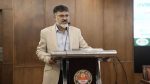


In another incident on 15 April, a member from Munshiganj-2 continued speaking loudly for more than two minutes after his microphone had been switched off for exceeding his time limit. Despite repeated requests from Deputy Speaker Kayser Kamal to conclude, the member continued, prompting laughter among those present.
While some of these moments have been treated light-heartedly, they have also highlighted deeper concerns about discipline and preparedness.
The issue has also taken on financial significance. According to an analysis by Transparency International Bangladesh (TIB), parliamentary proceedings are expensive to run. During the first 22 sessions of the 11th parliament between January 2019 and April 2023, the average cost per minute was approximately Tk2,72,364.
Based on this estimate, the 50 hours allocated for discussion on the president’s address in the current session could cost around Tk81.7 crore. This has prompted questions about the justification for time wastage in such a costly forum.
Constitutional expert and senior Supreme Court lawyer Sharif Bhuiyan tells TIMES of Bangladesh the situation is not unexpected given the scale of new members, but warns that corrective steps are essential.
He argues that both political parties and the Parliament Secretariat should take coordinated initiatives to improve members’ understanding of parliamentary rules through structured training led by experienced figures.
There are now indications that such measures may be forthcoming. Whips and members from both the ruling party and the opposition are considering the organisation of orientation programmes, while the Parliament Secretariat is also working on a plan to introduce formal training for new MPs.
There is precedent for such initiatives. In the past, organisations including the United Nations Development Programme (UNDP) and other international bodies have supported orientation programmes in collaboration with the Parliament Secretariat.
Speaking to TIMES, Deputy Speaker Kayser Kamal has urged patience, describing the current situation as part of a broader learning curve. He noted that this parliament includes the highest number of educated young members since independence and that many are encountering parliamentary procedures for the first time. He also pointed out that both the leader of the house and the leader of the opposition are new, as is he in his role as deputy speaker.
“Honest mistakes should not be judged too harshly,” he said, adding that members had been provided with the rules of procedure on the day they took their oath and are in the process of familiarising themselves with them. He expressed confidence that the situation would improve over time.
However, others stress that time alone may not be enough. Ruling party whip ABM Ashraf Uddin Nizan said discussions are already under way with opposition members to arrange parliamentary training through the speaker.
He acknowledged that many new MPs are unfamiliar with legislative procedures, which has led to criticism and could continue to do so without intervention. He added that all members must work towards becoming competent parliamentarians.
Nizan also noted that, in the past, international parliamentary organisations and institutions such as UNDP had provided training support. He said that while BNP and Jamaat alliance have already conducted two rounds of training for their members, a broader, more comprehensive programme is needed.
Gazi Nazrul Islam, a three-time MP from Satkhira-4 and a member of a parliamentary special committee, echoed these concerns. He said many members speak without fully understanding the law, creating complications within proceedings, and emphasised the need for structured training led by experienced parliamentarians.
Officials within the Parliament Secretariat confirm that preparations for an orientation programme are under way. Mohammad Shamsuddin Khaled, joint secretary of the Legislative Support Wing, said the Human Resources Division is responsible for organising such training and that a process is currently ongoing. He indicated that, unofficially, the programme could be launched soon.
For now, the parliament remains in a transitional phase, balancing the promise of new leadership with the practical challenges of inexperience. Whether through training, stricter enforcement of rules or time itself, the coming weeks are likely to determine how quickly the institution can adapt—and whether it can restore confidence in its effectiveness.