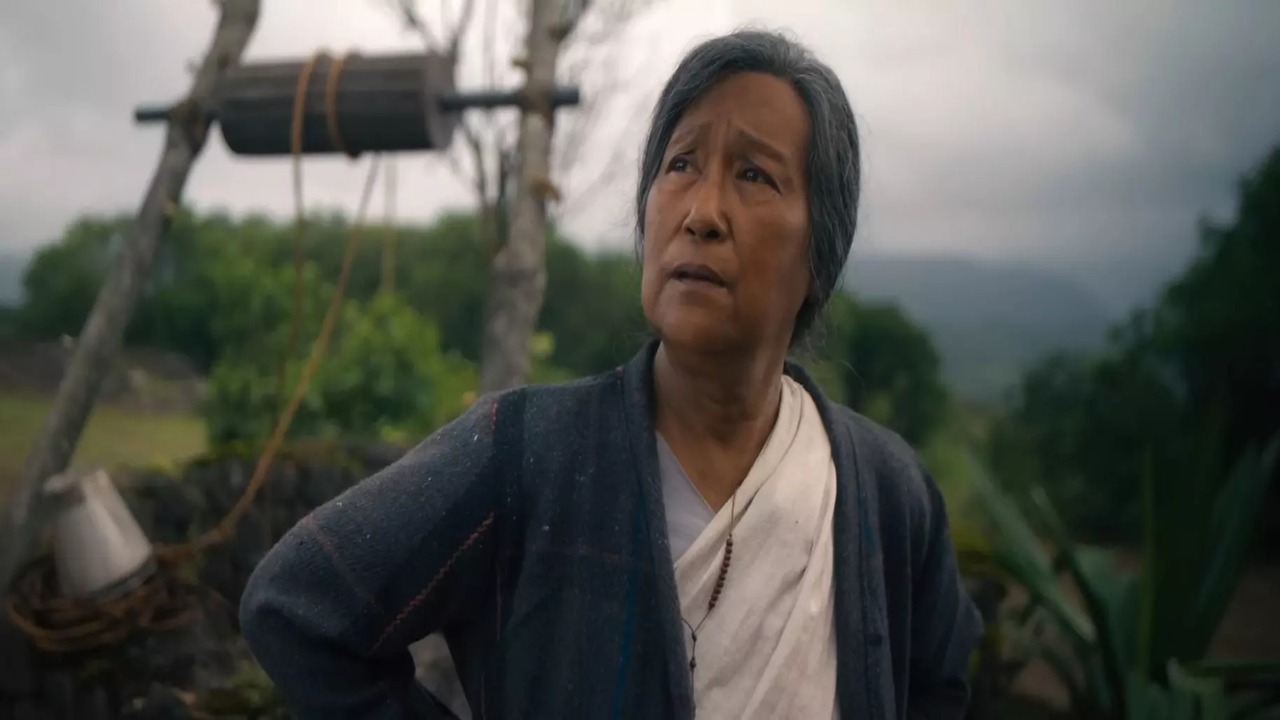



When Biana Watre Momin agreed to act in a Malayalam film, it was not part of any long-held ambition. At 70, the retired college teacher from Meghalaya was living a quiet life in the Garo Hills, surrounded by her family, grandchildren, and dogs. Cinema, particularly one made more than 3,000 kilometres away in a language she did not speak, felt worlds apart.
That changed with ‘Eko’, a Malayalam-language film now streaming on Netflix, which has quietly emerged as a critical success and introduced audiences to one of the most unusual lead actors in recent Indian cinema.
Momin, a former English literature lecturer at Tura Government College, plays Mlathi Chettathi, a reclusive elderly woman living alone in the Western Ghats. The character’s silence, strength and moral authority sit at the centre of the film, anchoring its brooding atmosphere and layered narrative.

Until recently, acting was never on her radar. Growing up in a small town with no cinema or theatre, she had no exposure to performance beyond the classroom. “Unless you count teaching as a kind of performance,” she has joked. Her first brush with filmmaking came only through a short film based on Garo folklore, where she appeared almost by chance.
That appearance proved decisive. While searching for an unfamiliar face to play an elderly Malay woman with a complex past, the Eko team came across images and clips of Momin. Director Dinjith Ayyathan and his collaborators were struck by her presence and invited her to Kerala for an audition.




The risk paid off. Despite never having faced a professional camera before, Momin impressed the filmmakers with her restraint, spontaneity and emotional control. She took on the physically demanding shoot, trekking up forested hills each day, working around unpredictable weather and learning her Malayalam lines phonetically with the help of a language coach. Her dialogue was later dubbed, but she delivered every scene herself on set.
Completed in just 45 days on a modest budget, Eko has drawn attention largely because of its lead performance. Critics and fellow actors have praised Momin’s natural authority on screen, with national award-winning actor Dhanush calling it a “world-class performance”.
For Momin, the experience was transformative rather than glamorous. She has described the shoot as returning to student life, absorbing new skills and rhythms late in life. She also sees the role as quietly political.
Coming from a matrilineal indigenous community, she found parallels with Kerala’s social structures and drew on that perspective to shape her character.
Following the film’s success, approaches have come in from filmmakers beyond Kerala, including from Bollywood. For now, she is cautious. Acting, she admits, is demanding work, and she has returned home to her routines, family life and book club discussions.
Momin’s journey has resonated far beyond the film itself. Her late entry into cinema has become a reminder that Indian screens still have space for stories and faces outside convention. As she puts it, creative risks do not belong only to the young, and neither does reinvention.