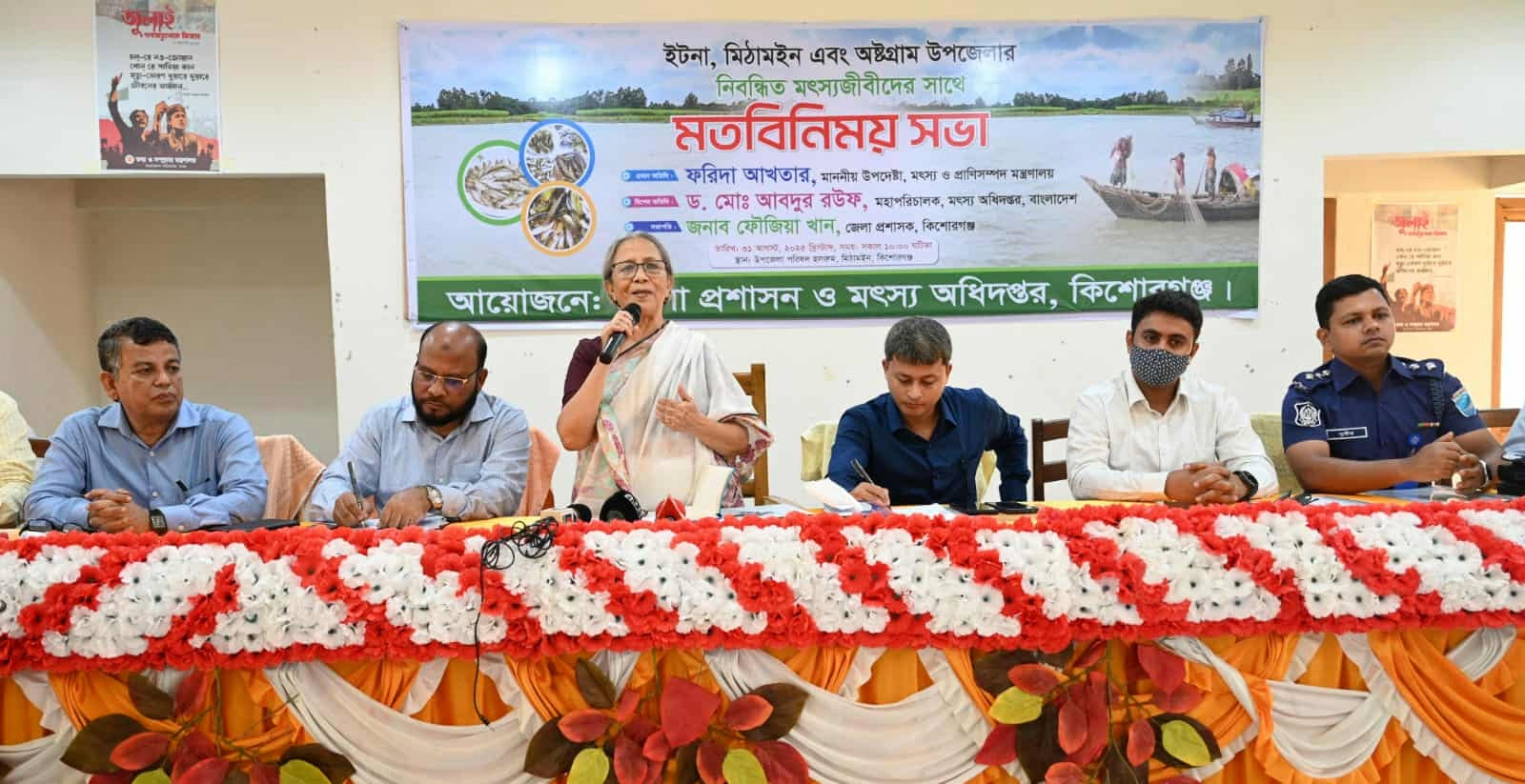

Fisheries and Livestock Adviser Farida Akhter stated that haors are extremely important for Bangladesh’s agriculture and fisheries resources. Nearly half of the country’s total Boro rice production comes from haor regions. However, due to the excessive use of insecticides and pesticides in agriculture, the fisheries resources in haors are suffering.
The adviser made these remarks as the chief guest while speaking at a discussion meeting with registered fishermen from Itna, Mithamain, and Astagram upazilas of Kishoreganj district, held Sunday morning at the Mithamain Upazila Parishad hall room. The district administration and the Department of Fisheries, Kishoreganj, jointly organized this discussion meeting.
The Fisheries and Livestock Adviser mentioned that a national committee has been formed to limit the use of pesticides in the agricultural sector to protect fisheries and livestock in haor areas. Work is underway on how to reduce pesticide use in agriculture while increasing production and, at the same time, protecting fisheries and livestock. Everyone must comply with the upcoming announcements regarding this matter.

The adviser noted that natural changes are occurring in haors due to various reasons, including the construction of embankments. Instead of silt, sand is now accumulating on the land, which is disrupting the balance of nature. However, not all natural changes are created by nature; in many cases, humans are responsible for such changes.
Criticising those who use illegal nets, the adviser said that some mischievous individuals are catching fish using illegal nets and electronic shocks, which is becoming increasingly concerning. She questioned how, as a human being, one could cause such harm.



She added that tourists visiting haors are damaging the environment while failing to understand the hardships faced by local people. The lack of sufficient bridges and culverts in the construction of the Itna-Mithamain-Astagram highway is obstructing water flow. If more bridges and culverts were built, fish movement would be easier, and everyone would benefit.
Regarding the lease system, she mentioned that there are currently 45 lease-free water bodies and 312 leased water bodies in the Kishoreganj haor. The government wants to ensure that only genuine fishermen can obtain leases, and inter-ministerial coordination is underway to achieve this goal.
Later, the adviser released 550kg of fry into the Itna Haor near Gabtali Bridge.
The discussion meeting was chaired by Kishoreganj’s Additional District Commissioner (General) Mizabe Rahmat. Speeches were given by the Director General of the Department of Fisheries, Dr Md Abdur Rauf, District Fisheries Officer Mohammad Shahidul Islam, and Mithamain Upazila Executive Officer Khan Md Abdullah Al Mamun.
Additionally, statements were provided by fisheries representatives from Itna Upazila, Md Swapan Mia; from Mithamain Upazila, Md Azizur Haque; and from Astagram Upazila, Md Kakan Mia. The meeting was attended by senior officials from various government and private institutions, as well as fishermen from the haor region. The welcome address was delivered by the Director of the Department of Fisheries, Md Monirul Islam.