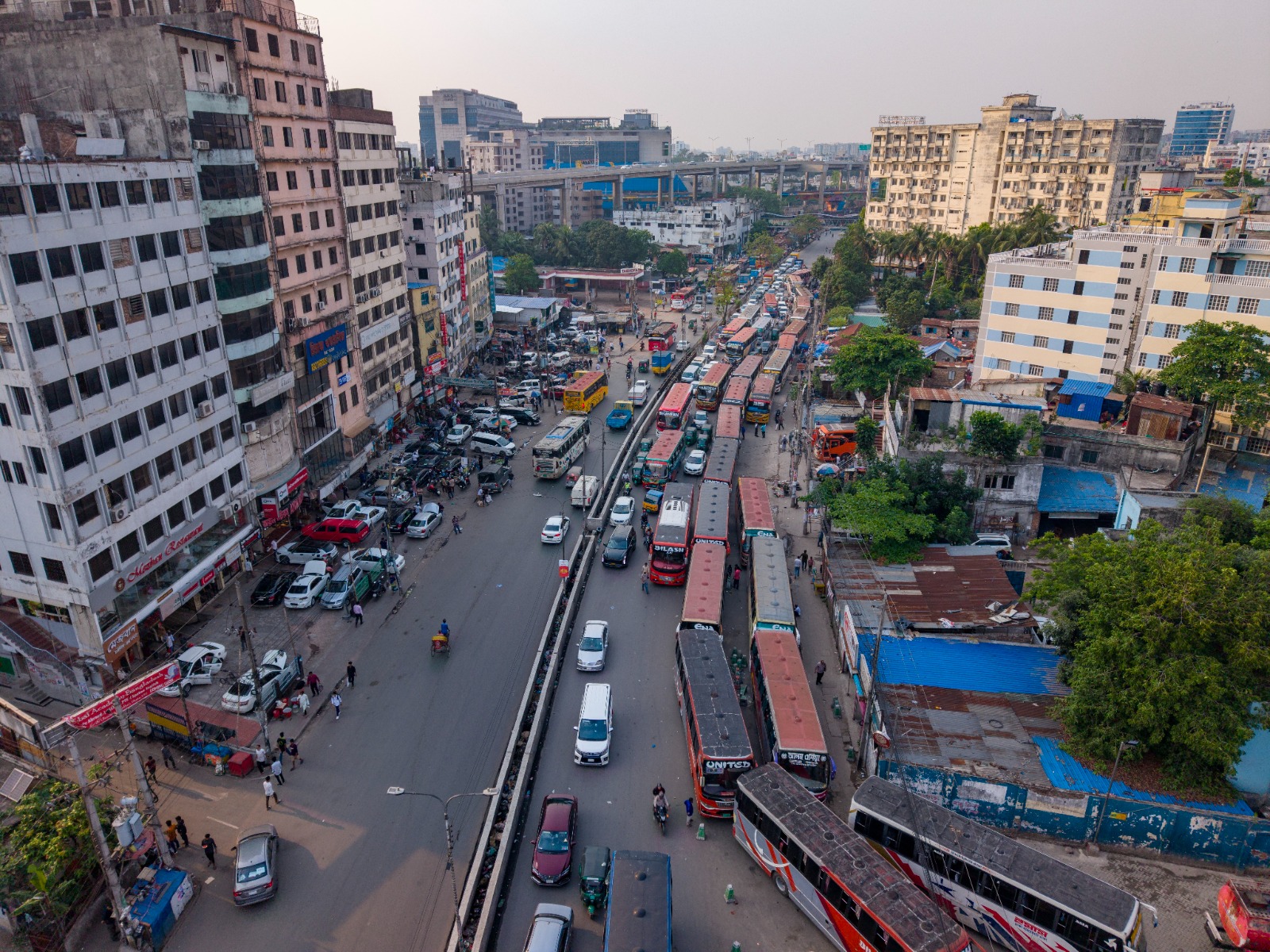
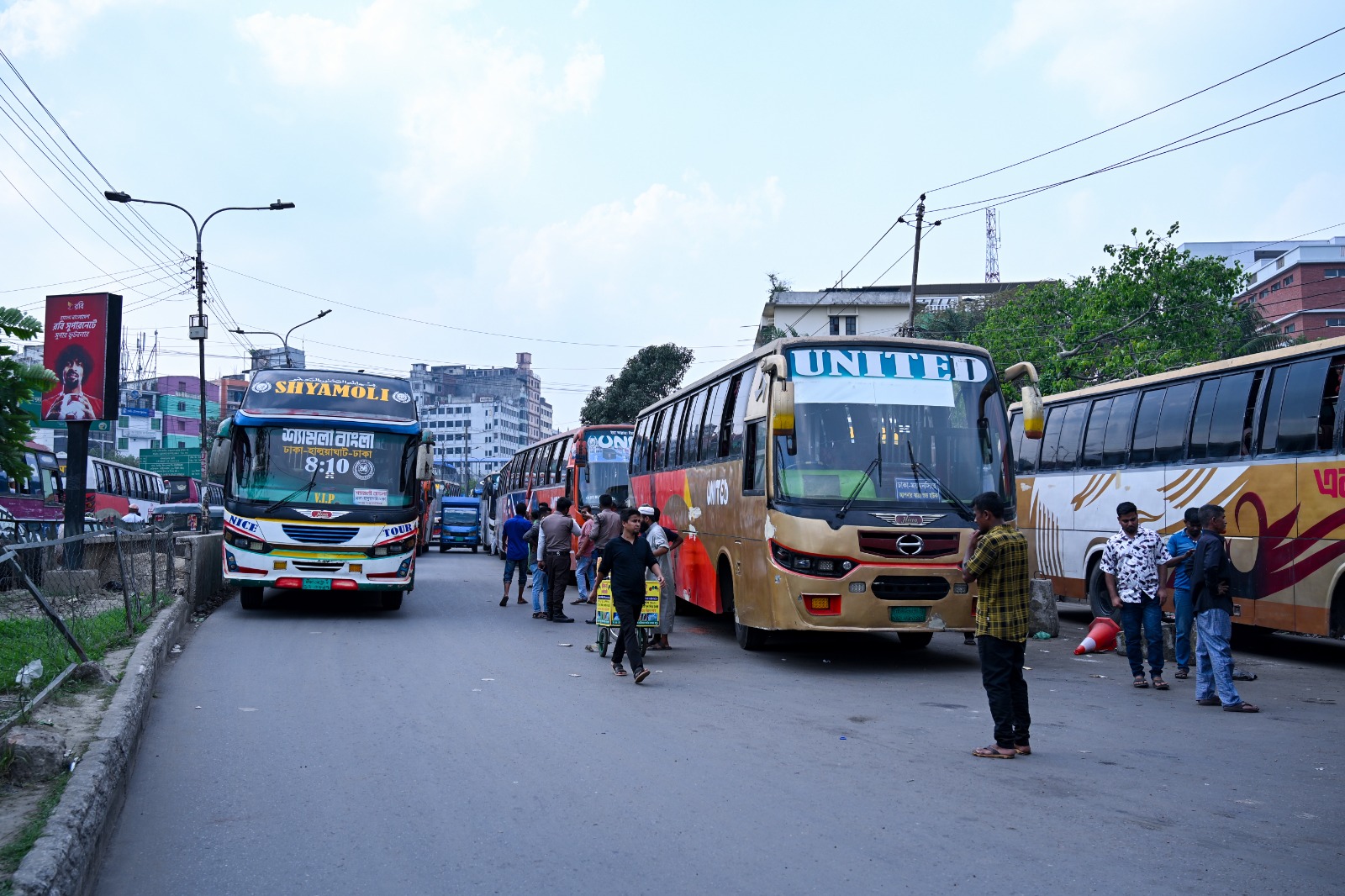
In an ambitious bid to dismantle Dhaka’s long-standing reputation as one of the world’s most gridlocked cities, the government has formalised a landmark policy to relocate the capital’s four major bus terminals to its suburban periphery.
This strategic decentralisation, approved by Prime Minister Tarique Rahman, seeks to modernise traffic management and liberate the city’s internal arteries from the suffocating presence of inter-district transport.
However, as the government moves to redraw the city’s logistical map, a profound tension has emerged – while the initiative is lauded for its visionary scope, it has simultaneously triggered a wave of anxiety among commuters, transport owners, and urban experts.
The key concern is that without a robust, affordable, and high-capacity secondary transport network, this relocation may inadvertently transition from a strategic relief into a financial and logistical trap for millions of daily passengers.

Road Safety Foundation (RSF) Executive Director Saidur Rahman told TIMES of Bangladesh that without deep-seated structural reforms, the government’s initiative remains “uncoordinated.”
He identifies the core of the crisis not in the location of the terminals, but in the fragmented and undisciplined management of bus industry.
The policy outline, finalised during the third meeting on traffic congestion and management modernisation held at the Secretariat last Monday, establishes a new geographic framework for the city’s transit hubs.
Under this plan, the Fulbaria-Gulistan terminal will be shifted to Keraniganj, and the Gabtoli hub will move to Hemayetpur.
The Sayedabad-Jatrabari terminal is slated for relocation to Kanchpur, while the Mohakhali terminal – a critical northern gateway – will first move temporarily to Purbachal before being permanently established near Tongi.

Financial burden on middle class
For the middle-class commuter, the geographic shift of these terminals translates directly into a surge in daily living costs. Ramim Talukdar, a small-scale entrepreneur who operates a cycle-parts business in Old Dhaka, exemplifies the growing unease.
For years, Talukdar has relied on the Sayedabad terminal for his weekly business trips to Jhenaidah.
He argues that while reaching Sayedabad through city traffic was always a hurdle, starting his journey from Kanchpur will not only fail to alleviate the time-drain but will effectively double his travel expenses.
For those whose livelihoods depend on regular movement between the capital and the districts, the relocation threatens to upend their economic stability.
This sentiment is echoed by Tahjib Sparsha, a private sector employee who commutes to Cumilla every weekend.

Relying on Sayedabad as his primary exit point, Sparsha estimates that being forced to disembark at Kanchpur would necessitate hiring secondary transport, such as a CNG or a private car, to reach his workplace in the city.
He projects that this shift will add an additional Tk1,500 per week to his travel budget – a sum he describes as a “major blow” to any fixed-income earner.




Sparsha further notes that while decentralisation is a theoretical necessity for a functional Dhaka, it must not be executed at the expense of the working class.
He warns that without affordable feeder services, low-income passengers will be forced to rely on “shackle-buses” (unfit, local vehicles) to navigate the gap between the new terminals and the city centre.
If this happens, the pressure on the roads will not decrease; it will merely shift from inter-district coaches to a chaotic fleet of unregulated local transport, leaving the congestion crisis unresolved.
A working-class perspective
The impact of the relocation is perhaps most visceral for the city’s low-income workforce. For Rahela Khatun, a garment worker, the prospect of travelling to the outskirts just to begin a long-distance journey is a source of immense frustration.
She points out that for workers who “live hand-to-mouth,” the existing challenges – such as ticket black-marketing and arbitrary fare hikes during festivals – are already a heavy burden.
“We earn very little and just want to go home cheaply,” Khatun remarked, expressing fear that the government is overlooking the ground realities of the poor.
She argues that forcing a worker to travel from a city residence to a distant point like Purbachal to catch a bus from the Mohakhali terminal will only add “unbearable hardship” to an already difficult life.
Her grievance highlights a critical gap in the policy – the need for coordinated planning that includes not just new infrastructure, but the protection of commuters from predatory pricing and inefficient transport links.
Even passengers who opt for high-end AC bus services for comfort are not immune to these concerns.
There is widespread anxiety that after a comfortable long-distance trip, passengers will be “dumped” at peripheral terminals and forced to battle extreme heat or adverse weather while searching for transport into the city.
Without high-quality ancillary transport, the resulting overcrowding and chaos at the new terminals could lead to a breakdown in both road safety and public order.
Reform vs ‘uncoordinated’ infrastructure
Communication experts argue that moving terminals is merely a cosmetic fix if the underlying transport system remains broken.
Road Safety Foundation (RSF) Executive Director Saidur Rahman told TIMES that Dhaka’s bus system is currently not institutional, leading to a “lethal competition” between various private operators on the same routes.
This results in reckless driving, irregular passenger pick-ups, and a total lack of safety standards. He insists that the entire network must be brought under a unified management structure through comprehensive route rationalisation.
To solve the terminal crisis, Saidur proposes a disciplined “scheduled entry” system. Under this model, long-distance buses would stay at suburban depots and enter the city only at fixed times to pick up passengers, returning to their peripheral bases at night.
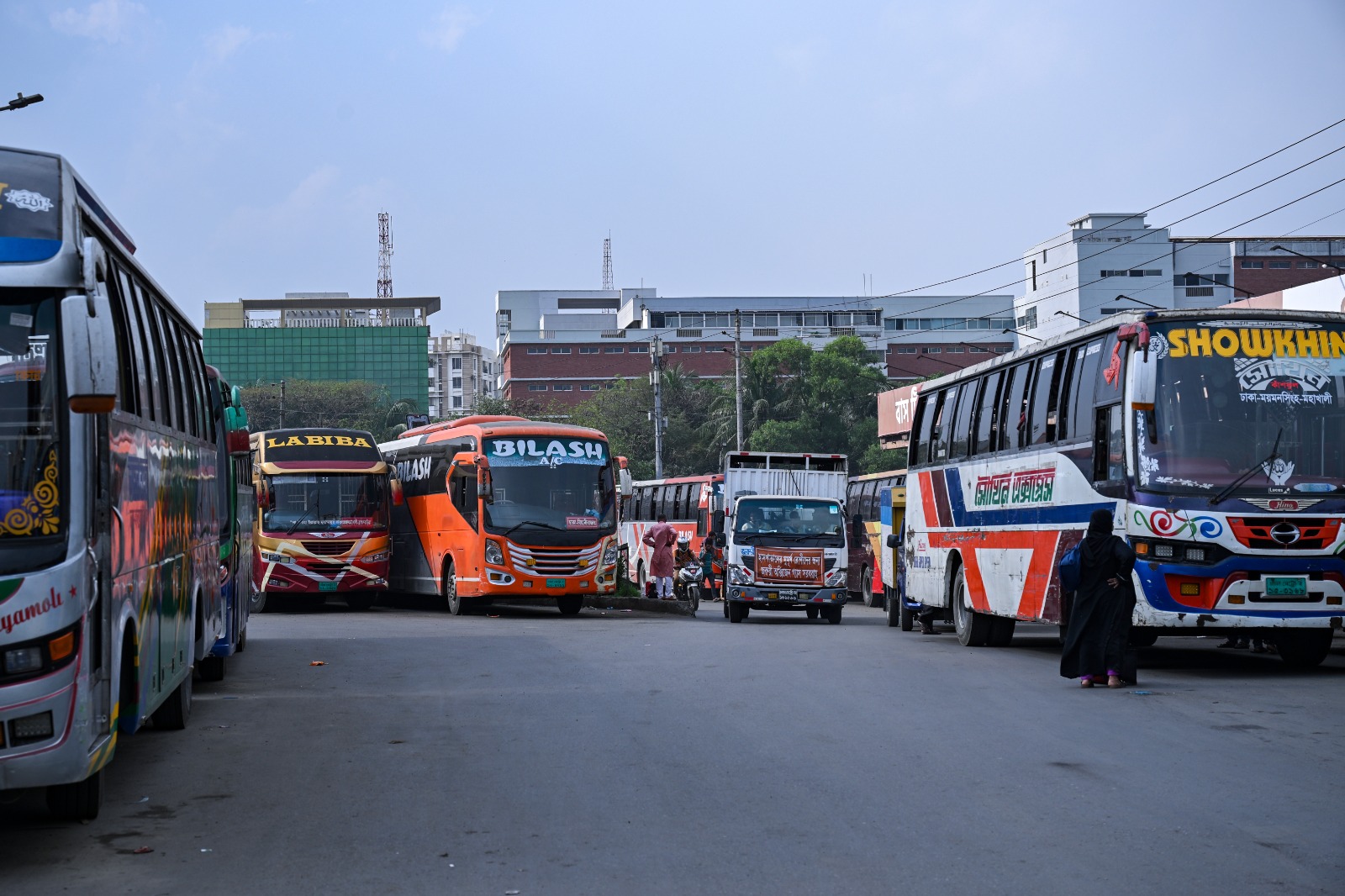
However, he cautions that even this will fail unless the government addresses the human element – the commission-based pay of drivers and the use of unfit vehicles.
“The chaos will remain as long as drivers are forced to work on daily contracts or commissions,” he warned, labelling the terminal move an “incomplete and temporary solution” if it isn’t backed by fixed salaries and modernised fleets.
Operational hurdles and BRT ‘cautionary tale’
Transport operators also see significant risks in the transition. Sobhan Sikdar, a private bus owner, raised questions about the structural readiness of the proposed suburban sites.
He warned that many existing city routes are already underserved, and if new permits are issued indiscriminately to ferry millions of passengers from the new terminals into the capital, the surge in vehicles on entry roads could be catastrophic.
Sobhan called for a scientific plan based on actual passenger flow and road capacity to ensure that the gridlock doesn’t simply migrate from the city centre to its entrance points.
Finally, the discussion on Dhaka’s traffic cannot ignore the Bus Rapid Transit (BRT) project, which Dr Md Hadiuzzaman described as a “cautionary tale.” Having cost the public 12 years of suffering and massive investment, the project currently stands as a symbol of delayed progress.
During the 10 June meeting, Prime Minister Tarique Rahman engaged with Dr Hadiuzzaman and other experts to discuss how to rescue the project.
Rather than abandoning it – which would set a “very bad example” of wasted resources – the PM has requested a new framework within seven days to transform the BRT into an effective “public transport corridor” that can complement the new terminal strategy.
Ultimately, while the relocation of Dhaka’s bus terminals is a bold step toward urban modernisation, its success hinges on whether the government can build a bridge between its high-level policy and the daily survival of its citizens.
Without a coordinated plan for company-based management, affordable feeder services, and structural reform, the move risks being remembered as another layer of complexity in Dhaka’s already tangled web of congestion.