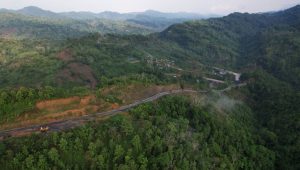
The Ramu Rubber Garden has emerged as a unique destination for tourists, offering a serene green landscape alongside its role as a significant production hub.
Located just 18 kilometres from Cox’s Bazar district town and two kilometres north of Ramu Chaumuhani, the garden spans a vast 2,682 acres along the Chattogram-Cox’s Bazar highway.
Historical background and expansion
The initiative began in 1960-61 under the Bangladesh Forest Industries Development Corporation (BFIDC). Originally established on only 30 acres of uncultivated land with seeds imported from Malaysia, the project has since grown into an expansive forest.

The garden’s boundaries now stretch from Joarianala Malapara in the north to Jumchhari and Gorjonia in the east, and Lot Ukhiya Ghona in the south.
Production and economic impact
The primary objective of the garden is to move the country towards self-sufficiency in rubber production. Currently, the site hosts approximately 180,000 trees, with over 50,000 currently in production.




A rubber tree typically yields latex for 25 years, losing its capacity by the age of 32 or 33.
The garden produces approximately 250,000 kilograms of rubber annually. While production continues throughout the year, the peak season runs from October to January, with winter yielding the highest amount of latex.
During this period, roughly 5,000 kilograms of latex are collected daily. This raw material is processed into dry rubber within seven days at a factory located on the eastern side of the garden.
A growing tourism spot Beyond its industrial utility, the garden has become a popular picnic and tourist spot, drawing visitors from home and abroad to its cool, shaded environment. Visitors can observe the extraction of white latex from the trees at close range.
Travel and accommodation Travellers can reach Cox’s Bazar from Dhaka by bus, train, or air, and then take a CNG-run auto-rickshaw or ‘Tomtom’ to the garden.
While there are no high-end resorts in the immediate vicinity, the authorities maintain a rest house available with prior permission. Otherwise, tourists typically stay in hotels in Cox’s Bazar city.
Visitor guidelines While no permission is required to enter the garden, those wishing to visit the rubber processing factory must obtain prior authorisation from the authorities. Visitors are cautioned to be careful around the factory’s high-temperature furnaces.
Additionally, the authorities encourage visitors to maintain the cleanliness of the natural environment.