

Bangladesh today faces a fundamental economic question: Can we realistically expect a genuine revival of foreign direct investment (FDI), industrial production and employment? The answer to this pressing question should not be looked at merely in optimistic statements, investment conferences or announcements of reforms.
Rather, it should be judged by what is happening on the ground: Are factories closing down and remaining ones operating at full capacity? Are new industries being established? Are jobs being created? Are investors actually investing, and is their confidence returning?
Following the fall of the Sheikh Hasina government, private investment under the Yunus administration continuously declined amid political and economic uncertainty. In 2025, Bangladesh attracted less FDI than several considerably smaller developing economies, including Uganda and Ghana. In the first quarter of 2026, investment reportedly declined by around 70 percent.
Export growth has also slowed over the past two years, while GDP growth has plummeted, with the IMF projecting growth of around 2.2 percent for the current year, which is the lowest in decades.
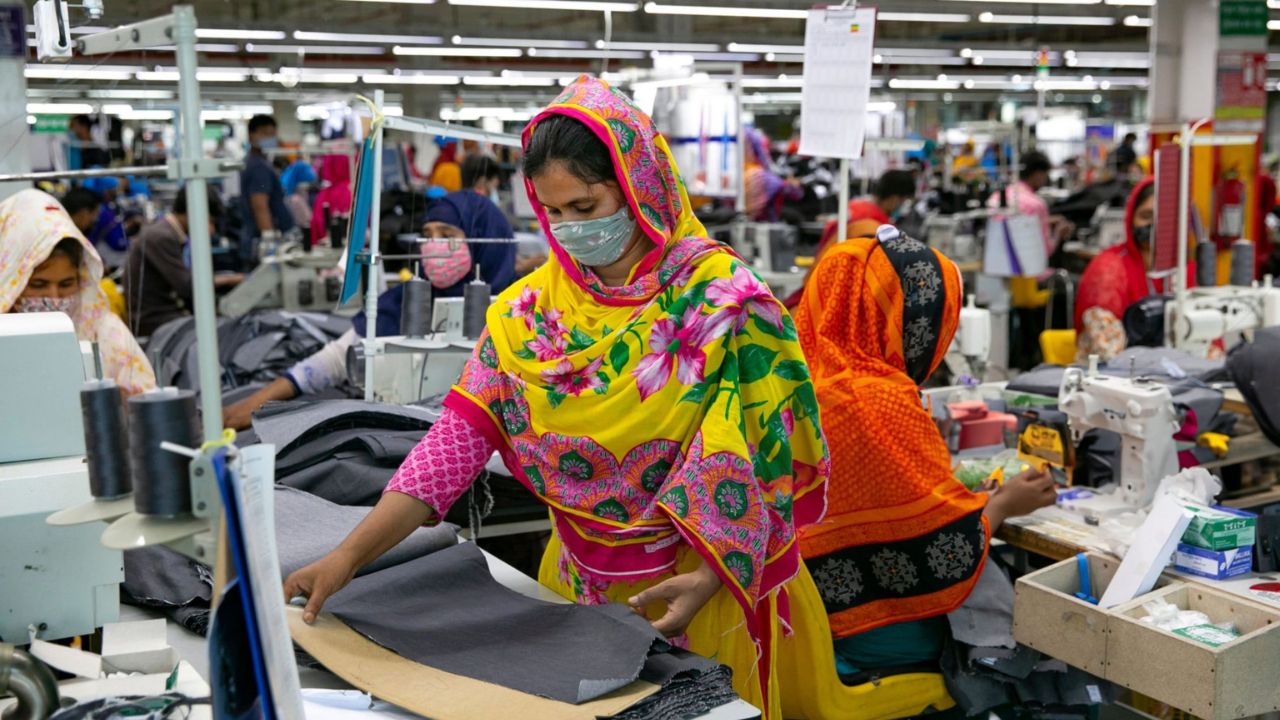
The situation appears worrisome. Severe shortages of electricity and gas have disrupted existing industries, while some newly established factories have struggled to get a connection to start their operations. Many businesses unable to operate at capacity increasingly face difficulties servicing bank loans.
The BNP government has now completed its first six months. During this period, it has introduced administrative changes, reforms and initiatives to create a more investment-friendly environment. It had promised to create 10 million new jobs in its first 18 months. Instead, over 20,000 jobs were lost in the last six months and 2.1 million jobs have been lost since August 2024, with thousands of production units closing. Government efforts towards economic recovery and reform are therefore welcome, but the challenges continue to mount and require urgent national attention.
The Invest Bangladesh Act 2026, passed by Parliament in July, has consolidated investment-related issues and functions under a unified authority, sought to reduce bureaucratic obstacles and provided a more streamlined system for registration and approvals under one authority. New incentives have also been announced for emerging sectors such as semiconductors. These are welcome initiatives. But legislation and incentives alone cannot ensure an investment surge without efficient implementation and enforcement of the Act.
With nearly 180 million people, a large workforce, a strategic location between South and Southeast Asia and decades of experience in export-oriented manufacturing, Bangladesh appears to be a natural and lucrative investment destination. The fundamental concern for investors, however, is whether they can operate predictably and profitably.
Domestic industry also deserves equal attention. Bangladesh’s private sector, particularly its established business groups, remains among the country’s largest employers. While governance, transparency and financial discipline must certainly be strengthened and enforced, existing major businesses should be allowed to function and sustain.

A workable mechanism should enable major domestic business conglomerates to continue legitimate operations. Investment retention and job preservation must receive as much attention as attracting new investment. Domestic private economic zones should also continue to receive appropriate incentives alongside stronger regulatory oversight.
Perhaps the most critical immediate obstacle to investment and industrial production now is energy. Reliable gas and electricity are not merely infrastructure issues; they are fundamental components of investment policy. Any foreign company considering Bangladesh for new investment will ask a basic question: Can we operate reliably and predictably? If the answer remains uncertain, tax incentives, investment summits and promotional campaigns will have hardly any meaningful impact.
Bangladesh, therefore, needs a comprehensive strategy to ensure affordable and reliable energy for existing and new industries. This should include diversification of gas sources, greater exploration of domestic onshore and offshore reserves, full utilisation of existing power-generation capacity and expansion of reliable electricity imports where economically viable.
The operationalisation and future expansion of the Rooppur Nuclear Power Plant, in cooperation with Russia, could contribute significantly to long-term energy security. Bangladesh should examine whether relevant arrangements of the trade agreement with the United States should be renegotiated where necessary to facilitate further cooperation with Russia as well as import cheaper gases from other sources than the US.
Additional opportunities for regional power imports and generation partnerships through subregional connectivity should also be explored and prioritised. Solar energy deserves much greater attention. China, with its extensive renewable-energy experience and large-scale solar investment, could be an important partner. Ultimately, energy policy must be aligned with industrial policy.
In terms of policy statements on energy, policymakers and ministers should exercise caution when publicly suggesting that the government has little control over gas and electricity availability or that the energy problem cannot be resolved for another 18 months to two years. Such statements send damaging and discouraging signals to prospective investors.




Bangladesh’s investment strategy must include a pragmatic effort to strengthen economic relations with India. China, Japan, South Korea and India have been important sources of foreign investment and industrial employment.
Bangladesh should develop country-specific investment strategies, including dedicated economic zones where appropriate, while continuing to explore new markets. India has major business conglomerates investing extensively across North America, Europe, Africa and Asia.
With adequate investment protection, regulatory certainty and security, Bangladesh could become an attractive destination for Indian investors. Improving bilateral economic relations with India should therefore be pursued without unnecessary delay. Bangladesh should also seek to restore disrupted transshipment and land-border transit arrangements where these serve mutual economic interests and facilitate Bangladeshi exports.
Bangladesh should prioritise participation in economic groupings such as BRICS and BIMSTEC over involvement in military frameworks such as the Mecca Joint Defence Agreement. As we approach LDC graduation, Bangladesh urgently requires development finance, diversified markets, infrastructure financing, technology and greater economic cooperation rather than military cooperation. BRICS and institutions such as the New Development Bank could provide important opportunities in these areas.
By contrast, participation in collective security arrangements would derail Bangladesh’s traditional foreign-policy principle of ‘Friendship to all, malice towards none’ and our long-standing ‘nonalignment policy’, increase defence expenditure at the expense of social and economic sectors, and potentially complicate relations with important neighbours, particularly India, affecting investment and trade cooperation.
Bangladesh’s priority should therefore, remain economic integration and regional cooperation rather than geopolitical polarisation.
Another critical dimension deserves far greater national attention: economic diplomacy. Investment never arrives simply because the government announces that an investment-friendly climate has been created. Investment has always to be actively pursued.
Around the world, foreign ministries, embassies and high commissions are increasingly engaged as important aides for economic progress. Diplomats are expected not only to manage political relations but also to promote exports, attract investment, identify technology partners, cultivate business networks and connect domestic companies with their international partners and markets.
We must be cautious that economic diplomacy should not disappear simply because governments change. Foreign policy must serve enduring national interests even if there is a change of government and leadership. Bangladesh’s ambassadors and high commissioners should therefore be given clear economic objectives alongside their political responsibilities.
Our every major mission should be equipped to engage with companies in its country of accreditation to know which ones are expanding overseas, which industries are diversifying supply chains, which corporations are seeking alternative manufacturing locations, and where opportunities exist for Bangladeshi exports and technology partnerships. Under the active supervision of the Heads of Mission, our missions should approach prospective investors rather than wait for investors to approach Bangladesh.
Ambassadors in major capitals like Tokyo, Seoul, Beijing, New Delhi, Washington, Ottawa, London, Berlin, Paris, Riyadh and other Gulf capitals should develop sustained relationships with serious prospective investors. Under active supervision of the Heads of Mission, commercial and economic officers should maintain regular contact with chambers of commerce, industry associations, investment funds, corporations and diaspora business networks.
Wherever and whenever necessary, ambassadors themselves or appropriate diplomatic officers should also be assigned to this important task. Most importantly, economic diplomacy should be measured by results rather than activities.
Did a mission help bring an investor to Bangladesh? Did it help an existing investor expand? Did it open a new market for Bangladeshi products? Did it connect a Bangladeshi company with technology or capital? Did it contribute to creating jobs? These are the outcomes that should increasingly matter and to be assessed.
Embassies cannot accomplish this alone. Economic diplomacy requires close coordination among the Ministry of Foreign Affairs, newly established Invest Bangladesh Authority, Ministry of Commerce, Ministry of Industries, Export Promotion Bureau and private-sector organisations.
The Trade, Development and Technology Division of the Ministry of Foreign Affairs, working closely with ‘Invest Bangladesh Authority’ and the Ministry of Commerce, should serve as focal ministry for guiding and monitoring missions’ performance on FDI and implementing Bangladesh’s overseas investment strategy.
If an embassy identifies a major prospective investor but that investor encounters months of bureaucratic delay after arriving in Dhaka, the diplomatic effort will have been wasted and useless. Economic diplomacy abroad and investment facilitation at home must therefore form one national strategy and be mutually inclusive. Existing investors must also be treated as valuable partners.
A satisfied foreign investor can become one of Bangladesh’s strongest ambassadors; a dissatisfied investor can discourage many others. Investment retention must therefore be pursued as vigorously as investment attraction. The difficulties and challenges faced by existing investors should be addressed with promptness and sincerity.
One of the important ingredients of Economic diplomacy should be exploring and supporting export diversification. Following LDC graduation, competitiveness will increasingly depend on productivity, technology, quality and innovation rather than preferential market access alone.
Ready-made garments will remain central, but diplomatic missions should actively pursue opportunities in pharmaceuticals, leather and footwear, agro-processing, light engineering, electronics, information technology, shipbuilding and emerging technologies. Recent incentives for semiconductor industries are promising, and the good news is that some Bangladeshi missions are actively engaged in the efforts to attract FDI into this budding sector.
Our perspective about foreign investment should also change. It should also not be viewed merely as capital, as it brings technology, management expertise, international standards and access to global supply chains. It is important that Bangladesh should not be considered merely as a low-cost manufacturing destination. With appropriate policies, it can aspire to become an important Asian manufacturing and technology hub offering quality, scale and sustainability.
We must also acknowledge the fact that geography and demographics alone will not achieve our investment goal. We have to be cognisant of the fact that Bangladesh competes with Vietnam, Cambodia, Ethiopia, India, Indonesia, Malaysia and other emerging economies that actively pursue international capital through their governments, investment agencies and diplomatic missions.
Bangladesh therefore needs an immediate two-track strategy for our economic revival. Domestically, the government must make efforts to restore investor confidence through political and policy stability, reliable energy, regulatory predictability, access to foreign exchange, efficient administration and genuine business facilitation. Internationally, it must mobilise the diplomatic machinery of the state to pursue investment, exports, technology partnerships and employment opportunities.
Economic diplomacy can no longer remain a secondary responsibility of Bangladesh’s foreign missions. At a time when the country urgently needs investment and jobs, it should become one of their principal responsibilities. Our ambassadors must increasingly become economic and commercial ambassadors as well as political representatives.
Bangladesh possesses the people, geographical position, entrepreneurial capacity and manufacturing experience necessary for another period of sustained economic growth. What it needs now is confidence, political stability, energy security, investment-friendly governance and a diplomatic service capable of actively pursuing economic opportunities around the world.
Investment will never come simply because we need it. We must create the conditions for investment at home and then go out into the world and compete for it, involving our missions abroad actively and aggressively. That is where professional economic diplomacy can make a decisive contribution and a significant difference to Bangladesh’s economic revival.