






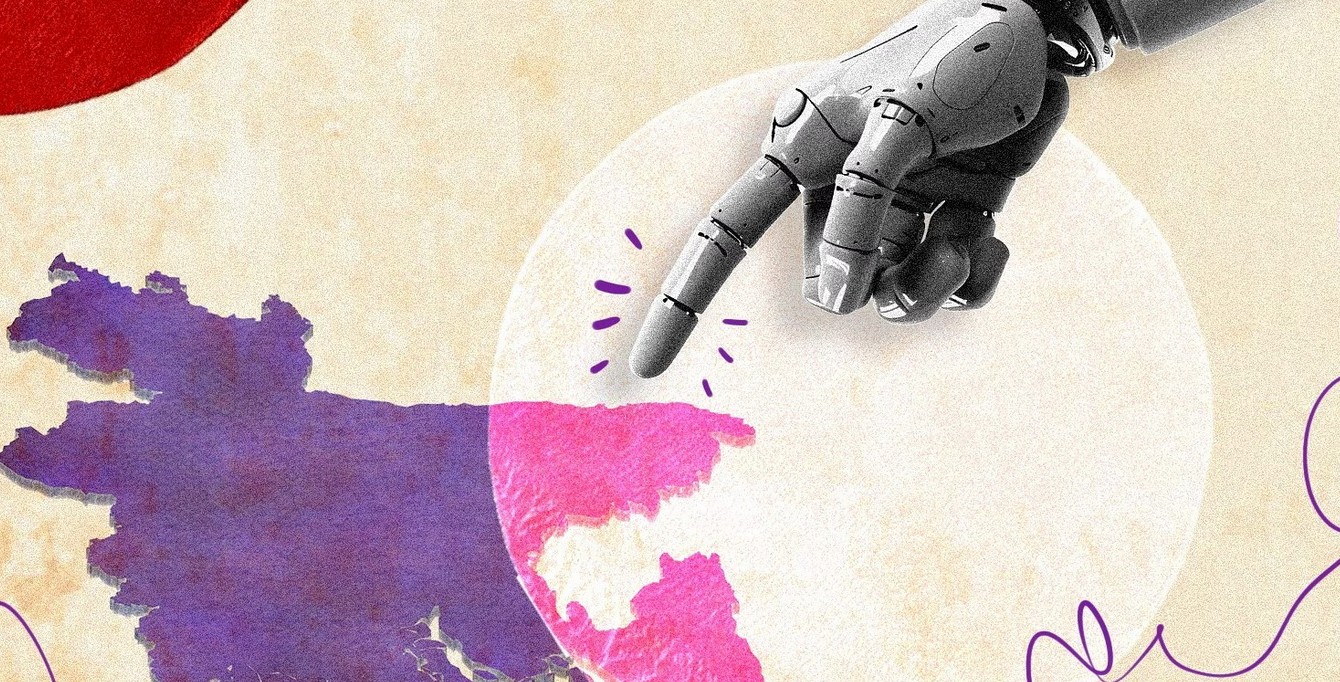
Artificial Intelligence (AI) is gradually taking over many of the tasks that humans perform daily. It basically uses simple computer algorithms and machine learning to analyse large datasets and report its results and predictions. Since machines do not get tired of working, it is possible to get a lot of work done in a short period of time. AI is being developed in such a way that one day it will be able to make decisions on its own. Currently, through the use of AI, it is possible to develop various types of modern machines in such a way that they can work exactly like humans. This usage has made our whole world more modern. With artificial intelligence-based websites, we are now able to perform content writing, graphics design, voice creation, website creation, etc., very easily. Artificial intelligence technology basically provides various services by analysing the previous data stored with it.
A significant method in this regard is the Artificial Neural Network (ANN). It processes existing data by simulating the functioning of neurons in the human body to create knowledge-based computation models. Among all the creatures in the world, humans can be distinguished by their intelligence – able to think about a particular subject, make decisions, learn from previous experiences and use them to create new knowledge. Due to the COVID-19 pandemic, all countries of the world were facing major challenges in the health sector. Many countries have taken various steps, including new research, to increase the use of AI in the medical sector. Continuous improvements in artificial intelligence technology are now creating machines capable of making decisions based on their environment, but in different ways. Currently, one of the most talked about issues through cutting-edge technology is to make machines with human-like emotional features. This development of artificial intelligence is like summoning a monster. Considering these harmful effects, we should now think about the misuse of artificial intelligence and take necessary measures to prevent its misuse.

The most common use of artificial intelligence is in the field of security. Drones are now being used by various military forces on battlefields, so that the soldiers do not have to stand in the field themselves. Radars are installed at important locations, which can give advanced awareness of the enemy’s location. Artificial intelligence CC cameras are now widely used security devices to identify criminals. There is a huge demand for artificial intelligence in the banking sector as well. Customers can now easily transact all money digitally. The use of paper money is decreasing day by day. Customers can easily update their information through email.

Artificial intelligence has the potential to dramatically change the way we live, for better or for worse. But experts doubt how prepared the world’s powers-that-be are for the huge advances in artificial intelligence coming in the future. While the use of AI has its advantages, it also has some disadvantages. Therefore, its use is justified only in those cases where it is possible to act quickly. And it is better to avoid AI technology in those cases where our family, social and economic arena may be damaged if used. Through the use of AI, it is becoming possible to develop various types of modern devices in a way that can be seen in reality. It is a unique discovery of science. There are many benefits to using AI, but overuse leads to addiction and various challenges are created. Foremost among these is information security. Through the use of AI, it is possible to steal confidential information using fake software.
In the context of the rapid expansion of technology in today’s world, artificial intelligence or AI is not just a concept, but has become one of the main driving forces of state management. As the use of technology makes life easier, its misuse also makes it miserable. Experts and lawyers feel that there should be a legal framework to ensure maximum use of artificial intelligence technology. AI has brought enormous potential to improve the economy, public services and the quality of human life. But the rise of AI has also involved ethical aspects and social implications. Bangladesh still has no legal framework to limit or prevent the misuse of artificial intelligence. That is, there are no integrated guidelines or rules, policies or policies or even strategies in Bangladesh. As a result, technology experts and lawyers believe that Bangladesh is not yet fully prepared to face the AI challenge.
There will come a time in the future when we cannot imagine a single moment without AI. The importance of AI is increasing day by day in every sector. Big companies have increased production several times by using robots in their companies, and as a result, there is no need to take breaks in the work. As we can improve a lot by using this artificial intelligence, it is important to eliminate its bad aspects so that people are not harmed. We all should improve the country and nation by working on the good aspects of AI, and for this, we should learn to use AI well and move forward with it.
Artificial intelligence has opened up endless possibilities in our lives, but with its use, some social, economic, and moral problems have also arisen. The spread of artificial intelligence and automation technologies may have some detrimental effects on the economy. The use of AI technology in many professions poses the risk of losing people’s jobs. Workers in occupations that rely on limited skills or automation may be particularly affected. AI systems collect vast amounts of data and make decisions based on that data. But it can create privacy and security risks. If this information is hacked or misused, it can be dangerous for individuals or organisations. If artificial intelligence is used correctly and safely, it will make our lives easier, more efficient, and faster. The challenges that come with it have to be solved, so that it results in the well-being of mankind.
The writer is the former registrar, Jamalpur Science and Technology University (JSTU). Email:[email protected]


